Our readers keep the lights on and my smoothie glass nicely filled. As an Amazon Associate, I earn from qualifying purchases.
A travel system isn’t “just a stroller plus a car seat.” It’s the moving control center of your day: the thing that determines whether a grocery run feels like a smooth little routine… or a clunky, shoulder-burning, trunk-wrestling event that ruins your afternoon.
If you’re searching for top rated car seat travel systems, you’re not looking for a cute roundup with recycled spec sheets. You’re looking for the truth that only shows up after real use: the fold that’s “one hand” until you’re holding coffee, the basket that’s “huge” until you load a diaper bag, the wheels that roll like butter on a store floor but rattle on cracked sidewalks, and the car seat that clicks in beautifully—unless you’re parked on a slope, in a tight space, with the door half closed.
So this guide is built like an experienced parent would build it: around friction points. I’m going to talk about what actually changes your quality of life—how the stroller behaves at curbs, whether the frame feels confident or flimsy when your toddler grows, which systems are genuinely “grandparent friendly,” and which ones quietly win because they remove ten tiny annoyances you didn’t know you’d have.
You’ll also see something most buying guides skip: the why behind user reviews. When parents rave about a system “gliding like a dream,” what are they feeling—tire material, suspension, wheelbase geometry, handle height? When parents complain a stroller “jams,” what usually causes it, and how can you avoid it? That’s the kind of clarity that helps you buy once—and feel good about it.
How to Choose the Right Top Rated Car Seat Travel Systems
Here’s the truth: almost any travel system can look good on a product page. The “best” one is the system that keeps working when you’re tired, late, and doing everything one-handed. The goal isn’t to buy the most complicated system. The goal is to buy the system that makes your day smoother—consistently.
1. Start with your “hardest day” (not your easiest)
Your easiest day is a sunny walk around the block. Your hardest day is real life: rushing to an appointment, carrying bags, trying not to wake a sleeping baby, or navigating a cramped trunk at dusk. Pick for the hardest day—because that’s where the right system feels like a superpower.
- If you live in a walkable city: you’ll care more about tight turning, sidewalks, elevators, and quick transitions.
- If you drive everywhere: you’ll care more about trunk size, one-hand fold reliability, and how the car seat base installs.
- If you travel (airports, family visits): you’ll care about compact storage, light frames, and how “portable” the system really is.
- If you have uneven terrain: wheels and suspension matter more than almost any “mode.”
2. Understand what “modes” really mean (and which ones you’ll use)
Brands love to advertise 3‑in‑1, 6‑in‑1, 8‑in‑1… but here’s how families actually use travel systems:
- Newborn stage: car seat clicks into frame, or baby rides in pramette/bassinet-style mode.
- Infant stage: you still use the car seat often, but stroller seat starts doing more of the work.
- Toddler stage: stroller seat is your main mode; the car seat is long retired.
So the question isn’t “how many modes.” It’s:
- Are the modes easy to switch without taking the whole stroller apart?
- Do the modes lock in with confidence (no wobble, no guessing)?
- Do you actually want your baby parent-facing sometimes (many families do)?
- Do you want a pramette for early strolls, or will car seat carrier mode be enough?
Modular systems can be amazing—especially when baby wants to face you, or when you love a pramette for early walks. But too many pieces can also become “one more thing to store.” The best modular systems are the ones that feel intuitive and stable, not fussy.
3. Car fit is the silent dealbreaker
This is where people get surprised. A system can be perfect… until you install it in your actual car. Car seat + base shape can affect whether your front passenger seat becomes cramped. And stroller fold shape can determine whether it fits in your trunk without removing wheels, trays, or your sanity.
Here’s how to think like a pro:
- Small car or compact SUV? Prioritize slimmer car seat/base footprints and simpler stroller folds.
- Frequent rideshare or multi-car use? Favor car seats that install confidently, with straightforward belt routing and lock-off features.
- Tall parents? Handle height and stride space matter—strollers that feel “short” become annoying fast.
- Short parents? A heavy, tall frame can feel awkward; a stable, manageable fold becomes more important.
Many families only realize this after purchase. You can avoid the regret by choosing systems with a reputation for easy installs, stable bases, and predictable folds—especially if you’ll be swapping cars often.
4. “Glides smoothly” usually means tires + geometry
When reviews say a stroller “pushes like a dream,” it’s usually some combination of:
- Tire type: rubber and treaded tires feel calmer on cracks and uneven surfaces than hard plastic wheels.
- Suspension: real suspension reduces vibration and keeps naps from turning into wake-ups.
- Wheelbase balance: a stable stroller feels planted, not twitchy.
- Handle ergonomics: a comfortable grip matters more than you think on long walks.
If you live somewhere with rough sidewalks or you love parks and neighborhood walks, “terrain confidence” matters more than a list of modes. That’s why all-terrain designs can feel like a lifestyle upgrade—not because you’re hiking mountains, but because your normal route includes curbs, cracks, and weird pavement transitions.
5. Fold quality is a lifestyle feature (not a nice extra)
A travel system can be gorgeous and still become a daily annoyance if the fold is finicky. Here’s what separates a great fold from a frustrating one:
- Consistency: does it fold the same way every time, without “sweet spots”?
- Self-standing: can it stand on its own when folded, or does it collapse into a heap?
- One-hand reality: can you fold it while holding a baby—or do you need two hands and a calm moment?
- Pinch safety: does it feel like it’s trying to bite your fingers during collapse?
You’ll see this theme repeatedly in parent feedback: a stroller can be loved for months, then one annoying fold quirk becomes the thing that makes it sit in the garage. So in this guide, I pay close attention to fold friction—because it’s one of the biggest “regret multipliers.”
6. Newborn comfort isn’t just padding—it’s support geometry
Newborn comfort is often misunderstood. It’s not just “soft.” It’s whether the inserts support baby’s head and torso without making the fit sloppy. It’s whether the harness adjustment feels easy to keep correct as baby grows. And it’s whether baby looks settled—chin up, posture supported—rather than scrunched or sliding.
In real reviews, this shows up as:
- “My baby sleeps immediately in this system.” (Often: smooth ride + supportive seat shape.)
- “My baby hated the car seat until we switched.” (Often: fit and support, not ‘more padding.’)
- “Great for preemie/small baby.” (Often: thoughtful inserts and proper harness routing.)
If newborn comfort is a major priority for you, don’t just look at “plush.” Look at whether the system gives you useful micro-adjustments and supportive inserts that make small babies feel secure.
7. Don’t underestimate storage (it’s your hidden calm)
A good storage basket is not a luxury. It’s how you keep your hands free, your shoulders fresh, and your patience intact. Parents rave about large baskets because it means:
- Diaper bag goes down instead of hanging off your shoulder.
- Groceries or packages can be carried safely without balancing acts.
- Extra layers, toys, and snacks don’t become “more things to hold.”
But basket access matters too. A basket can be huge and still annoying if you can’t reach it when the seat is reclined. Systems that allow front and rear access, or that keep the basket open and reachable, tend to feel better day to day.
8. Your “best system” is usually a match to one of these profiles
Most families fall into one of these patterns. Find yours and the choice gets easier:
- The everyday driver family: wants stable steering, reliable fold, and long-term stroller comfort.
- The compact-living family: needs a smaller fold and easy storage in tight spaces.
- The airport/city traveler: wants fast transitions and fewer separate pieces of gear.
- The terrain family: cares about tires, suspension, and nap protection on bumps.
- The “many caregivers” family: needs a system that grandparents can use confidently without frustration.
Keep that profile in mind while you browse the comparison table. Then the product reviews will feel like “yes, that’s us” instead of “maybe?”
Quick Comparison: 13 Top Rated Car Seat Travel Systems Picks
Use this table to quickly match a travel system to your lifestyle, then jump into the full reviews for the real-life details— like how the fold behaves when you’re in a parking lot, which systems feel stable on rough sidewalks, and which ones remove the most daily friction.
On smaller screens, swipe or scroll sideways to see the full table.
| Model | System style | Real-life strength | Best match | Amazon |
|---|---|---|---|---|
| Graco Modes Nest (Slide2Me) | Modular 3‑in‑1 | Adjustable “bring baby closer” height + pramette mode + big basket | Families who want a premium-feeling everyday system with real versatility | Amazon |
| Chicco Bravo 3‑in‑1 Trio | Full-size 3‑mode | Durable, smooth push + quick fold + proven KeyFit click-in flow | Daily walkers who want “reliable and sturdy” without constant fiddling | Amazon |
| Evenflo Shyft DualRide (Carryall) | Seat + stroller | Transforms in one step; great for airports and rideshares | Travel-heavy families who want wheels without a separate stroller frame | Amazon |
| Graco GoMax Next Gen | Ultra-compact | Overhead-bin-friendly frame concept + quick rigid LATCH install feel | Small trunks, travel days, and parents who want minimal bulk | Amazon |
| Safety 1st Deluxe Grow and Go Flex 8‑in‑1 | Modular 8‑in‑1 | Lots of configurations + comfort touches like memory-foam seat | Families who want “extras included” and a system that adapts | Amazon |
| Graco Modes Pramette (3‑in‑1) | Modular 3‑in‑1 | Pramette conversion + reversible seat + big everyday usability | Families who want a versatile “baby to toddler” stroller flow | Amazon |
| Evenflo Pivot Modular (LiteMax) | Modular 6‑mode | Light feel, pramette option, and preemie-friendly car seat range | Parents who want modular versatility with manageable bulk | Amazon |
| Graco Outpace LX All‑Terrain | 3‑wheel all‑terrain | Never-flat rubber tires + suspension = calmer rides on rough paths | Park walkers and “uneven sidewalk” families who want smoother naps | Amazon |
| Safety 1st Grow and Go Flex 8‑in‑1 | Value modular | Grows with baby and folds multiple ways for storage flexibility | Value-focused families who still want true modular features | Amazon |
| Safety 1st Smooth Ride | Simple classic | Agile steering + big canopy + easy fold; practical daily errands pick | Families who want straightforward function and easy “grab-and-go” use | Amazon |
| Baby Trend Passport Switch 6‑in‑1 | Feature-rich | Six modes + big storage access + parent phone holder convenience | Parents who want modular options and day-to-day convenience perks | Amazon |
| Graco Verb Travel System | Lightweight | Simple, portable fold + smooth ride basics + easy click-in flow | Minimalists who want a lighter, no-drama everyday combo | Amazon |
| Graco Modes Element | Modular 3‑in‑1 | Reversible seat + reliable basics + “classic Graco practicality” feel | Families who want modular flexibility without a premium learning curve | Amazon |
In‑Depth Reviews: 13 Top Rated Car Seat Travel Systems That Feel Great in Real Life
Now we’ll go system by system. I’ll talk like a person who actually loads trunks, hits curbs, and tries to keep a baby asleep— not like a brochure. You’ll get the daily-life strengths, the “good to know” realities, and the exact kind of buyer each system fits best.
1. Graco Modes Nest (Slide2Me) – The Everyday System That Feels Like a Quiet Upgrade

The Modes Nest is one of those travel systems that feels like it was designed by someone who actually remembers what it’s like to parent in motion. The Slide2Me concept—raising the seat and/or infant car seat—sounds simple, but in real life it changes the vibe: you’re not leaning down as far to check baby, you’re not doing awkward “hello-from-the-side” bonding, and the stroller feels more connected, more intentional.
What parents tend to rave about is a mix of “premium feel” and “daily practicality.” You’ll see comments about the stroller gliding nicely, the basket being genuinely spacious, and the overall setup looking like something far more expensive. Those aren’t just aesthetic wins; they’re calm wins. A stroller that moves smoothly reduces micro-stress. A basket that actually holds your essentials reduces shoulder strain. And that’s what a best-overall system should do: remove friction without demanding a PhD to operate.
The pramette mode is the underrated star. When baby is brand new, a flatter, more stretched-out stroll position can feel kinder for longer walks. Then, as baby grows, the reversible seat keeps the stroller feeling “new” again—parent-facing when you want connection, world-facing when baby turns into a curious observer. This is the kind of system that doesn’t force you into one lifestyle; it adapts as your week changes.
The best part? It’s not a delicate “handle with care” stroller. Owner feedback regularly frames it as sturdy and confidence-building—something that can handle doctor appointments, errands, neighborhood walks, and the occasional bumpy path without feeling like it’s going to fall apart. If you want one system that feels like a long-term partner, this one earns that role.
Why you’ll love it
- Slide2Me changes daily comfort – Less bending, more eye contact, and a “closer” feel that parents genuinely notice.
- Pramette mode feels usable – Not just a checkbox; it’s a real newborn stroll option that many families stick with for weeks.
- Big-basket practicality – Helps keep your hands free and your day calmer (diaper bags belong down, not on your shoulder).
- Sturdy, premium vibe – Many parents report getting “luxury stroller” comments—because it looks and feels upgraded.
Good to know
- Like most feature-rich modular systems, it’s not the smallest fold in the group—measure your trunk “real estate” honestly.
- Pramette mode is fantastic for strolling comfort, but the value comes from actually using it—commit to learning the conversion once.
- If your main priority is ultra-compact travel, you’ll prefer a system built around a smaller frame (see the GoMax).
Ideal for: families who want one “do-it-all” system that feels premium, handles everyday life well, and stays useful as baby grows into toddlerhood.
2. Chicco Bravo 3‑in‑1 Trio – Smooth, Sturdy, and Built for Long Walks
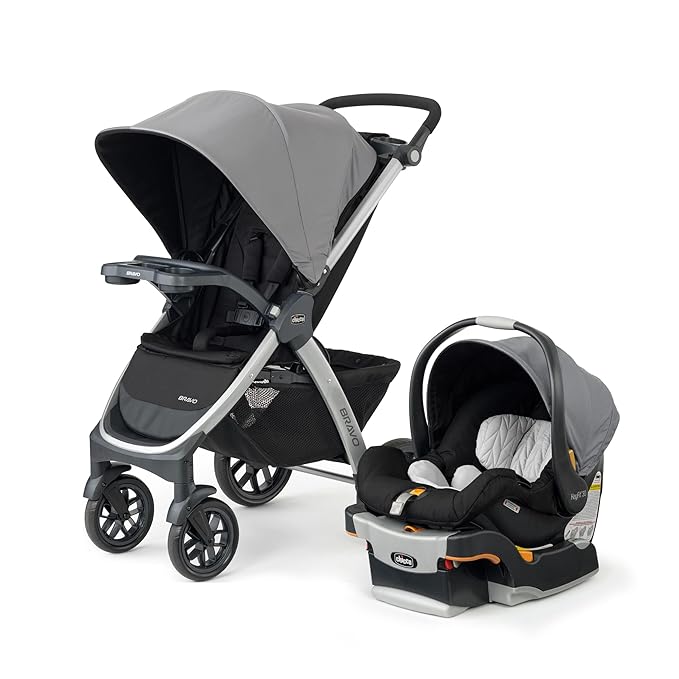
If you’re the kind of parent who takes long walks (or wants to), the Bravo Trio tends to land in that “I’m glad we bought quality” category. What shows up repeatedly in real feedback is that it feels sturdy, it maneuvers smoothly, and it becomes second nature fast—especially the click-in transitions between car seat and stroller.
Here’s the expert translation of what parents mean when they say it “moves like a dream”: the Bravo’s wheel design and suspension approach makes everyday surfaces feel calmer. Uneven sidewalks don’t become a rattly mess. Turns feel smooth. You don’t have to wrestle the handle to keep it tracking straight. That matters more than you think because a stroller that pushes easily also feels safer—your brain isn’t constantly correcting and bracing.
The second big advantage is the workflow. The car seat clicks in quickly through the stroller tray design, which means fewer adapters, fewer steps, fewer “did I line it up right?” moments. Parents often highlight that once the base is installed in the car, the snap-in action is fast and confidence-building. That’s exactly the kind of everyday ease that turns a travel system into something you’re happy to use daily—not something you tolerate.
The honest tradeoff is weight and “full-size stroller presence.” This isn’t a tiny frame stroller. It’s built to be a solid everyday vehicle. And that’s why I like it as a premium pick: if you’re walking miles, you’ll usually prefer a stroller that feels planted and durable. Many families keep a separate jogger for truly rough terrain, but for daily streets and parks, the Bravo holds its own as a reliable workhorse.
Why it’s worth it
- Sturdy, confidence push – Parents who walk often love how stable it feels on everyday sidewalks.
- Fast click-in workflow – Smooth transitions reduce stress when baby is asleep and you want minimal disturbance.
- Tall-parent friendly vibe – Many tall parents appreciate handle ergonomics and stride space.
- Quality feel over time – Built to last through heavy daily use, not just occasional errands.
Good to know
- It’s a full-size system; if you need ultra-compact storage, you’ll want a smaller-fold option.
- It’s happiest on pavement and smoother park paths; for loose gravel or grass, a dedicated jogger is still king.
- Some parents wish for more newborn lounging options beyond car seat usage—if pramette mode matters, consider a modular pramette system.
Ideal for: families who walk a lot, want a durable daily driver, and value smooth maneuverability and reliable click-in convenience.
3. Evenflo Shyft DualRide – The “One Piece of Gear” Solution That Saves You Steps

The Shyft DualRide is built for one thing: reducing transitions. And that matters because transitions are where parenting days get messy. Car to curb. Curb to lobby. Lobby to elevator. Elevator to appointment. Appointment to car. Every time you change modes, you burn time and attention. This system is popular because it removes an entire category of “separate stroller frame” logistics.
Real users consistently highlight the same travel superpower: it makes airports and international trips easier because you’re not juggling multiple pieces of gear. You pop wheels down, roll, and keep moving. Then once you land, you can buckle it into rides without the base when you need flexibility. That last detail is huge for travel-heavy families—because it means you aren’t trapped by “did we bring the base?” on the other side of the trip.
Now for the honest adult conversation: this convenience comes with physical reality. The unit is wide and it takes up space. Families with smaller vehicles often mention that it can be a tight fit. Also, stroller mode is designed for smooth surfaces (terminals, sidewalks, stores), not for rough off-roading. Some parents describe a bit of wobble compared with a dedicated full-size stroller. But that’s not a flaw—it’s the trade. You’re buying simplicity and compact “one system” living, not trail domination.
The extra touches are surprisingly useful, especially the carryall storage and the clean/contained wheel-well concept that helps keep dirt off your car. And SensorSafe-style alerts can be a modern layer of reassurance for busy days: reminders around temperature, time buckled, and unattended situations. This is a system that earns loyalty because it removes steps—and steps are where we lose time.
Why it’s a travel weapon
- One-step transformation – Wheels down, roll away. No separate frame, no adapter hunt.
- Rideshare flexibility – Can be buckled in without base when you need to move fast after landing.
- Carryall storage is real help – Keeps essentials close without extra dangling bags.
- Modern safety reminders – SensorSafe-style alerts can add peace of mind for busy parents.
Good to know
- It’s physically larger than a basic infant carrier—expect a tighter fit in small cars.
- Stroller mode is best on smooth surfaces; it won’t feel like a rugged jogger.
- Practice the fold/transform motions a few times so it feels effortless when you’re in public.
Ideal for: frequent travelers, airport families, and city parents who want fewer moving pieces and faster transitions.
4. Graco GoMax Next Gen – Compact, Flight-Friendly Energy Without the Bulk

Some parents don’t need a “big stroller.” They need a smart, portable solution that lives easily in a trunk, moves through tight spaces, and doesn’t make travel days feel like a gym session. The GoMax is built for that parent. Its whole identity is compactness and speed—quick transitions between car and stroller frame, quick storage, quick errands, quick travel.
What’s especially interesting about this system is how often users compare it to the “all-in-one travel legends” they’ve used before. Parents who’ve owned bulkier travel setups often describe the GoMax as a breath of fresh air: lighter handling, easier storage, less overheating fabric feel, and a general sense of “this is actually manageable on my own.” That matters because solo parenting moments are the moments when gear shows its true personality.
There is also an installation confidence angle here. Systems that emphasize fast, firm attachment (rigid-style LATCH feel) tend to reduce second-guessing. If you’re swapping cars, doing quick pickups, or you simply want “click and done” energy, this design philosophy can feel like a lifestyle upgrade. The stroller frame concept also reduces bulk: you’re not hauling a full seat unit when you’re mostly using car-seat carrier mode in the earliest months.
The tradeoff is straightforward: a very compact frame can feel less “tank-like” than a full-size stroller on uneven ground. Some parents describe it as slightly more flexible compared with premium everyday strollers—especially if you load heavy bags on the handle. The key is to treat it like what it is: a portable travel solution that prioritizes storage and simplicity. Used that way, it’s a winner.
Why it works
- Compact lifestyle fit – Easy to store, easy to carry, easy to keep in a small trunk.
- Fast car-to-stroller workflow – Designed for quick transitions during errands and travel.
- Great “solo parent” energy – Less bulk means less wrestling, especially when you’re alone.
- Comfort-focused materials approach – Parents often notice less heat buildup compared to bulkier systems.
Good to know
- A compact frame won’t feel as cushy over rough terrain as a larger all-terrain stroller.
- If you want a long-term toddler stroller for daily neighborhood walks, you may eventually add a dedicated stroller later.
- Compact designs reward smart packing—use the basket and avoid overloading the handle.
Ideal for: parents who prioritize compact storage, travel ease, and a fast “errands mode” system that doesn’t dominate the trunk.
5. Safety 1st Deluxe Grow and Go Flex 8‑in‑1 – Feature-Rich Comfort Without the Fuss

This is the kind of travel system that appeals to a very specific shopper: the parent who wants a comfortable ride, wants the accessories built in, and doesn’t want to buy a pile of add-ons later. The Deluxe Grow and Go Flex leans into comfort and convenience—details like a memory-foam seat feel small until you’re doing longer outings and you realize your stroller is basically baby’s “mobile lounge.”
What parents often appreciate in systems like this is the “complete package” vibe: trays and cup holders for both parent and child, storage that reduces what you have to carry, and enough configuration options that you can face baby in or out and adjust the setup as your week changes. This matters because babies change fast. One month they want to look at you; the next month they want to stare at ceiling lights and strangers. A reversible, modular system keeps up with those phases without forcing you to buy something new.
The included infant car seat is intentionally lightweight, which can make a big difference if you’re carrying baby in and out of the car often. Add in newborn inserts and easy-clean fabrics, and you get the kind of system that feels designed for real messes: spit-up, snacks, dusty sidewalks, and “oops” moments. Many families also love the “stands on its own” folded behavior—because a stroller that collapses neatly in the hallway is a calmer stroller to live with.
One honest note: very modular systems work best when you commit to learning them. You don’t need to memorize every configuration, but you do want to practice your two most-used setups so conversions feel smooth. Do that, and this system can feel like it’s doing the thinking for you.
Why families choose it
- “Everything included” energy – Trays, cup holders, storage, comfort touches—less accessory shopping later.
- True modular flexibility – Multiple directions and modes help match baby’s stage and mood.
- Light infant carrier feel – Easier carrying can make daily errands feel less physically demanding.
- Easy cleaning mindset – Machine-washable pads and practical materials suit real life.
Good to know
- More modes = more learning. It’s best for parents who like options and will actually use them.
- If your primary goal is ultra-compact travel, a dedicated compact system will store smaller.
- Some users mention occasional folding friction—slow down, follow the fold sequence, and it becomes predictable.
Ideal for: parents who want a comfortable, feature-packed modular system with built-in convenience and a “ready for real life” approach.
6. Graco Modes Pramette – The 3‑in‑1 That Nails Everyday Versatility

The Modes Pramette is famous for one simple reason: it feels like a lot of stroller for the money—without feeling cheap in the ways that matter. Parents repeatedly describe it as sturdy, smooth-rolling, easy to assemble, and easy to use daily. That combination is exactly why it shows up in so many “we bought it as backup… and then it became our main stroller” stories.
The real-life hero feature is the pramette conversion. When baby is tiny, a flat, comfy stroll setup can feel like the difference between “baby hates the stroller” and “baby naps while I walk.” Many families also love the reversible seat because it makes the stroller feel more interactive early on. You can face baby toward you, talk and check in easily, then flip to world-facing when curiosity kicks in. That flip is a psychological reset for a lot of parents—suddenly outings feel exciting again.
Another big theme in reviews is storage. The basket is described as “actually useful,” not “technically present.” And the parent tray + child tray convenience is real: you don’t have to buy extra organizers to carry basics. If you’re the type of parent who wants to keep a phone, keys, and drink accessible without hanging everything on the handle, this practical design matters.
The system’s day-to-day flow is also a win: the infant car seat clicks in and out smoothly and transfers baby from car to stroller without major disturbance. That’s the point of a travel system, and the Pramette delivers it cleanly. If you want versatile newborn-to-toddler function with a friendly learning curve, this is one of the safest “yes” choices.
Why it’s so popular
- Pramette mode is genuinely useful – Great for early walks, calmer newborn outings, and nap-friendly strolling.
- Sturdy and smooth handling – Parents often call it stable and easy to steer even in busy stores.
- Storage + trays feel practical – Reduces “extra accessories” shopping and keeps essentials reachable.
- Easy everyday workflow – Click-in travel system transitions feel natural and fast.
Good to know
- Like many full-feature travel systems, it’s not tiny when folded—plan trunk space realistically.
- For truly rough off-road terrain, a 3-wheel all-terrain stroller will feel smoother.
- If you love the idea of “baby closer” height adjustment, the Modes Nest may feel like an upgrade.
Ideal for: families who want a dependable 3‑in‑1 system with pramette comfort, reversible flexibility, and strong everyday usability.
7. Evenflo Pivot Modular – Light, Versatile, and Surprisingly “Daily Friendly”

The Pivot Modular is one of those systems that wins because it feels manageable. Parents often describe it as lightweight without feeling flimsy, easy to assemble, and smooth to maneuver—especially for everyday errands. That “manageable” vibe matters because a stroller can be feature-rich and still become annoying if it’s bulky or awkward to fold. The Pivot’s identity is flexibility with a relatively friendly footprint.
Its modular frame allows multiple modes—including parent-facing and forward-facing options and a pramette-style lay-flat setup—so it adapts well to different baby moods. That matters more than most people expect. Some babies hate facing forward early. Some love watching the world. Some nap only when they’re stretched out. The Pivot gives you enough configuration to respond without making you feel like you’re rebuilding furniture every time.
Another standout detail is the LiteMax car seat range that includes very small infants. Families preparing for a preemie or simply expecting a tiny newborn often feel calmer when the car seat is designed with that early fit in mind. Add the integrated belt lock-off approach in the base, and you get a system that is built to reduce install uncertainty. That’s a big deal for first-time parents—and also for grandparents who want to help safely without stress.
The main friction point reported by some users is folding technique. Like many modular strollers, it has a “right way” to fold smoothly. The good news is: once you learn that sequence, many parents say it becomes quick and easy. This is a system that rewards a little practice with a lot of daily payoff.
Why it’s a smart pick
- Feels light without feeling cheap – A common theme is “easy to use daily,” which is exactly what you want.
- Modular flexibility that makes sense – Enough modes to match baby’s mood without becoming a puzzle.
- Small-infant confidence – The LiteMax seat range can be reassuring for families expecting tiny newborns.
- Good maneuverability – Parents often note smooth steering and pleasant everyday handling.
Good to know
- Folding has a learning curve for some users—practice makes it feel “one motion.”
- Basket access is good, but very bulky loads can shift—pack with balance in mind.
- If you want the smoothest ride on rough terrain, consider an all-terrain tire system.
Ideal for: parents who want modular flexibility in a manageable, daily-friendly package—especially if newborn fit and easy handling matter most.
8. Graco Outpace LX All‑Terrain – The “Calmer Walks, Better Naps” Choice

If you’ve ever tried to push a basic stroller over cracked sidewalks and felt your baby vibrate awake, you already understand why all-terrain strollers get so much love. The Outpace LX is designed around a calmer ride: never-flat rubber tires and in-seat suspension combine to reduce the “rattle factor” that makes walks feel noisy and stressful.
In reviews, you’ll see parents talk about how smoothly it maneuvers on pavement, grass, and gravel—and that matters because most of us don’t live on perfect sidewalks. This stroller tends to shine in daily real-world conditions: parking lot seams, curb cutouts, rough patches, and the kind of uneven surfaces that basic plastic wheels hate. Many parents also mention how easy it is to lift and store compared with other all-terrain options, which is a big deal because a stroller can be great outside… and still annoying if it’s a trunk nightmare.
3-wheel designs have a specific personality: they often feel agile and sporty, with smoother turning when you’re moving. The tradeoff is that they can feel longer, and some people need a day or two to learn how they behave in super tight indoor spaces. But once you adjust, they’re often easier to push one-handed and more stable over bumps. For families who walk a lot, that’s a huge quality-of-life upgrade.
I also like the “parent-minded” practicality: a full canopy, snack tray convenience, and a fold designed to be manageable. Parents do sometimes mention that folding can be awkward at first, and that pinches happen if you rush the motion. That’s not uncommon in performance strollers—slow down the first week, learn the fold sequence, and it becomes a non-issue.
Why it’s different
- Calmer ride over rough ground – Rubber tires + suspension means fewer wake-ups and less “shake.”
- Agile 3-wheel handling – Great for parents who want smooth steering and sporty movement.
- Everyday practical features – Canopy coverage, snack tray convenience, and parent cup holders are genuinely useful.
- Strong build confidence – Many owners describe it as well constructed and durable.
Good to know
- 3-wheel strollers can feel longer; tight indoor navigation takes a little practice.
- Fold technique matters—rushing can lead to awkward drops or pinched fingers.
- If you want reversible parent-facing toddler seating, you’ll prefer a modular reversible system.
Ideal for: families who walk a lot on imperfect surfaces and want smoother pushes, calmer rides, and better nap success during outings.
9. Safety 1st Grow and Go Flex 8‑in‑1 – The Value System That Actually Feels Thoughtful
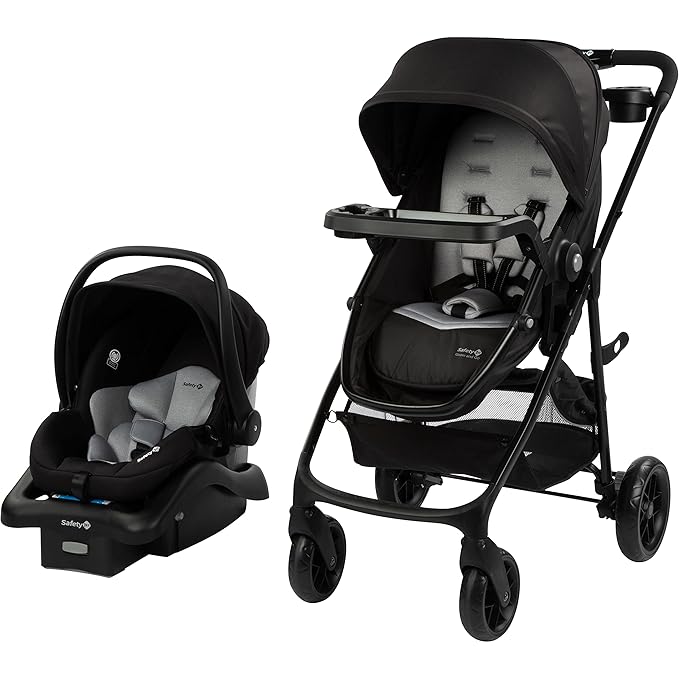
Some value travel systems cut corners in ways you feel immediately: wobbly locks, awkward conversions, flimsy wheel behavior, and storage that’s more decorative than useful. The Grow and Go Flex stands out because it’s value-focused but still tries to solve real parenting problems: modular options that can face either direction, a stroller that can fold in different ways depending on your storage space, and thoughtful add-ons like trays and an extra-large basket.
Across parent feedback, you see a common story: “we still use it months later,” or “it’s holding up better than I expected.” That’s the real test of value. Not “did it arrive” or “is it cute,” but “does it keep working when baby gets heavier and life gets messier.” Owners frequently highlight how convenient it is to transition between modes, and how the system reduces the need to buy multiple separate pieces of gear.
The car seat base installation flexibility also gets praise—especially from families who have multiple caregivers or multiple vehicles. When you can install confidently with different methods, you’re less likely to end up buying extra car seats “just to avoid moving it.” That’s a real budget win over time, and it also makes family support easier: grandparents can help without needing to learn a complicated process.
The biggest limitation tends to be rough terrain. Many parents say it rolls nicely on sidewalks and roads but struggles more on loose gravel. That’s normal for a value modular stroller. If you mainly do paved outings, it’s a strong choice. If your daily route includes rough paths, choose an all-terrain system.
Why it’s such a good value
- Real modular flexibility – Multiple reversible configurations help match baby’s mood and growth stages.
- Storage options that matter – Big basket + trays reduce what you have to carry.
- Multi-fold approach – Different folding modes can help in smaller spaces and tight trunks.
- Holds up over time – Many families mention ongoing use and durability months into ownership.
Good to know
- Not designed for rough gravel as a main environment—choose all-terrain tires if you need that.
- It’s best when you commit to two “default modes” and stick with them for daily rhythm.
- Like most modular strollers, it’s not the smallest folded footprint in the group.
Ideal for: families who want maximum versatility at a value-friendly tier—and mostly stroll on roads, sidewalks, and smoother park paths.
10. Safety 1st Smooth Ride – The Straightforward “Just Works” Everyday System

The Smooth Ride is popular for one very practical reason: it hits the core needs without turning into a complicated “system project.” Parents often describe it as easy to assemble, easy to use, easy to fold, and comfortable enough that baby feels settled. That’s a strong combination, especially for first-time parents who want a travel system that doesn’t demand constant troubleshooting.
Where this system tends to shine is maneuverability—especially the way it handles corners and daily errands. The stroller is designed to feel agile in stores and sidewalks, with practical touches like a large canopy (including a visor) and a peek-a-boo window that helps with airflow and quick check-ins. When you’re doing real-life outings—parking lots, store aisles, waiting rooms—those small design choices are the ones that keep baby calmer.
Parents also talk a lot about the “click-in confidence” when attaching the infant car seat. A travel system’s purpose is fast transitions, and this one delivers that basic promise well. Add in trays and storage and it becomes the kind of system that helps you carry what you need without juggling. And if you ever visit theme parks or busy attractions, the fact that it’s designed with practical sizing and maneuvering in mind is a nice plus.
The main caution is car fit. Some families mention that in certain vehicles, the car seat + base footprint can affect front passenger comfort. That’s not unique to this system, but it’s something to think about if you drive a smaller sedan or keep the front seat far back. As a daily “simple and functional” system, it remains one of the easiest to live with.
Why it’s easy to recommend
- Simple learning curve – Many parents feel comfortable using it quickly without confusion.
- Agile everyday maneuvering – Great for stores, sidewalks, and “quick errand” life.
- Canopy coverage helps naps – Extra shade + peek window makes outings calmer.
- Practical storage and trays – Helps you carry essentials without extra organizers.
Good to know
- Some vehicles may feel tighter in the front passenger seat depending on seat position.
- It’s best on paved surfaces; if your environment is rough, choose a rubber-tire all-terrain option.
- Like many value systems, it’s strongest when used for what it is: dependable daily errands and walks.
Ideal for: families who want a straightforward, user-friendly system for daily errands, appointments, and neighborhood walks.
11. Baby Trend Passport Switch 6‑in‑1 – The “So Many Features” Budget-Friendly Surprise

The Passport Switch is designed for parents who love options and convenience features—without paying premium-stroller prices. It offers multiple forward and rear-facing configurations with car seat, bassinet-style mode, and toddler seat mode, plus practical “daily life” extras like a phone holder on the handlebar and a flex-grip cup holder that’s built to handle real water bottles.
What’s especially interesting in real parent feedback is how often it becomes a “go-to” stroller even when it was purchased as a backup. That usually happens when a system hits the sweet spot of being easy to assemble, easy to navigate, and easy to live with. Parents describe it as smooth to push, sturdy enough to feel safe, and convenient to swap parts without feeling like a complicated conversion kit. Some even mention that simply sitting in it calms a fussy baby—often a sign of a comfortable ride and supportive seat design.
Storage is a big win here. The basket is designed with front and rear access, which is a detail that sounds small… until you’re trying to grab wipes while the seat is reclined. Parents also tend to appreciate the “parent perks” layout: you don’t feel like you need a stroller organizer immediately. It’s already built into the system’s design.
The honest friction point is the car seat buckle/clip design for some families—especially if baby is squirmy. That’s not rare in infant seats across brands, but it’s worth knowing if you expect lots of solo buckling. If you practice the buckle motion a few times and learn the best “hold and click” technique, most parents adjust quickly.
Why people love it
- Convenience features that matter – Phone holder, useful cup holder, and basket access reduce daily hassle.
- Six-mode flexibility – Lets you face baby in or out, and swap between newborn and toddler setups.
- Big basket with smart access – Front and rear access is a real-world usability upgrade.
- Easy “go-to” behavior – Many parents find it becomes their main stroller because it’s simply easy.
Good to know
- Some families find the infant buckle/clip awkward at first—practice helps a lot.
- As with most multi-piece modular strollers, keeping parts organized helps reduce “where did that go?” stress.
- If you need the smoothest off-road ride, you’ll prefer rubber tires and suspension-focused designs.
Ideal for: parents who want lots of configurations plus modern convenience perks, and who appreciate a system that feels feature-packed without premium pricing.
12. Graco Verb Travel System – A Simple, Light, “First-Time Parent Friendly” Combo

Not everyone wants a modular mega-stroller. Some parents want a straightforward travel system that’s light enough to move easily, simple enough to fold without drama, and functional enough to handle daily appointments and errands. That’s exactly the niche the Graco Verb fills—and it fills it well.
Parents consistently talk about three things: it’s lightweight, it’s easy to fold and store, and the car seat doesn’t feel overly heavy to carry. That matters because early parenthood is physically demanding. If your gear is heavy, you feel it immediately—in your wrists, your shoulders, and your willingness to “just go out.” A lighter system can genuinely increase how often you take walks and run errands, because it removes that physical barrier.
The Verb’s suspension and locking front swivel wheel contribute to a smoother, more controlled push than you’d expect from a simpler stroller. It won’t feel like an all-terrain jogger on rough trails, but for everyday paved life it tends to be pleasantly predictable. The trays and basket also help keep essentials close, and the carry strap on the fold is one of those “small but genius” touches that you appreciate in tight spaces and quick transitions.
This is the system for parents who want to stop shopping and start living. If you’re overwhelmed by too many options and you just want something cute, functional, and easy, the Verb is a clean answer.
Why it’s a great simple pick
- Lightweight feel – Easier lifting, easier trunk loading, and less “gear dread.”
- Reliable fold + carry strap – Practical portability for apartments, small trunks, and busy days.
- Predictable everyday handling – Smooth enough on sidewalks and stores, without complicated adjustments.
- Beginner-friendly system – Easy click-in flow helps first-time parents feel confident fast.
Good to know
- Not intended for beach sand or rough off-roading; it’s a paved-life stroller.
- If you want reversible parent-facing toddler seating, you’ll need a modular reversible system.
- Storage is useful, but not “giant-basket” level like some premium modular systems.
Ideal for: first-time parents and minimalists who want an easy, lightweight travel system for daily errands, appointments, and simple neighborhood walks.
13. Graco Modes Element – Reversible, Practical, and Built for “Normal Life”

The Modes Element feels like a “classic Graco” answer: practical, flexible, and built around the day-to-day things that matter—easy transitions, decent storage, and a reversible seat so you can choose parent-facing or world-facing as your baby grows. This is the kind of stroller that doesn’t try to be trendy. It tries to be useful.
Parents who love systems like this often describe a similar experience: the car seat clicks in smoothly, the stroller is easy to use, and the whole setup feels dependable without being precious. That matters because stroller life is messy. There will be spills. There will be scuffs. There will be “we threw it in the trunk and ran.” A system that’s built for that reality can feel more valuable than one that’s “beautiful” but delicate.
The reversible seat is the main reason to choose this model over simpler lightweight options. If you want baby facing you sometimes—especially early on— it’s a big emotional and practical win. You can check in quickly, soothe with your voice, and feel connected. Then, later, you flip the seat and let baby “explore the world” while still riding safely and comfortably. That flip often extends the stroller’s emotional lifespan; it keeps outings interesting.
The tray system is also practical: snacks and drinks stay close, and the removable child tray helps with easy entry. In daily life, that’s more valuable than it sounds. Toddlers don’t love being “threaded” into seats—easy entry reduces meltdowns.
Why it stays useful
- Reversible seat flexibility – Parent-facing early, world-facing later, without buying a new stroller.
- Dependable travel system workflow – Smooth transitions help protect naps and reduce stress.
- Practical trays + storage – Helps you carry essentials and manage snacks without extra add-ons.
- “Built for normal life” durability – Designed to handle everyday use, not just occasional outings.
Good to know
- Like most modular full-feature strollers, it’s not the most compact folded option.
- For consistently rough terrain, a rubber-tire all-terrain stroller will feel smoother.
- If you prioritize ultra-lightweight minimalism, a simpler travel system may feel easier to lift daily.
Ideal for: families who want a practical, reversible modular system that stays useful through multiple baby stages without feeling complicated.
How Travel Systems Actually Save Time (and Where They Don’t)
Travel systems promise “seamless transitions.” Sometimes they deliver—and sometimes the promise falls apart in real life. The difference is simple: the best systems remove steps without adding new ones. That’s why some parents feel like a travel system changed their life, and others feel like they bought a bulky object that still requires too much work.
What makes a travel system feel effortless
- Click-in alignment that’s obvious – The car seat should guide itself into place so you’re not wiggling and guessing.
- A fold you can trust – A great stroller fold feels the same every time, not “finicky when you’re in a hurry.”
- Stable wheel behavior – Smooth steering isn’t just comfort; it’s mental relief. You stop fighting the stroller.
- Storage that reduces carrying – A big, accessible basket turns “I need three hands” into “I can do this.”
- Comfort that protects naps – Better canopy coverage and smoother rides reduce wake-ups and stress spirals.
This is why systems like the Graco Modes Nest and Chicco Bravo get so much love: they don’t just “have features.” They reduce micro-frustrations that would otherwise build up in your week. And that’s the real definition of convenience.
Where travel systems still require strategy
- Trunk geometry is real – The best stroller in the world can still be annoying if it doesn’t fit your trunk comfortably.
- Mode overload is common – If a system has eight modes, you will not use eight modes. Pick your two defaults and master them.
- Rough terrain reveals everything – Plastic wheels and minimal suspension will show their limits on cracked sidewalks and gravel.
- One-hand claims vary – Some “one-hand folds” are one-hand only when the stroller is perfectly empty and perfectly aligned.
- Car fit can surprise you – A seat and base can affect front passenger comfort depending on your vehicle setup.
The best approach is to pick a system that matches your environment honestly. If you’re mostly on pavement, don’t overbuy ruggedness. If your sidewalks are brutal, don’t underbuy wheels and suspension. The right match makes the system feel like it’s helping you—not demanding your attention.
FAQ: Choosing a Travel System Without Regret
Do I actually need a travel system, or should I buy a stroller and car seat separately?
What’s the difference between “pramette mode” and a bassinet?
Which feature matters most: wheels, fold, or car seat?
I have a small car. What should I watch out for?
Are 3-wheel strollers better than 4-wheel strollers?
What makes a travel system feel “premium” in real life?
How do I avoid the most common “I regret this stroller” mistake?
Final Thoughts: Pick the System That Protects Your Energy
The best travel system isn’t the one with the most modes—it’s the one that makes you feel calm, capable, and ready to leave the house. Because once your gear stops fighting you, your world gets bigger. Walks get longer. Errands feel easier. You say “yes” to more outings. And that’s where the real value lives.
If you want the simplest “which one should I choose?” shortcut, use this:
- Want the best all-around everyday pick? Start with the Graco Modes Nest (Slide2Me). It’s versatile, premium-feeling, and built to stay useful from newborn strolls to toddler life.
- Want a premium daily driver for long walks? Choose the Chicco Bravo 3‑in‑1 Trio. It’s smooth, sturdy, and loved by families who really put miles on their stroller.
- Want the easiest “airport / travel” setup with fewer pieces? Go with the Evenflo Shyft DualRide. If you hate transitions, this system removes them.
- Need compact storage and travel-friendly simplicity? Look at the Graco GoMax Next Gen. It’s designed for small trunks and quick “in-and-out” living.
- Want a feature-rich modular system with comfort touches? Consider the Safety 1st Deluxe Grow and Go Flex 8‑in‑1. It’s a strong “extras included” option that adapts as your baby grows.
- Want smooth walks on rough sidewalks and park paths? Pick the Graco Outpace LX All‑Terrain. Rubber tires and suspension are real-life upgrades for nap-friendly strolling.
- Want simple, lightweight, first-time-parent friendly? The Graco Verb Travel System is a calm, straightforward choice that many parents love for daily errands.
When you choose from truly top rated car seat travel systems, the biggest win isn’t “features.” It’s feeling like your gear supports you—so you can focus on your baby, your day, and the life you’re building together.

Mo Maruf
I created WellFizz to bridge the gap between vague wellness advice and actionable solutions. My mission is simple: to decode the research and give you practical tools you can actually use.
Beyond the data, I am a passionate traveler. I believe that stepping away from the screen to explore new environments is essential for mental clarity and physical vitality.