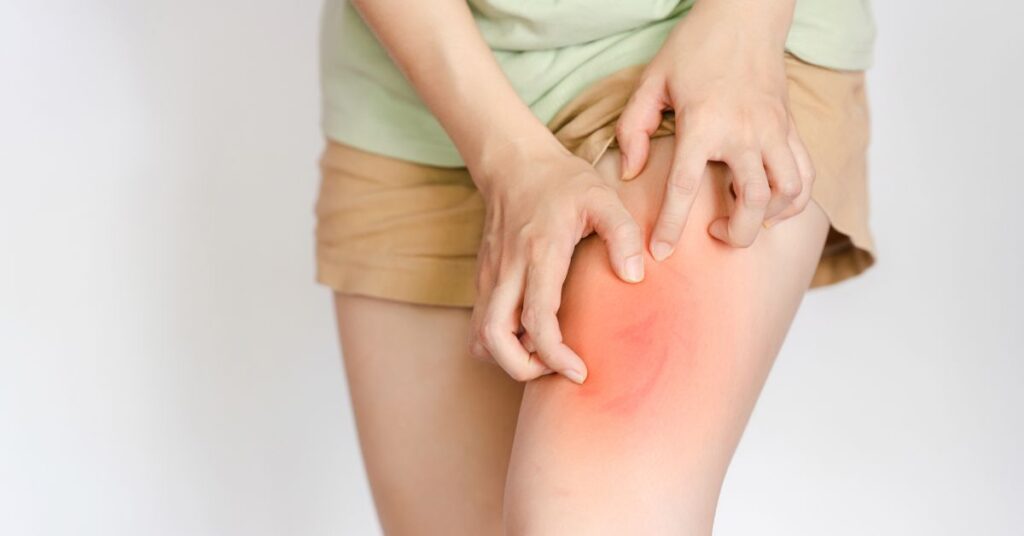
No, isopropyl alcohol won’t reliably cure a tinea infection and can sting sore skin; proven antifungals clear it more reliably.
An itchy ring-shaped rash can make you reach for rubbing alcohol. It feels like it should wipe out “germs” on contact. Ringworm isn’t a surface stain, though. It’s a fungus living in the top layer of skin, and it hangs on unless you treat it like the fungal infection it is.
Below, you’ll see why alcohol doesn’t hold up on skin, what treatments actually work, and how to keep the rash from bouncing back.
What Ringworm Is And How People Catch It
Ringworm is the everyday name for “tinea,” a dermatophyte fungus that feeds on keratin in skin, hair, and nails. On the body it often forms a round or oval patch with a scaly, raised edge and a calmer center. It can itch, burn, or feel tight.
Tinea spreads through skin contact, animals, and shared items. Towels, gym mats, brushes, hats, and tight shoes can all carry it. Sweat and friction help it thrive, so groin folds and toes are common hot spots. If you treat one patch but leave athlete’s foot or a pet source untreated, the rash can return.
Can Rubbing Alcohol Kill Ringworm? What Helps Instead
Rubbing alcohol (often 70% isopropyl alcohol) kills many bacteria and some viruses on hard surfaces. On living skin, it flashes off fast and doesn’t stay wet long enough for dependable antifungal action. It also dries the skin barrier, which can worsen itching and cracking.
Skin antifungals are the standard for ringworm. Steroid creams can make a fungal rash spread and look less obvious, so skip them unless a clinician tells you otherwise.
Using Rubbing Alcohol On Ringworm Skin: Why It Falls Short
Alcohol works best when it stays in contact with the target at the right strength on a surface that doesn’t soak it up. Skin fails that test.
It evaporates before it can do much
On skin, alcohol spreads thin, warms up, and evaporates. That short wet time makes results spotty.
The fungus sits under scale
The active edge of ringworm is often thick with flaking skin. Fungal strands can sit under that scale. Alcohol may hit the surface and still miss what’s growing underneath.
Irritation can spread it
Alcohol can sting inflamed patches. That sting often leads to rubbing or scratching, which moves fungal material to nearby skin and under nails.
It can delay the right diagnosis
Many rashes mimic ringworm, including eczema, psoriasis, and contact reactions. Alcohol can dry any rash for a day and make it look different without fixing the cause. If the border keeps expanding, it’s time to switch tactics.
What To Do At Home For Most Mild Patches
For small areas on the body, groin, or feet, over-the-counter antifungal products are often enough. The win comes from using them correctly and long enough.
Choose one antifungal product
Look for terbinafine, clotrimazole, miconazole, or butenafine. Pick a cream for dry, scaly skin. Pick a gel or spray for areas that stay sweaty. Don’t rotate products day to day; stick with one so you can judge progress.
If you like checking the “why” behind the steps, two pages are worth a skim: CDC ringworm treatment guidance for the public-health basics, and the American Academy of Dermatology’s ringworm treatment page for how dermatologists handle different body areas.
Apply past the visible edge
Tinea grows outward. Apply medication to the rash and about 1–2 cm beyond the border. Wash hands after each application, or use a cotton swab to avoid smearing fungus.
Keep treating after it looks better
Redness and itch often fade before the fungus is gone. Many regimens run 2–4 weeks. The NHS notes that daily antifungal treatment can be needed for up to 4 weeks and should be used for the full time even if the rash seems to clear. NHS ringworm advice explains what to expect.
Cut moisture and friction
Dry the area fully after bathing and workouts, especially between toes and in skin folds. Change socks and underwear daily. Loose, breathable clothing helps the skin stay drier while it heals.
Reduce spread at home
Use your own towel and don’t share brushes, hats, helmets, or nail clippers. Wash bedding and workout clothes regularly. If a pet has bald or scaly patches, a vet visit matters, since animals can pass tinea back to people.
| Option People Try | Upside | Downside For Ringworm |
|---|---|---|
| Rubbing alcohol | Dries quickly | Short contact time; can burn irritated skin; unreliable cure |
| Hydrogen peroxide | Easy to find | Skin irritation risk; not a proven tinea treatment |
| Vinegar | Cheap | Stings and can inflame skin; results vary |
| Tea tree oil | Some antifungal activity | Allergic reactions are common; strength varies by product |
| Bleach mixtures | Kills fungi on surfaces | Not safe for skin; can cause chemical burns |
| OTC antifungal cream | Made for skin fungi | Needs consistent use for the full course |
| Antifungal powder or spray | Helps keep feet drier | Often works best as an add-on to cream |
| Prescription oral antifungal | Treats scalp, nails, severe cases | Needs medical supervision and lab checks at times |
When A Clinician Visit Saves Time
Some cases need more than a tube from the pharmacy. Getting help early can spare weeks of trial and error.
Scalp, beard, or nails
Scalp ringworm often needs oral medicine because hair follicles hide the fungus. Nail infections can look fungal and still be trauma or psoriasis, so confirmation matters.
Face, genitals, or widespread patches
Delicate skin areas react strongly to the wrong product. Spreading rashes may need prescription-strength options or testing to rule out look-alikes.
No improvement after steady use
If you’ve used an antifungal as directed for 10–14 days and the border still expands, get checked. A clinician may scrape the skin for a quick test or change the medicine.
Repeat relapses
When ringworm keeps returning, an untreated source is common: athlete’s foot, shared towels, damp shoes, or a pet. The AAD self-care tips for ringworm treatment list habits that cut spread and reinfection.
What Healing Usually Looks Like
Ringworm often improves from the center outward. Itch and burning usually calm first. Next, the raised rim flattens and scaling drops off. The patch can stay pink or brown for a while after the fungus is gone, especially on deeper skin tones or after lots of scratching. That leftover color change isn’t the same as active infection.
Track progress by watching the edge. If the border keeps moving outward, treatment isn’t working or reinfection is happening. If the edge stops spreading and the scale thins day by day, you’re on the right path. If you’re unsure, snap a photo in the same lighting every few days so you’re not guessing.
One snag: peeling skin can look worse for a few days after you start cream. That can be normal as dead scale lifts. Don’t scrape it off; let it shed in the shower, then dry well and reapply medicine. If the patch becomes hot, swollen, drains pus, or you get fever, stop home care and get checked, since bacteria can join in. For kids, trim nails and cover the patch with loose cotton so scratching drops.
| Situation | Home Step | Next Step If It Doesn’t Improve |
|---|---|---|
| One small body patch | OTC antifungal for the full label course | Clinician visit if growth continues after 10–14 days |
| Groin fold rash | Cream plus keeping the area dry | Medical visit if pain, oozing, or spread occurs |
| Athlete’s foot | Treat feet and dry shoes between wears | Check for bacterial infection if cracks worsen |
| Scalp scaling or hair loss | Don’t share combs or hats | Clinician visit for oral antifungal medicine |
| Nail thickening | Keep nails short and dry | Confirmation and treatment plan with a clinician |
| Multiple large patches | Start topical treatment right away | Medical care for prescription options and testing |
| Diabetes, immune suppression, infant skin | Avoid self-treating without advice | Medical guidance before starting any drug |
Cleaning And Laundry That Help Without Going Overboard
You don’t need to bleach the whole house. You do need to stop reintroducing fungus from items that touch skin daily.
Use a fresh towel after each shower until the rash is gone. Wash towels, underwear, socks, and workout gear regularly, then dry fully. Don’t leave damp clothes in a pile where they stay wet for hours.
Let shoes dry between wears. Rotate pairs if you can. Wipe down gear that touches sweaty skin, like shin guards and mat surfaces. If the infection is on the scalp, don’t share pillowcases, brushes, or hats, and wash pillowcases often during treatment.
Habits That Drag Treatment Out
- Stopping early. The itch can fade before the fungus is gone.
- Using steroid cream. It can calm redness while tinea keeps spreading.
- Only treating the “main” patch. Treat feet and groin issues at the same time.
- Reusing contaminated items. Damp towels and unwashed hats are frequent culprits.
- Shaving or scratching over the rash. It moves fungal material and inflames follicles.
Starter Checklist Before You Begin
- Pick one antifungal product and follow the label timing.
- Apply beyond the border and wash hands right after.
- Keep the area dry and switch to clean socks or underwear daily.
- Don’t share towels, hats, brushes, or nail tools.
- Treat athlete’s foot at the same time if your toes itch or peel.
- Plan to treat for the full course even once the rash looks calmer.
- See a clinician for scalp, nails, face, genitals, widespread rash, or no improvement after 10–14 days.
Rubbing alcohol can make skin feel clean, yet ringworm usually needs an antifungal product plus dry-skin habits to stop reinfection. Most mild patches improve within days and clear over a few weeks when you stay consistent.
References & Sources
- Centers for Disease Control and Prevention (CDC).“Treatment of Ringworm and Fungal Nail Infections.”Summarizes standard antifungal treatments and warns against steroid creams on suspected ringworm.
- American Academy of Dermatology (AAD).“Ringworm: Diagnosis and treatment.”Explains typical medical treatment options and expected duration.
- National Health Service (NHS).“Ringworm.”Outlines common symptoms, treatment length, and when to seek medical care.
- American Academy of Dermatology (AAD).“Ringworm: 12 tips for getting the best results from treatment.”Gives practical habits that reduce spread and reinfection during treatment.

Mo Maruf
I created WellFizz to bridge the gap between vague wellness advice and actionable solutions. My mission is simple: to decode the research and give you practical tools you can actually use.
Beyond the data, I am a passionate traveler. I believe that stepping away from the screen to explore new environments is essential for mental clarity and physical vitality.