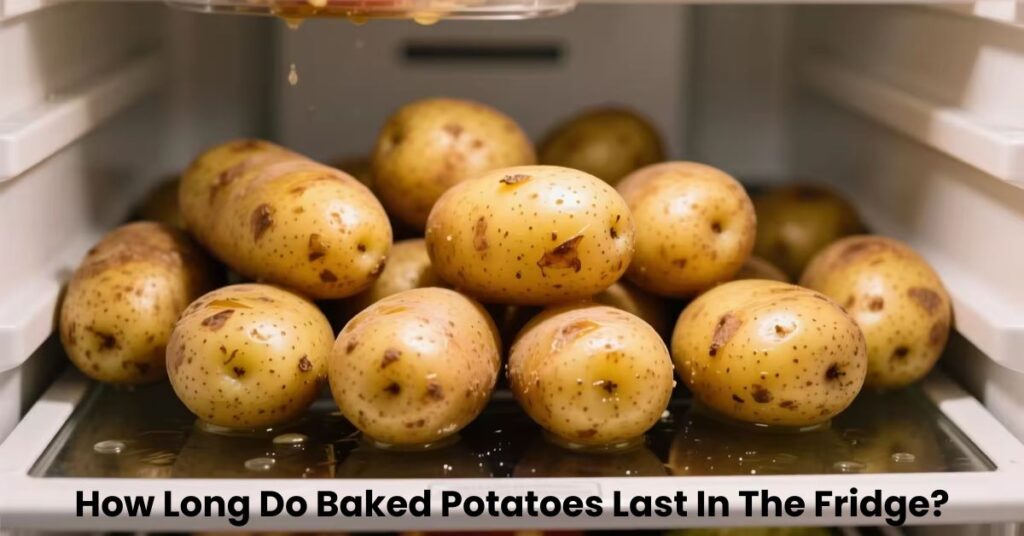
Cooked baked potatoes keep 3–4 days in the fridge when chilled within 2 hours, stored in a lidded container, and held at 40°F or colder.
You open the fridge and spot yesterday’s baked potatoes. Maybe you made extras on purpose. Maybe dinner ran long and you stashed them away and forgot.
Either way, you’re staring at them now and wondering if they’re still a good bet. This is one of those leftover moments where a clear rule beats a sniff test.
If you’re asking, “How Long Do Baked Potatoes Last In The Fridge?” the safe window is short: plan to eat them within 3 to 4 days. After that, toss them or switch to the freezer plan below.
How long baked potatoes last in the fridge, day by day
For most cooked leftovers, the refrigerator limit is four days. FoodSafety.gov’s leftovers storage tips spell out “use cooked leftovers within 4 days,” and baked potatoes fit that same rule when they’re cooled fast and stored well.
Day one and day two usually taste close to fresh. Day three is still fine, but the flesh can start to dry and turn dense. Day four is your stop sign.
The calendar starts when the potatoes come out of the oven, not when they finally reach the fridge. If they sat out too long, chilling later doesn’t undo that time.
When 3 days beats 4
Go with a 3-day plan when the potato is cut open, handled a lot, or loaded with dairy toppings. Sour cream, cheese sauce, and creamy fillings spoil sooner than plain potato.
If you stuffed the potato with another leftover, let the shortest-life ingredient set the limit. A potato stuffed with yesterday’s chili doesn’t get a fresh four-day clock.
If you can’t say which day you baked it, treat that as past its window. Labeling takes seconds and saves you from guessing later.
Why the fridge timer matters
Baked potatoes feel harmless because they’re simple. But after baking, they’re also warm, moist, and packed with starch. That combo can feed bacteria if the potato sits in the wrong temperature range for too long.
The fridge doesn’t kill germs. It slows them down. That’s why the “two hours on the counter” rule and the “four days in the fridge” rule work together. The first rule limits warm time. The second caps total cold storage time.
Texture is the other reason. Potatoes change in the fridge. The starch firms up, moisture shifts, and the fluffy interior can go mealy. You can reheat and bring back softness, but you can’t rewind days of drying.
So the timer is doing two jobs at once: it keeps you out of risky leftovers territory, and it keeps you from eating a potato that tastes like packing foam.
Storage moves that keep leftovers safe and tasty
Baked potatoes hold heat longer than many leftovers. Cooling and packing make the biggest difference, and you don’t need fancy gear.
Cool them fast and get them into the fridge
FoodSafety.gov’s two-hour rule reminder is the one to stick with: refrigerate leftovers within two hours, and within one hour in hot weather.
Don’t pile hot potatoes in a deep bowl. Spread them out for a short rest, then move them into the fridge so the center cools sooner.
What to do if the potato is still hot
Split large potatoes in half before chilling. More surface area lets heat escape. If you worry about warming the fridge, use two small containers instead of one large one.
Skip tight foil when storing
Foil is fine for baking, but tight foil plus time at room temperature is a bad combo. The CDC’s botulism prevention page calls out foil-wrapped baked potatoes and says to keep them hot until served or refrigerate them with the foil loosened so air can get in.
So, if you baked in foil, open it up when the potatoes come out. Let steam escape, then store the potatoes in a container with a lid. If you keep a bit of foil on top, leave it loose.
Keep the fridge cold enough
The refrigerator target is 40°F or below. The FDA’s fridge thermometer advice suggests keeping an appliance thermometer in the fridge and checking that it stays at or below 40°F.
Store baked potatoes on a middle shelf toward the back, not in the door. The door warms each time it swings open, and potatoes don’t need that extra stress.
Pack for texture, not just safety
Air in the fridge dries potatoes out. A lidded container slows that drying. If you love crisp skin, store potatoes uncut, then reheat in the oven.
Keep toppings separate when you can. Cold sour cream on a hot potato is great. Sour cream that’s been reheated into the potato is… not great.
If you’re meal prepping, bake potatoes plain, then add toppings at serving. Reheated potato plus fresh herbs, salsa, or steamed broccoli tastes brighter than a fully loaded leftover next day.
| Storage situation | Fridge time | Smart move |
|---|---|---|
| Plain baked potato, chilled fast, stored in a lidded container | 3–4 days | Label the cook day and stop at day four. |
| Potato cut open before chilling | Up to 3 days | More exposed surface dries and spoils sooner. |
| Twice-baked or stuffed potato with dairy | Up to 3 days | Chill in a shallow container; reheat to 165°F. |
| Potato with sour cream, cheese sauce, or chili already added | 1–3 days | Let the topping set the limit, not the potato. |
| Foil-wrapped potato stored with foil kept tight | Avoid | Loosen or remove foil; store with airflow. |
| Potato left out up to 2 hours, then chilled | 3–4 days | Start counting from cook day. |
| Potato left out over 2 hours (or 1 hour in heat) | Toss | Don’t gamble; chilling later won’t fix it. |
| Fridge above 40°F for unknown time | Toss or freeze same day | Check temps with a thermometer, then decide. |
| Batch you won’t finish by day four | Freeze early | Freeze while texture is still good. |
Signs a baked potato should be tossed
Time tracking is your best tool. A potato can smell fine and still be past its safe window. If it’s day five, it’s trash day.
When you do check the potato, use simple cues. You’re not trying to play food detective. You’re trying to avoid a bad meal.
What you can see and feel
- Sticky or slimy skin: That slick film is a common spoilage sign.
- Mold anywhere: Fuzzy spots mean it’s done. Don’t cut around it.
- Pool of liquid in the container: Moisture speeds spoilage and makes the potato gummy.
What you can smell
A baked potato has a mild, earthy smell. If you get sour, yeasty, or “off” notes, toss it. If you feel unsure, stop and discard it.
Reheating baked potatoes so they stay fluffy
Cold baked potatoes can reheat well, but the method matters. A rushed reheat dries the middle, then you try to rescue it with extra butter.
Oven reheat for crisp skin
- Heat the oven to 350°F.
- Split the potato lengthwise and set it cut-side down on a sheet.
- Warm 15–20 minutes, until hot through.
If you want that restaurant-style skin, this is the move. You can also rub a little oil on the skin before reheating to bring back crispness.
Microwave reheat for speed
- Pierce the skin a couple of times.
- Wrap the potato in a damp paper towel.
- Microwave in 45–60 second bursts, turning each time.
The damp towel adds steam and helps the flesh stay tender. If you want a bit of crisp, finish with a minute or two in a hot pan.
Reheat target temperature
Leftovers should be reheated until steaming hot all the way through. For stuffed potatoes, check the center with a probe thermometer and aim for 165°F.
Freezing baked potatoes when 4 days won’t work
Freezing is the move when you made a big batch or your week got busy. Frozen food stays safe for a long time, though texture can fade. Freezing sooner helps.
Freeze plain baked potatoes
- Chill the potatoes in the fridge first.
- Wrap each potato in parchment or wax paper, then place in a freezer bag.
- Press out air, label the date, and freeze.
Pressing out air cuts freezer dryness. When you’re ready to eat, thaw in the fridge overnight, then reheat in the oven for better texture.
Freeze twice-baked potatoes
Twice-baked potatoes freeze well because the filling is already mixed. Chill them, freeze on a tray until firm, then pack. Reheat at 350°F until hot through, and add a small splash of milk if the filling looks dry.
| Reheat method | Best for | Tip |
|---|---|---|
| Oven at 350°F | Crisp skin and fluffy center | Split and heat cut-side down. |
| Microwave with damp towel | Fast lunch potato | Use short bursts and turn each time. |
| Skillet finish | Extra crisp edges | Warm first, then sear briefly. |
| Oven from frozen | Frozen plain potatoes | Allow extra time; check the center. |
| Oven, foil loose on top | Stuffed or twice-baked | Loose foil slows surface drying. |
| Microwave then oven | Speed plus crisp skin | Warm through, then crisp the skin. |
A simple fridge routine you’ll keep doing
If you want fewer “Is this still okay?” moments, set a small routine and stick with it.
- Cook day: Let potatoes vent, then chill within two hours.
- Storage: Use a lidded container on a back shelf.
- Label: Write the cook date and the day-four toss date.
- Toppings: Store cold toppings in separate containers.
- Plan: If you won’t eat them by day four, freeze on day one or day two.
That’s it. Once it becomes habit, baked potatoes turn into one of the easiest leftovers in the fridge.
References & Sources
- FoodSafety.gov.“People at Risk of Food Poisoning.”Lists the “use cooked leftovers within 4 days” rule and cooling tips.
- FoodSafety.gov.“Leftovers: The Gift that Keeps on Giving.”Explains the two-hour rule, shallow containers, four-day reminder, and 165°F reheat target.
- U.S. Food and Drug Administration (FDA).“Refrigerator Thermometers – Cold Facts about Food Safety.”Gives the 40°F refrigerator limit and thermometer advice.
- Centers for Disease Control and Prevention (CDC).“Home-Canned Foods | Botulism.”Notes safe handling for foil-wrapped baked potatoes and how to reduce botulism risk.

Mo Maruf
I created WellFizz to bridge the gap between vague wellness advice and actionable solutions. My mission is simple: to decode the research and give you practical tools you can actually use.
Beyond the data, I am a passionate traveler. I believe that stepping away from the screen to explore new environments is essential for mental clarity and physical vitality.