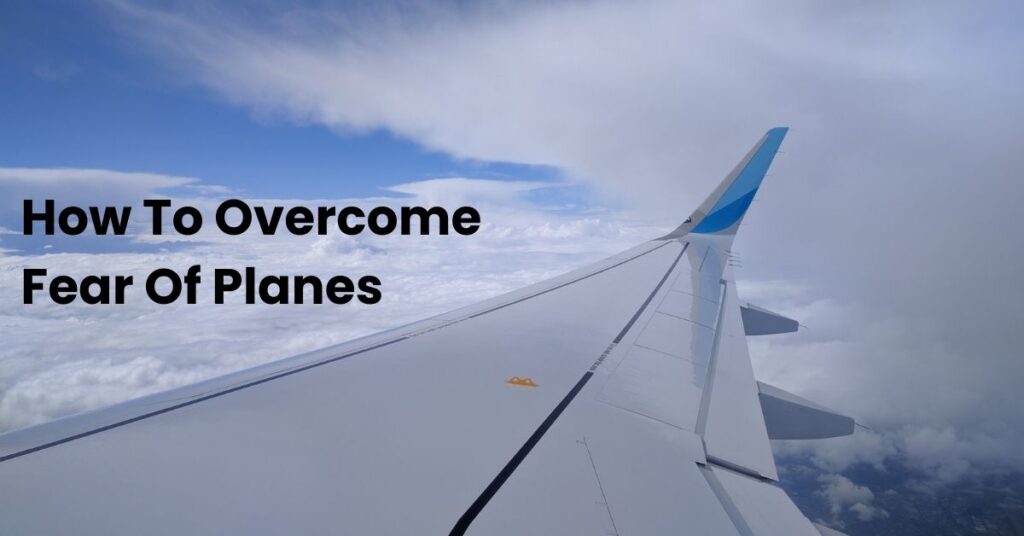
Flight fear can shrink when you learn what the aircraft is doing, rehearse a steady breathing pattern, and follow a simple plan from door to landing.
If flying makes your stomach flip, you’re not alone. The tough part is that air travel often feels like a loss of control: you can’t pull over, you can’t see the “road,” and you’re surrounded by strangers. If you’re searching how to overcome fear of planes, start with a plan you can repeat.
This article gives you a practical way to handle that feeling. You’ll get clear steps for before, during, and after a flight, plus small habits that build confidence trip by trip.
Common Triggers And What To Do In The Moment
| Trigger | What It Often Feels Like | First Move That Can Settle You |
|---|---|---|
| Boarding door closes | “No way out” thoughts, tight chest | Plant both feet, loosen shoulders, name five things you can see |
| Engine spool-up | Startle response, racing mind | Remind yourself: loud equals power, not danger; start slow nasal breaths |
| Takeoff push back | Heart thumps, sweaty hands | Grip armrest for three breaths, then relax fingers one by one |
| Turbulence bumps | Jolt of fear, urge to brace | Check the crew: if they’re calm, match their body language; keep belt snug |
| Banking turns | “We’re tipping” worry | Look at the wing: the aircraft is built to fly in that angle; keep gaze steady |
| Cabin noises | “What was that?” spirals | Label it “normal sound,” then return to a task like counting breaths |
| Seat belt sign | Anticipation dread | Tell yourself the goal is injury prevention; keep belt on low and tight |
| Landing drop feeling | Stomach lift, fear spike | Exhale longer than you inhale and press tongue to roof of mouth |
Notice the pattern: fear flares when your brain can’t predict the next sensation. Your job isn’t to “feel nothing.” Your job is to give your body a repeatable response that says, “I can ride this out.”
How To Overcome Fear Of Planes
Use this as your main plan. It’s simple on purpose, because a stressed brain hates complicated instructions.
Step 1: Pick One Anchor Skill
An anchor skill is a short action you can do anywhere that tells your nervous system to downshift. A steady breathing pattern works well because you can’t forget it in a seat.
Try this: inhale through your nose for a count of four, pause for one, then exhale through pursed lips for a count of six. Repeat for two minutes. The longer exhale nudges your body toward a calmer state.
Step 2: Learn What “Normal” Feels Like In A Plane
A lot of flight fear comes from misreading normal sensations as warnings. Planes make noises because systems move: flaps, landing gear, pressurization valves, and pumps. The cabin also warms and cools in cycles. None of that means the aircraft is in trouble.
Airliners have backup systems and crews train for rare failures, so routine noises don’t hint at catastrophe.
If turbulence is your main trigger, read an official overview of what it is and why seat belts matter. The FAA’s page on turbulence safety explains common causes and why bumps are expected.
Step 3: Replace “What If” With “What Now”
Fear likes big, blurry questions. Swap them for small, concrete ones you can answer in a seat. “What now?” can be: “Are my feet flat? Is my jaw unclenched? Am I breathing out longer than in?”
Each time you answer those, you prove you can steer your body even when you can’t steer the aircraft.
Step 4: Use A Two-Part Reframe For Turbulence
Part one is physics: turbulence is air movement, like bumps on a road. It can feel rough, yet aircraft are built and tested for far more stress than routine bumps. Part two is behavior: your seat belt is your safety device. Keep it snug any time you’re seated, even when the sign is off.
That combo turns turbulence from a mystery into a known event with a clear action.
Step 5: Practice The Exact Day You’ll Fly
Rehearsal works when it matches the real scene. The day before your flight, sit in a chair for ten minutes with your belt buckled. Play cabin noise audio if it helps. Then run your anchor skill and a short script: “Buckle. Breathe. Shoulders down. Next step.”
This kind of practice doesn’t erase fear. It makes fear less bossy.
Build A Pre-Flight Routine That Cuts Stress
The airport itself can raise tension. A routine gives you fewer choices to juggle, which reduces mental load.
Plan Your Seat With Your Trigger In Mind
If bumps scare you, many flyers prefer a seat over the wing, where motion can feel steadier. If feeling boxed in bothers you, an aisle can bring relief because you can stand up more easily.
Pick a seat based on comfort, not on superstition.
Pack A “Seat Kit” You’ll Actually Use
- Water and a light snack you know sits well
- Noise-reducing headphones or earplugs
- A pen and a small card with your breathing counts
- A playlist, podcast, or audiobook you already like
- A soft layer, since cabins can run cool
Keep the kit small. If it’s a hassle, you won’t pull it out.
Choose One Person To Tell
You don’t need a big confession. A line to a travel partner or a flight attendant like “I get nervous during takeoff” can lower pressure. You’re no longer acting.
If you’re flying alone, write the same line on your phone notes. Naming it can take some bite out of it.
What To Do During Takeoff, Cruise, And Landing
Think of the flight as three short phases. Each phase has a default plan, so you don’t have to invent one mid-air.
Takeoff: Give Your Body A Job
- Feet flat, back supported, belt low across hips.
- Start your breathing pattern as the aircraft lines up.
- Pick a focus point: the seat in front of you, a corner of the window frame, or your watch face.
- Count ten slow exhales. Ten is a finish line your brain can hold.
If your mind shouts, “This is too much,” answer with a tiny instruction: “Exhale.” One word is enough.
Cruise: Ride The Middle Without Scanning For Doom
Many nervous flyers spend cruise time watching every sound and every ding. That keeps your body on alert. Try this instead: set a timer for twenty minutes and do one quiet task until it ends.
Good tasks are simple: a puzzle, a light show, sorting photos, or writing a short plan for what you’ll do after landing.
When you catch yourself scanning, return to the task without arguing with the thought.
Landing: Expect Sensations, Not Surprises
On descent, you may feel ear pressure, a change in engine tone, and gentle turns. That’s the aircraft lining up and managing speed. Remind yourself that landing includes planned power changes. It isn’t “falling,” even when your stomach lifts.
Use the same breathing pattern you used on takeoff. Familiar equals steadier.
When Fear Feels Bigger Than Tips
Some people can’t fly at all, or they fly while feeling sick for days before the trip. If that’s you, it may help to work with a qualified clinician on graded exposure and skills training.
The NHS explains common treatment options for phobias, including gradual exposure and talking therapy, on its page about phobia treatment. If your fear is tied to panic attacks, trauma, or broader anxiety, getting personal care can make flights feel manageable.
If you use medication for anxiety, follow advice from a licensed prescriber and avoid mixing sedatives with alcohol. Your goal is to stay alert and steady.
Overcoming Fear Of Planes Before Your Next Trip
Here’s a simple build-up you can start today. It’s meant to be repeatable, not heroic.
Start With Micro-Exposure
Spend five minutes doing one flight-adjacent thing without rushing. Watch a takeoff video, sit with the cabin sound, or read a plain-language explanation of turbulence. Then do your anchor breaths and stop. Ending on purpose teaches your brain you’re in charge.
Use A Realistic Script
A script isn’t positive thinking. It’s a short set of lines you’ll use in the seat when fear spikes. Keep it blunt:
- “Bumps happen. Belt stays on.”
- “No need to solve the whole flight. Next breath.”
- “I can feel scared and still sit here.”
Pick A Post-Flight Reward
Give yourself something pleasant that starts after landing: a favorite meal, a shower, a walk, or a call with someone you like. Your brain learns from endings. A decent ending makes the next flight less intimidating.
Pre-Flight Timeline You Can Follow
| When | What To Do | What It Changes |
|---|---|---|
| 7 days out | Book seat that fits your trigger; add airport buffer time | Less rushing, fewer “unknowns” |
| 3 days out | Do two chair rehearsals with your breathing pattern | Turns skills into muscle memory |
| Night before | Pack the seat kit; set out clothes; plan a light meal | Cuts morning decision fatigue |
| At the airport | Walk, sip water, keep caffeine moderate | Lowers body jitters that mimic fear |
| Boarding | Tell one person you’re nervous; buckle early | Reduces pressure to “act fine” |
| During bumps | Check crew posture; exhale longer; keep belt snug | Shifts you from alarm to action |
| After landing | Write one win and one tweak for next time | Builds confidence through proof |
Make Your Next Flight A Little Easier
Fear often fades in layers. One flight might feel rough, then the next feels manageable because you finally have a plan. Stick with the basics: buckle, breathe, give your mind a task, and let the crew do their job.
If you want a single sentence to carry into the cabin, use this: “I don’t need to feel calm to take this flight; I need to keep doing the next small step.”
On your next trip, keep the plan short, keep the belt on, and treat each minute you stay with it as proof that how to overcome fear of planes is a learnable skill.
References & Sources
- Federal Aviation Administration (FAA).“Turbulence: Staying Safe.”Explains what turbulence is and why seat belts reduce injury risk.
- NHS (UK National Health Service).“Treatment – Phobias.”Outlines common care options like graded exposure and talking therapy.

Mo Maruf
I created WellFizz to bridge the gap between vague wellness advice and actionable solutions. My mission is simple: to decode the research and give you practical tools you can actually use.
Beyond the data, I am a passionate traveler. I believe that stepping away from the screen to explore new environments is essential for mental clarity and physical vitality.