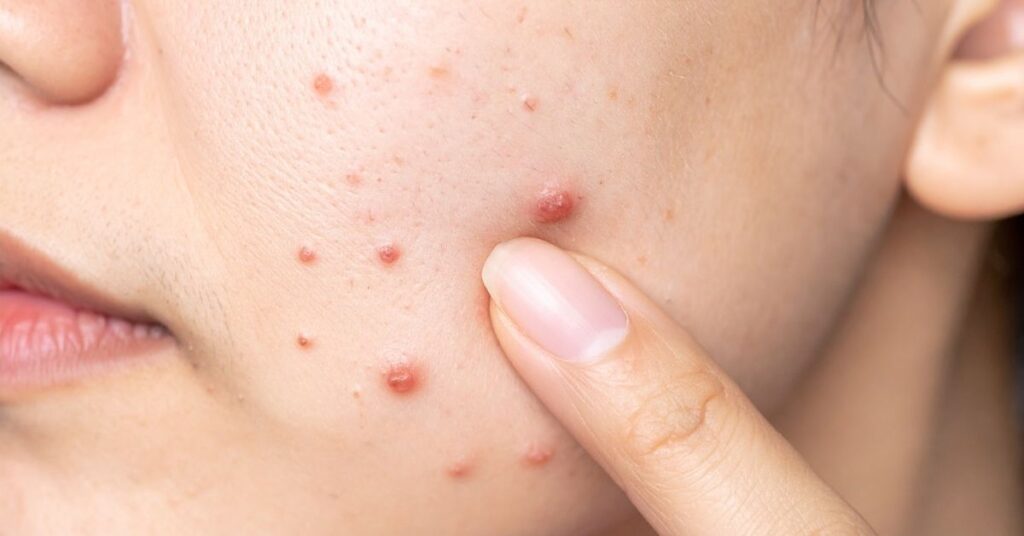
Pimple redness drops when you cool swelling, stop picking, use mild skin care, and guard the area with daily sunscreen.
A red pimple can feel louder than the rest of your face. The goal isn’t to “erase” it in five minutes. The goal is to calm the angry skin fast, avoid extra irritation, and keep the red mark from hanging around.
You’ll get a plan for the first hour, the first day, and the next week, plus clear early signs for a dermatologist visit.
| Situation | What To Do Now | Notes |
|---|---|---|
| Fresh, swollen pimple | Cold compress 5–10 minutes, rest 10 minutes, repeat up to 3 rounds | Wrap ice in clean cloth; don’t press hard |
| Tender deep bump under skin | Cold compress, then a thin layer of benzoyl peroxide once | Skip heat; heat can push more redness |
| Pimple you picked or popped | Rinse with lukewarm water, pat dry, dab plain petrolatum | Goal is sealing the spot so it can settle |
| Dry, stinging skin from acne meds | Pause actives for 24–48 hours, use fragrance-free moisturizer | Redness from irritation needs barrier repair |
| Flat red mark after the bump | Daily broad-spectrum SPF 30+, gentle cleanser, no scrubs | Sun can darken marks and slow fade |
| Redness you need to hide today | Use a light green-tint corrector, then a non-comedogenic base | Tap on with clean fingers or sponge |
| Pimple in beard or shaving zone | Skip shaving over it, rinse after sweat, keep blades clean | Friction keeps the area red |
| Large painful spot that keeps growing | Book a dermatologist visit | In-office care can shrink some breakouts fast |
Why Pimples Look Red
Redness is a sign of inflammation. Your immune system sends extra blood flow to the pore when it senses bacteria, oil buildup, or a tiny break in the follicle wall. That rush of blood brings heat, swelling, and that sharp red ring.
Two kinds of red color can show up:
- Active inflammation: the pimple is raised, tender, and warm.
- Leftover redness: the bump is flat or almost flat, yet a pink or red mark stays behind.
The steps below target both. First you calm swelling. Then you protect the skin so it can clear the red stain on its own schedule.
How To Make Pimple Redness Go Away Faster At Home
When you’re trying to cut redness, gentle wins. Scrubbing, harsh alcohol toners, and repeated spot treatments can turn one red dot into a red patch.
Start With Cold, Not Heat
Cold slows blood flow for a bit and can ease swelling. Use an ice cube wrapped in a clean cloth or paper towel. Hold it on the spot for 5 to 10 minutes. Take a 10-minute break. Repeat up to two more rounds.
If you have broken skin from picking, keep the cloth between the ice and the spot. Cold burn looks a lot like pimple redness, and nobody wants that trade.
Clean The Area With A Mild Wash
Wash with lukewarm water and a mild, non-abrasive cleanser. Use your fingertips and rinse well. Pat dry. That’s it.
If you’re unsure what “mild” looks like, the AAD acne skin-care tips from dermatologists spell out habits that reduce irritation while you treat breakouts.
Pick One Spot Treatment And Keep It Thin
Red pimples are often inflamed pimples, so a light touch matters. Choose one of these and stick with it for the day:
- Benzoyl peroxide (2.5% is plenty): helps reduce acne-causing bacteria. Use a pea-size amount for the whole area, not a thick dab.
- Salicylic acid (0.5% to 2%): helps clear clogged pores. Use once if you’re prone to dryness.
- Adapalene (0.1%): a retinoid that helps prevent clogged pores. Use at night, and start every other night if you’re new.
If your skin stings, flakes, or feels tight, skip actives for a day and stick with moisture. Redness from irritation often lasts longer than the pimple itself.
Seal A Picked Spot So It Can Settle
If you popped a pimple or scratched it open, treat it like a tiny wound. Rinse with lukewarm water. Pat dry. Add a thin film of plain petrolatum. This keeps the surface from drying and cracking, which can keep it red.
Skip acids and benzoyl peroxide on open skin. They can sting and prolong redness.
Use Sunscreen Every Morning
Sun exposure can deepen marks and slow clearing, even on cloudy days. Use a broad-spectrum sunscreen with SPF 30 or higher. Pick a formula labeled non-comedogenic if you break out easily.
The NHS acne advice also warns against harsh washing and squeezing, both of which can leave lasting marks.
Hide Redness Without Rubbing It In
If you need the spot to look calmer right now, start with a green-tint corrector on the red area. Tap it on. Then apply your base makeup with a light hand. Finish with a small tap of powder if you use it.
Take your makeup off at night with a gentle cleanser. Rubbing hard can keep that red ring hanging around.
How To Make The Redness Of Pimples Go Away
You’ll get the fastest visual change by working in time blocks. Here’s a simple rhythm you can follow when you’re staring at the mirror and thinking about how to make the redness of pimples go away without making things worse.
The First Hour
- Cold compress in short rounds.
- Wash gently, then leave it alone.
- If the skin is intact, use one thin spot treatment.
Stop there. A red pimple doesn’t respond well to constant fiddling. Touching it all day adds friction and bacteria.
The First Day
Keep your routine simple. Cleanse once in the morning and once at night. Use a light moisturizer if you feel dry. Use sunscreen in the morning.
If you choose benzoyl peroxide or salicylic acid, don’t stack both. Layering multiple acne actives in one day often makes redness spread past the pimple.
Days Two Through Seven
This is when leftover redness fades. Stay consistent with sunscreen. Keep picking off the table. If you use adapalene, keep to your schedule and pair it with moisturizer.
When the bump is flat, you can shift from “calm swelling” to “keep pores clear.” That’s when gentle retinoid use, steady cleansing, and non-comedogenic products pay off.
What Not To Do When You Want Less Redness
Some habits feel satisfying in the moment, yet they keep redness alive. These are the big ones to drop:
- Squeezing or digging: it pushes inflammation deeper and can cause marks or scars.
- Hot water and steam: heat can widen blood vessels and make the red halo brighter.
- Harsh scrubs and brushes: friction turns a small pimple into a larger irritated zone.
- Alcohol-heavy toners: they can strip the surface and trigger stinging redness.
- Switching products daily: your skin needs a steady routine to settle.
If you’re frustrated, aim your energy at consistency. A simple routine done daily beats a chaotic mix of “fixes.”
| Option | When It Fits | How To Apply |
|---|---|---|
| Cold compress | Swollen, tender pimple | 5–10 minutes on, 10 minutes off, up to 3 rounds |
| Plain petrolatum | Picked or cracked surface | Thin film after gentle rinse and pat-dry |
| Benzoyl peroxide 2.5% | Inflamed pimple with intact skin | Thin layer once daily; wash hands after |
| Salicylic acid 0.5%–2% | Clogged pores and small bumps | Use once daily, then adjust based on dryness |
| Adapalene 0.1% | Repeat breakouts in same zones | Pea-size for full face at night, start every other night |
| Fragrance-free moisturizer | Dryness, peeling, tight skin | After cleansing; pair with acne meds as needed |
| SPF 30+ broad-spectrum | Any red mark after acne | Every morning; reapply with sun exposure |
Red Marks After The Bump Is Gone
Sometimes the pimple flattens, yet the pink mark stays. That’s common. It often fades on its own over weeks, and daily sunscreen helps it fade more evenly.
What helps at home:
- Steady sun protection: this is the simplest step that keeps red marks from lasting longer.
- Gentle routine: mild cleanser, moisturizer, and one acne active you tolerate.
- Don’t pick: each round of picking can reset the clock on redness.
If you also see brown marks, you may be dealing with post-acne dark spots. Those follow a different path. Sun protection still helps, and a dermatologist can match treatments to your skin tone and mark type.
When A Dermatologist Can Help
Home steps work well for small breakouts and mild redness. Some pimples need medical help, mainly the deep, painful kind that sits under the skin or keeps returning in the same spot.
See a dermatologist if any of these fit:
- The pimple is large, painful, and getting bigger after two days.
- You get nodules or cyst-like bumps that linger for weeks.
- You see scars forming or dark marks that don’t fade.
- Acne is affecting wide areas of your face or body.
Dermatologists can offer prescription topicals, oral meds, or procedures that reduce swelling fast in select cases. Getting the right plan also lowers the odds of new red spots.
A Simple Seven-Day Routine That Keeps Redness Down
If you want fewer red flare-ups, build a routine you can repeat. It doesn’t need ten steps. It needs steady habits.
Morning
- Cleanse with a mild wash.
- Moisturize if you feel dry or tight.
- Apply SPF 30+ broad-spectrum sunscreen.
Night
- Cleanse to remove sunscreen and makeup.
- Apply one acne active you tolerate (benzoyl peroxide on spots, or adapalene for repeat zones).
- Moisturize if you’re using a drying acne med.
Any Time A New Red Pimple Shows Up
- Cold compress in short rounds.
- Hands off, even if it feels tempting.
- Swap to a fresh pillowcase if you get frequent breakouts.
Keep gentle steps; how to make the redness of pimples go away gets easier.
References & Sources
- American Academy of Dermatology (AAD).“Acne: Tips for managing.”Dermatologist-backed daily habits that reduce irritation while treating acne.
- National Health Service (NHS).“Acne.”Guidance on gentle cleansing and avoiding squeezing to reduce worsening and marks.

Mo Maruf
I created WellFizz to bridge the gap between vague wellness advice and actionable solutions. My mission is simple: to decode the research and give you practical tools you can actually use.
Beyond the data, I am a passionate traveler. I believe that stepping away from the screen to explore new environments is essential for mental clarity and physical vitality.