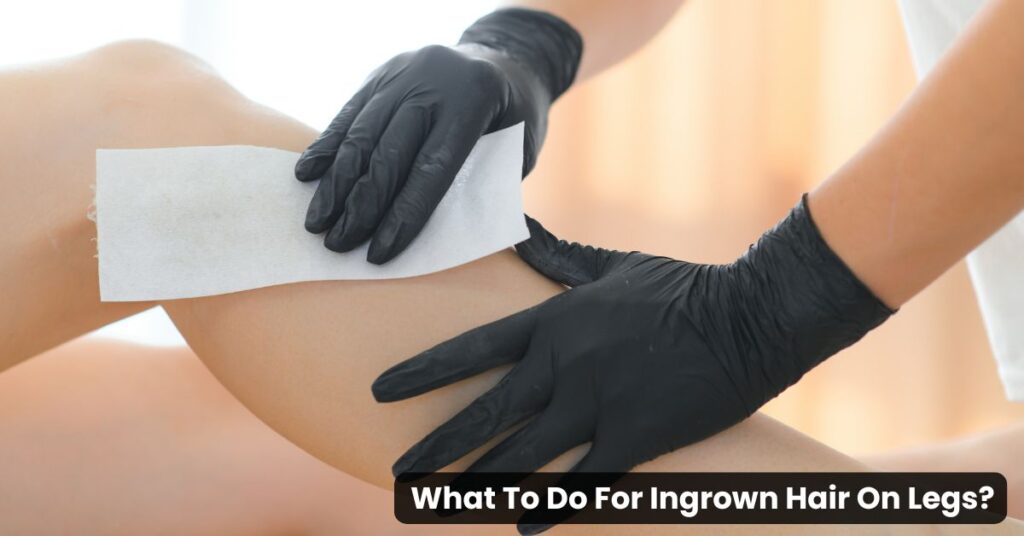
Most leg ingrown hairs settle with warm compresses, gentle exfoliation, and pausing shaving until the bump flattens.
Leg ingrown hairs have a talent for showing up where fabric rubs and sweat sits. One day it’s a tiny dot, the next it’s a sore bump that makes you side-eye your razor.
If you’re trying to fix one fast, the goal isn’t to “dig it out.” The goal is to calm the skin, soften the trapped hair, and let it exit on its own terms.
And if you keep getting them, the long game is simple: change the hair-removal habits that push hair back into the skin.
Why Ingrown Hairs Pop Up On Legs
An ingrown hair starts when a hair grows back and curls or angles into the skin instead of rising up and out. Shaving can make this easier because it leaves a sharp tip that can poke sideways.
Another common trigger is a clogged follicle opening. Dead skin and product buildup can trap the new hair under the surface, so it grows in a loop and makes a bump.
Friction stacks the odds. Tight jeans, leggings, socks, and boots can irritate follicles and keep bumps angry longer than they need to be.
Leg Ingrown Hair Quick Check Table
Use this table to match what you’re seeing with a safe first move. If you’re unsure, take the gentlest option and give it 24–48 hours.
| What You Notice | What It Often Means | Best First Move |
|---|---|---|
| Small red bump after shaving | Hair tip turned inward | Warm compress, then hands-off time |
| Itchy cluster of tiny bumps | Multiple follicles irritated | Pause shaving, switch to loose clothing |
| Dark dot under the skin | Hair loop trapped below surface | Gentle exfoliation for a few days |
| Visible hair tip at the surface | Hair is close to exiting | Warm compress, then lift tip gently |
| Whitehead-like top | Inflamed follicle with fluid | Don’t squeeze; use compresses and keep clean |
| Increasing redness spreading outward | Possible infection | Stop hair removal and get medical care soon |
| Hard, tender lump that keeps growing | Deeper inflammation | Skip at-home extraction; get checked |
| Repeated bumps in the same zone | Technique or friction issue | Reset shaving routine and reduce rubbing |
| Flaky, rough skin with frequent ingrowns | Dead-skin trapping hairs | Add gentle chemical exfoliation 2–4 nights weekly |
What To Do For Ingrown Hair On Legs?
If you searched what to do for ingrown hair on legs? because one is sore right now, start with calm, clean, and slow steps. Give the skin a chance to release the hair without tearing.
Step 1: Clean The Area Without Scrubbing
Wash with lukewarm water and a mild cleanser. Pat dry. Skip harsh body scrubs on day one if the bump is tender, since rough friction can swell the follicle more.
Step 2: Use A Warm Compress For 10–15 Minutes
Warmth softens the skin and can loosen the hair’s path. Use a clean washcloth soaked in warm water, wrung out, and held on the bump. Repeat once or twice daily.
Step 3: Pause Shaving, Waxing, And Tweezing
Shaving over a bump can slice the hair shorter and push the tip deeper. Give the area a break until the bump is flat and no longer sore.
Step 4: Add Gentle Exfoliation Once Tenderness Drops
When the bump feels less sensitive, use gentle exfoliation to clear dead skin over the follicle opening.
- Physical option: a soft washcloth in small circles, light pressure.
- Chemical option: a low-strength salicylic acid or glycolic acid body product, thin layer, a few nights a week.
Stop if you get stinging, peeling, or more redness. Calm skin heals faster than irritated skin.
Step 5: Only Lift A Visible Tip, Never Dig
When you can see the hair tip at the surface, you can lift it with clean tools. This is not the same as pulling it out.
- Wash your hands, then clean a pair of tweezers with rubbing alcohol.
- Warm compress first so the skin is softer.
- Gently lift the exposed tip up and out of the skin.
- Do not pluck the hair from the root. Leave it alone after lifting.
If you can’t see the tip, skip this step. Digging raises the risk of scarring and infection.
Step 6: Soothe And Reduce Rubbing
After the compress, apply a bland moisturizer or a thin layer of petroleum jelly to reduce chafing. If clothing hits the spot all day, place a small breathable bandage to cut friction.
Step 7: Watch For Infection Signs
Call for medical care if you notice any of these:
- Redness spreading wider over hours
- Heat, swelling, or worsening pain
- Pus, crusting, or a foul smell
- Fever or feeling unwell
For a conservative baseline on home care and when a GP may treat an ingrown hair, read the NHS guidance on ingrown hairs.
What Not To Do When A Bump Is Bugging You
This part saves skin fast. A lot of leg marks come from the “I’ll just fix it myself” moment.
- Don’t squeeze it. Pressure can push inflammation deeper and leave a longer-lasting mark.
- Don’t use a needle at home. Sterile technique is hard to pull off in a bathroom, and tiny punctures can scar.
- Don’t shave over it. You’re trimming the hair shorter and irritating the follicle.
- Don’t pile on strong actives. Mixing acids, retinoids, and fragranced lotions can sting and prolong redness.
- Don’t keep rubbing it. Tight clothing, rough towels, and repetitive scratching keep the cycle going.
Ingrown Hair On Legs After Shaving: A Routine That Cuts Bumps
If you get ingrowns mainly after shaving, the fix is often technique plus timing. Small changes can pay off within two or three shave sessions.
Before You Shave
- Shave after a warm shower or bath so the hair is softer.
- Use a slick shaving gel or cream. Dry shaving is a fast track to bumps.
- Use a clean, sharp razor. Dull blades tug and create jagged hair tips.
While You Shave
- Use light pressure and short strokes.
- Shave with the direction of hair growth when you can.
- Rinse the blade often so it doesn’t drag product and hair across the skin.
- Limit passes over the same strip of skin.
Right After You Shave
- Rinse with cool water and pat dry.
- Moisturize to cut dryness and friction.
- Wait on acids for several hours if your skin is sensitive after shaving.
Hair Removal Options And Ingrown Risk
If you’re stuck in a loop of bumps, changing the method can help. This table gives a practical trade-off view.
| Method | Ingrown Risk | Small Tweaks That Help |
|---|---|---|
| Multi-blade razor | Medium to high | Light pressure, fewer passes, swap blades often |
| Single-blade safety razor | Medium | Go slow, use slick lather, avoid chasing “glass-smooth” |
| Electric trimmer | Low to medium | Leave a tiny stubble; don’t press into the skin |
| Waxing | Medium | Exfoliate gently between sessions, avoid tight pants for a day |
| Depilatory cream | Low to medium | Patch test, follow timing exactly, moisturize after rinsing |
| Laser hair reduction | Low | Use a qualified clinic and follow aftercare instructions |
Dark Marks And Rough Patches After Ingrowns
Even when the bump is gone, a spot can hang around. That’s common on legs because follicles are larger and friction is constant.
Start with patience and gentle skin turnover. Harsh scrubbing tends to keep marks around longer.
Mark-Fading Habits That Don’t Irritate
- Moisturize daily so the skin isn’t dry and reactive.
- Use a gentle chemical exfoliant a few nights a week, not every night.
- If you wear shorts, apply sunscreen to exposed legs so marks fade more evenly.
When Texture Is The Main Problem
If your legs feel bumpy all over, not just in single spots, you may be dealing with a build-up of dead skin that traps hairs. A urea or lactic acid body lotion can smooth over time. Start slow and avoid applying right after shaving.
When To Get Medical Care For A Leg Ingrown Hair
Most ingrowns calm down with home care. A clinician visit makes sense when the bump is getting worse, not better.
- Spreading redness, heat, or swelling
- Drainage that looks like pus
- A deep, painful lump that lasts longer than two weeks
- Repeated infections in the same area
- Conditions that raise infection risk, like poor circulation or immune suppression
Medical treatment can include removing the trapped hair with sterile tools or using prescription creams when needed. The Mayo Clinic ingrown hair treatment page lays out common options and why stopping hair removal can help the skin reset.
Seven-Day Leg Reset Plan
This routine keeps the core what to do for ingrown hair on legs? steps in one place. It works for a single bump and for a rough patch of recurring ingrowns.
Day 1
- Clean gently.
- Warm compress once or twice.
- No shaving.
Day 2
- Repeat compress.
- If tenderness is down, add light exfoliation with a soft cloth.
Day 3
- Moisturize after showering.
- If a hair tip is visible, lift it gently and stop there.
Day 4
- Use a mild chemical exfoliant at night if your skin tolerates it.
- Wear looser clothing if friction keeps setting the area off.
Day 5
- Check progress: flatter bump, less redness, less soreness is the target.
- If it’s worse, shift to medical care.
Day 6
- Keep shaving paused.
- Stick with moisturizer plus gentle exfoliation.
Day 7
- If the skin is calm, re-start hair removal with the low-irritation shaving routine.
- If you get frequent repeats, swap to an electric trimmer for a few weeks.
Once you’ve got a routine that keeps bumps down, consistency beats intensity. Calm skin, fewer ingrowns, and less time spent staring at your legs under bathroom lighting.
References & Sources
- NHS.“Ingrown hairs.”Outlines home care and when a GP may treat an ingrown hair.
- Mayo Clinic.“Ingrown hair: Diagnosis and treatment.”Lists common treatment options and the role of pausing shaving or waxing.

Mo Maruf
I created WellFizz to bridge the gap between vague wellness advice and actionable solutions. My mission is simple: to decode the research and give you practical tools you can actually use.
Beyond the data, I am a passionate traveler. I believe that stepping away from the screen to explore new environments is essential for mental clarity and physical vitality.