Word count: 1707
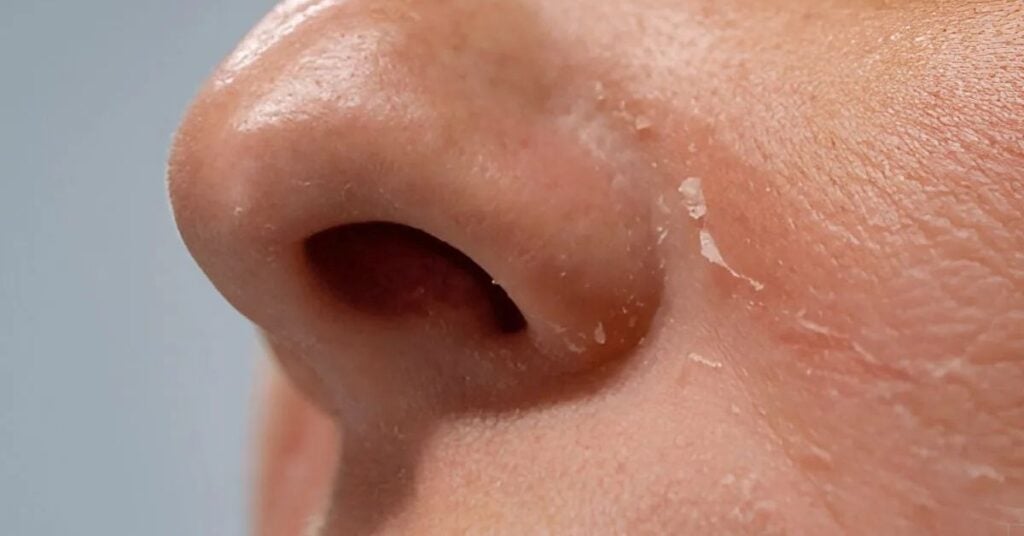
Dry skin on the nose clears fastest when you soften it with warm water, lift flakes gently, then seal in moisture with a barrier cream.
Dry skin on your nose can feel petty until it shows up in a mirror, clings to makeup, or stings every time you smile. The fix usually isn’t a fancy product. It’s a small routine done in the right order, with the right pressure, and with fewer “extra” steps than most people think.
This article walks you through a nose-friendly routine, plus the common reasons flakes keep coming back and what to change so you’re not stuck in the same loop next week.
| Likely Cause | Clues Around The Nose | What To Do First |
|---|---|---|
| Over-washing or hot water | Tightness right after cleansing, flakes by noon | Switch to lukewarm water and a mild cleanser once daily |
| Harsh actives (retinoids, acids) | Peeling along nostrils and crease lines | Pause actives on the nose for 5–7 days |
| Cold symptoms and frequent wiping | Red, sore skin where tissues rub | Use saline spray for the inside, ointment for the outside edge |
| Fragrance or alcohol in products | Burning, patchy dryness, random flare-ups | Go fragrance-free and skip “toners” for now |
| Dry indoor air | Flakes feel worse at night and on waking | Run a humidifier near your bed and hydrate after cleansing |
| Shaving or hair removal | Roughness under the nostrils, tiny bumps | Shave after a warm shower and apply a bland moisturizer |
| Mask friction | Dry strip where the mask touches | Add a thin barrier layer before masking |
| Seborrheic dermatitis | Greasy scale, redness in the creases | Try an anti-dandruff wash as a short-contact face wash |
| Contact dermatitis | Itchy rash, sharp borders, swelling | Stop new products and patch-test later, one at a time |
How To Get Dry Skin Off Nose
If you only take one thing from this page, make it this: flakes come off cleanly when they’re softened first. Rubbing dry skin off a dry nose usually creates tiny tears you can’t see, and that keeps the area rough.
Step 1: Soften The Flakes Before You Touch Them
Start with warm (not hot) water. Splash your nose for 10–15 seconds, then press a clean, warm washcloth over the area for about a minute. You want “supple,” not soggy.
If the skin stings with plain water, skip the cloth and use a bland, fragrance-free cleanser diluted with water. Keep it light. No scrubs, no cleansing brushes.
Step 2: Lift Loose Skin With A Gentle Sweep
Once the flakes look darker or slightly translucent, they’re ready. Use your fingertips or the washcloth and make small, slow circles. Use the least pressure that moves the loose bits.
- Stop when the skin turns pink from friction.
- Don’t pick at edges that still feel attached.
- If you see pinpoint bleeding, you went too far. Rinse, moisturize, and give it a day.
Step 3: Moisturize While The Skin Is Still Damp
Pat your nose so it’s damp, not dripping, then apply a cream. Creams and ointments tend to beat thin lotions for dry patches because they hold water in longer. The American Academy of Dermatology’s tips for relieving dry skin include using warm water, patting dry, then moisturizing right after washing.
Step 4: Seal With A Thin Barrier Layer At Night
On nights when the nose keeps flaking, add a rice-grain amount of plain petrolatum or a similar ointment over your moisturizer. This slows water loss while you sleep and helps the surface feel smooth by morning.
Keep the ointment on the outside skin only. Don’t push it up into your nostrils.
Step 5: Protect The Area In The Morning
Dry skin doesn’t like sun and wind. Use a face sunscreen that feels comfortable around the nose, then reapply if you’re outdoors for hours. If sunscreen stings, switch to a mineral formula and avoid getting it into the crease.
Getting Dry Skin Off Your Nose Without Irritation
Sometimes you do the routine above and still get flakes two days later. That usually means something is stripping the skin faster than you’re rebuilding it. Fixing that can be simple, but you need to spot the culprit.
Check Your Cleanser And Water Temperature
If your face feels squeaky after washing, that’s a red flag. Stick to lukewarm water and a mild cleanser, then rinse well. On rough weeks, cleanse at night only and use water in the morning.
Pause Actives On The Nose, Then Reintroduce Slowly
Retinoids, benzoyl peroxide, and exfoliating acids can be great for some goals, but they’re common causes of peeling around the nostrils. If you’re seeing flakes, stop these products on the nose for a week. When the skin feels calm again, restart with a smaller amount and keep it off the creases for a while.
Stop The “Fix It” Stack
When the nose is flaky, it’s tempting to layer toner, serum, oil, and a thick cream. That stack can backfire if one layer irritates you. For a few days, run a simple set: cleanser, moisturizer, sunscreen. Add one extra item only after the nose stays smooth for three days.
Mind Friction From Tissues, Masks, And Towels
Mechanical rubbing can keep skin stuck in a peel cycle. If you have a cold, dab instead of wiping. Pick soft tissues. After washing, press a towel to your nose instead of dragging it across.
Use A Targeted Trick When You’re Sick
A dry, sore nose during a runny cold is a special kind of misery. Saline spray can reduce crusting inside the nose. For the outside edge, a thin layer of ointment can cut friction from tissues. If you use petrolatum near the nostrils, follow Mayo Clinic’s guidance on petroleum jelly for a dry nose, which warns against heavy use inside the nose, suggests using it sparingly, and not using it within several hours of lying down.
Small move, big payoff: put the ointment on before you start blowing your nose, not after it’s already raw.
What Not To Do When The Nose Is Peeling
Some habits feel satisfying in the moment, then punish you later. If flakes keep returning, check this list and cut the worst offender first.
- Skipping softening. Dry rubbing makes more loose skin the next day.
- Using grainy scrubs. The nose creases are easy to overdo.
- Peeling strips or strong pore masks. They can strip already-dry areas.
- Alcohol-heavy astringents. They often sting and dry the surface more.
- Topical antibiotics “just in case.” Many people react to them; plain ointment is often gentler for minor rawness.
Choosing Products That Play Nice With Nose Skin
You don’t need a 10-step routine. You need the right texture and a few ingredients that hold water, smooth roughness, and keep irritants out. If you’re shopping, scan labels for these categories:
- Humectants: glycerin, hyaluronic acid, urea (low strength) to pull water into the surface.
- Emollients: ceramides, squalane, fatty alcohols to make the surface feel less scratchy.
- Occlusives: petrolatum, dimethicone, mineral oil to slow water loss.
Fragrance is a common troublemaker on irritated skin. If your nose flakes and burns, go fragrance-free for a month and see if the pattern changes.
| Product Type | What To Look For | How To Use On The Nose |
|---|---|---|
| Gentle cleanser | No fragrance, no scrub beads | Massage 20 seconds, rinse with lukewarm water |
| Barrier cream | Ceramides, glycerin, dimethicone | Apply on damp skin, morning and night |
| Ointment (spot use) | Plain petrolatum or similar | Rice-grain layer over moisturizer at night |
| Mineral sunscreen | Zinc oxide, titanium dioxide | Tap into creases, then smooth outward |
| Low-strength urea cream | Urea 5–10% | Use 2–3 nights a week if roughness persists |
| Anti-dandruff shampoo (short-contact) | Ketoconazole, zinc pyrithione, selenium sulfide | Leave on nose area 60 seconds, rinse well |
| Saline spray | Isotonic saline | Use for inner dryness when sick or in dry air |
| Soft tissue or balm stick | Unscented, bland formula | Dab, don’t rub; add balm before long errands |
When Dry Skin On The Nose Signals Something Else
Most nose flaking is plain dryness or irritation. Still, a few patterns point to a skin condition that needs a different plan.
Seborrheic Dermatitis Clues
If the scale looks yellowish or greasy and sits in the nostril creases and eyebrows, seborrheic dermatitis is a common suspect. A short-contact wash with an anti-dandruff shampoo on the area can help some people. Keep contact short and rinse well. Pair it with a simple moisturizer.
Contact Dermatitis Clues
If the rash is itchy, puffy, or sharply outlined, think contact dermatitis. New fragrance, sunscreen, masks, or even a new laundry detergent can set it off. Stop any new product, then reintroduce items one by one after the skin settles.
When It’s Time To Get Medical Help
Get checked by a clinician if you have cracking that won’t close, spreading redness, honey-colored crust, fever, or pain that keeps getting worse. Those signs can point to infection or another condition that needs prescription care.
Simple 7-Day Plan To Keep The Nose Smooth
This is a plain schedule you can run without guessing. Adjust it to your skin’s mood, but keep the order steady.
Days 1–2: Calm And Seal
- Night: cleanse gently, moisturize, then add a thin ointment layer.
- Morning: rinse with water, moisturize, sunscreen.
Days 3–5: Light Buffing If Needed
- If you feel roughness, do the warm cloth step and a soft sweep once.
- Keep actives off the nose.
Days 6–7: Restart What You Miss, One Item At A Time
- Add back one product you paused, using a smaller amount.
- If flakes return, that product is a likely trigger for your nose.
If you’re searching for how to get dry skin off nose because flakes keep coming back, this week-long reset usually shows what’s helping and what’s making things worse.
And if you landed here wondering how to get dry skin off nose before an event, do the softening step, sweep only what’s loose, then moisturize and seal. Your makeup, if you wear it, will sit better on that smooth, hydrated base.
References & Sources
- American Academy of Dermatology.“Dermatologists’ Top Tips For Relieving Dry Skin.”Steps on gentle washing and moisturizing right after cleansing to ease dryness.
- Mayo Clinic.“Petroleum Jelly: Safe For A Dry Nose?”Notes on safe, sparing use of petrolatum near the nostrils and alternatives like saline spray.

Mo Maruf
I created WellFizz to bridge the gap between vague wellness advice and actionable solutions. My mission is simple: to decode the research and give you practical tools you can actually use.
Beyond the data, I am a passionate traveler. I believe that stepping away from the screen to explore new environments is essential for mental clarity and physical vitality.