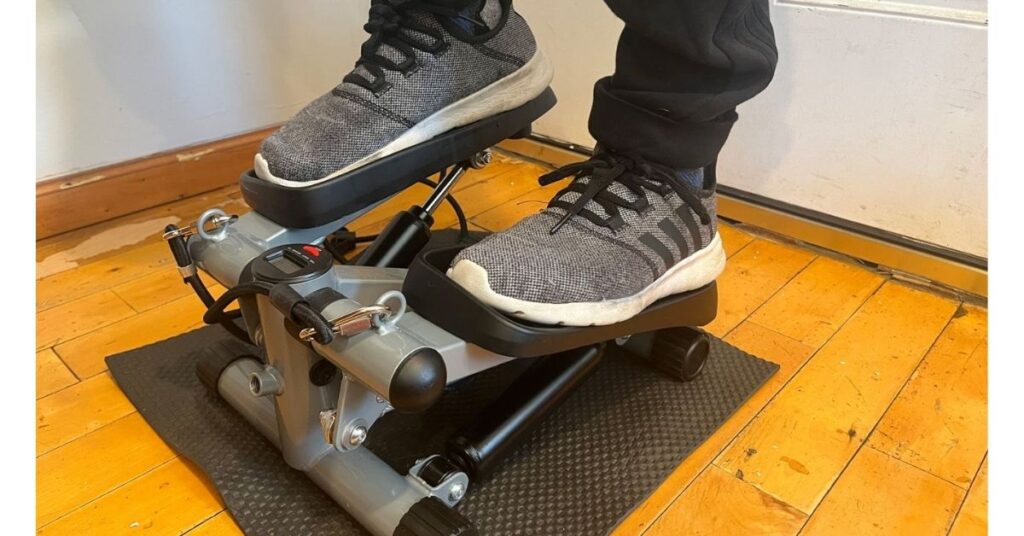
A stepper can feel like walking uphill indoors, but the stride, loading, and balance demands differ, so it’s not a perfect swap.
You’ve got a stepper at home, you’ve got a pair of shoes by the door, and you’re wondering which one “counts.” Fair question. Both are steady, repeatable, and easy to fit into a week. Both can raise your heart rate without turning your living room into a sweat-fest. But they’re not identical, and the differences matter when you’re picking a machine for knees, time, or training goals.
This article gives you a clean way to compare a stepper and walking. You’ll see what feels the same, what changes, and how to match effort so your sessions land where you want them. If you want a simple takeaway right now: treat a stepper like a short, continuous climb. Treat walking like a long, natural stride on level ground or a hill. Then match intensity with pace, resistance, and time.
Is A Stepper The Same As Walking?
People ask “is a stepper the same as walking?” because the motion looks familiar. One foot goes up, the other goes down. Your hips and knees bend. Your heart rate rises. Still, the way your body moves through space is different. Walking is a forward stride with a heel-to-toe roll. A stepper is a mostly-in-place step where your feet stay on pedals and you keep a constant bend at the hips and knees.
That small change affects three things right away: how your muscles share the work, how much balance you need, and how you measure progress. On a stepper, the machine sets the path. On a walk, the ground sets the path. Your body reacts to each in its own way.
| Factor | Stepper | Walking |
|---|---|---|
| Movement Pattern | Vertical stepping in place, shorter range | Forward stride with heel-to-toe roll |
| Stride Length | Fixed by pedal travel | Varies with height, speed, terrain |
| Glute And Hamstring Load | Often higher, like a steady climb | Moderate on level ground, rises on hills |
| Calf And Ankle Work | Lower if your heels stay planted | Higher due to push-off each step |
| Joint Angles | Knee stays bent more of the time | Knee straightens more during stride |
| Balance Demand | Higher on mini steppers, lower with rails | Varies; higher on uneven ground |
| Intensity Control | Resistance, cadence, step height | Pace, incline, wind, surface |
| Space And Weather | Indoor, tiny footprint | Needs space; weather can change plans |
| Progress Tracking | Steps/min, resistance, time | Distance, pace, time, route difficulty |
Stepper Vs Walking For Daily Cardio: The Real Differences
Walking moves you forward. That means your hips glide over each foot, and your ankles help you push off the ground. That push-off is why a brisk walk can feel snappy in your calves. It also means your stride has a rhythm: heel strike, mid-stance, toe-off. Your arms swing as a counterbalance, and your trunk rotates a bit. It’s a whole-body pattern you’ve practiced since you were little.
A stepper keeps you in place. You still alternate legs, but there’s no heel strike and no toe-off in the usual sense. Your foot stays on the pedal, and the pedal drops. Your knee stays bent longer. Your glutes and quads often feel more “on” because you’re lifting your body weight repeatedly without the small rest you get when a leg swings forward.
Muscle Feel: Where The Burn Shows Up
On many steppers, the first muscles to complain are the glutes and the front of the thighs. That’s the “climb” effect. If you lean on the handles, your legs may feel less loaded, but your posture can get sloppy. A gentle forward lean from the ankles is fine. A deep hinge at the hips with rounded shoulders is not.
Walking tends to spread the effort out. Your calves and shins can feel it if you jump from short strolls to long walks. Your hips can feel it if your stride is long or your shoes lack cushioning. Hills change the picture fast: an incline walk pushes more work into glutes, hamstrings, and calves.
Joint Stress: What Changes For Knees And Hips
Both options are low-impact in the sense that you’re not jumping. Still, the joint angles differ. A stepper often keeps your knee in a flexed position, and you repeat that pattern for minutes at a time. If your knees get cranky with deep bends, start with shorter bouts, lighter resistance, and a slow cadence. On walks, knee angles open and close more naturally, and the load changes each step as the foot rolls through.
Your hip position also shifts. A stepper can encourage a tucked pelvis if you slump. Walking rewards tall posture and steady arm swing. If you tend to sit all day, both can help, but walking often feels more “resetting” for the hips because of the longer stride.
Balance And Safety: The Hands-Free Test
Mini steppers can feel wobbly at first. Your feet are on two separate pedals, and each pedal can move. If you can’t step without gripping a wall or rail, that’s feedback. Choose a model with a stable base or a rail, or keep walking until your balance is steadier. When you walk outside, the balance challenge comes from curbs, cracks, and turns. Indoors, a treadmill walk removes most of that.
How To Match Effort So The Sessions Feel Comparable
One reason people get mixed results is that “20 minutes” does not always mean the same workload. A gentle stepper pace while scrolling your phone can be lighter than a brisk walk. A hard stepper session at high cadence can feel like a hill hike.
Use two checks to match effort:
- Talk Test: You can speak in short sentences, but you can’t sing.
- Perceived Effort (1–10): Aim for a steady 5–7 for most sessions.
If you track heart rate, use it as a guide, not a scoreboard. Day-to-day changes in sleep, hydration, and caffeine can nudge the number.
Cadence And Resistance On A Stepper
Cadence is the step rate. Resistance is how hard each step feels. If you raise cadence and keep resistance light, your breathing rises but your legs might not feel heavy. If you raise resistance with a calmer cadence, your legs work harder and your heart rate still rises, just in a different way. Start with one lever at a time. Change cadence first for a week, then add resistance.
Pace And Incline When Walking
Walking intensity comes from pace and incline. A brisk pace on flat ground is the simplest knob. Hills and treadmill incline raise effort fast. If you want a stepper-like feel on a walk, add incline. Short hill repeats can mimic the steady climb feeling without needing a machine.
Calories, METs, And What Those Numbers Mean In Real Life
Many people want a clean calorie number. It’s understandable, but calorie readouts can drift. Fitness watches guess using heart rate, motion, and your profile. Machines may guess using speed and resistance. The better use of numbers is consistency: track the same session over time and watch the trend.
If you like a simple metric, METs can help. MET is a way to rate energy cost of an activity compared with resting. Brisk walking often lands in the moderate range. Stepping can land in a similar range when cadence is steady, and it can climb higher with resistance and speed. Treat METs as a ballpark, not a promise.
For weekly targets, align your routine with public health guidance. The CDC aerobic activity guidelines for adults give clear time ranges for moderate and vigorous activity, plus strength work.
When A Stepper Is A Better Fit
A stepper shines when you want reliable indoor cardio in a small space. If you’re squeezed for time, it’s easier to hop on for ten minutes than to gear up and head outside. It can also feel friendlier in bad weather or late at night when you’d rather stay in.
Steppers also work well for stacked workouts. You can do five minutes of stepping, then a short strength circuit, then five more. That keeps the session moving without long breaks.
Mini Stepper, Stair Stepper, Or Elliptical Stepper?
Not all steppers feel the same. Mini steppers are compact and often demand more balance. Stair stepper machines with rails feel steadier and can allow a taller posture. Elliptical-style steppers add a glide, which reduces the up-down feel and can be kinder to joints for some people. If you’re choosing between them, base it on comfort, stability, and whether you can keep good posture.
When Walking Wins
Walking is hard to beat for consistency. You can do it anywhere, you can scale it from easy to brisk, and it tends to feel natural. Outdoor walks also give you changes in terrain and turns that keep your ankles and hips responsive.
If you want better walking endurance, the simplest training is more walking. A stepper can help your cardio, but it won’t teach your feet and ankles the same patterns you use on sidewalks and trails.
If you’re building a walking habit, the American Heart Association walking tips are a solid reference for pacing and staying consistent.
Form Cues That Keep The Work Where You Want It
Stepper Form Cues
- Stand tall, ribs stacked over hips, eyes forward.
- Step through the whole foot. Don’t let your knees cave inward.
- Use the rails lightly if you need them. If your grip turns white, slow down.
- Keep the motion smooth. Stomping wastes energy and can irritate joints.
Walking Form Cues
- Think tall and relaxed. Let your shoulders drop.
- Keep your steps under you, not reaching far in front.
- Let arms swing naturally. A gentle bend at the elbows helps rhythm.
- If you add incline, shorten your stride and keep cadence steady.
Common Mix-Ups That Skew Results
Leaning hard on handles. On a stepper, heavy handle use shifts work away from the legs. If you need the handles to stay safe, keep them. Just be honest about intensity and add time.
Chasing step counts across devices. A stepper step is not always the same as a walking step. Many trackers miss stepper steps or count them oddly because your body doesn’t travel forward. Use minutes and perceived effort instead.
Going too hard too soon. Stepping can spike leg fatigue. Walking can sneak up with long durations. Build gradually: add five minutes per week, or add one extra session per week, not both at once.
Sample Sessions You Can Repeat
These sessions help you match the feel across both choices. Pick one and run it twice a week for three weeks. Keep notes on cadence, pace, and how your legs feel the next day. Small tweaks beat constant reinvention.
| Goal | Best Pick | Try This |
|---|---|---|
| Easy Daily Movement | Walking | 20–40 minutes at a pace that lets you chat |
| Indoor Sweat Without Noise | Stepper | 10 minutes steady, 2 minutes easy, repeat once |
| Hill Feel Without A Hill | Stepper | 5 minutes easy, 10 minutes moderate resistance, 5 minutes easy |
| Brisk Cardio On Flat Ground | Walking | 5 minutes easy, 20 minutes brisk, 5 minutes easy |
| Short Interval Boost | Either | 8 rounds: 30 seconds hard, 90 seconds easy |
| Leg Endurance | Stepper | 3 x 8 minutes moderate, 2 minutes easy between |
| Low-Fuss Lunch Break | Either | 12 minutes steady, then 5 minutes easy cooldown |
| Incline Skill | Walking | Treadmill: 10 minutes easy, then 10 minutes at 4–6% incline |
So, Should You Swap One For The Other?
Here’s the straight answer in plain terms. A stepper can replace a walk when you match intensity and time. It can raise your heart rate, build steady leg endurance, and fit into tight schedules. Still, it won’t copy the full walking pattern, especially the ankle push-off and forward stride. If your goal is walking-specific stamina or comfort on long routes, keep some real walks in your week.
If you still catch yourself asking “is a stepper the same as walking?” use this rule: choose the option you’ll do consistently, then adjust effort so the session lands in your target range. A calm stepper session can be a nice filler between walks. A brisk walk with hills can stand in for most stepper sessions.
References & Sources
- Centers for Disease Control and Prevention (CDC).“Physical Activity Basics: Adults.”Time targets for aerobic activity and strength work used to frame weekly planning.
- American Heart Association (AHA).“Walking.”Walking form and consistency tips used for practical pacing and habit ideas.

Mo Maruf
I created WellFizz to bridge the gap between vague wellness advice and actionable solutions. My mission is simple: to decode the research and give you practical tools you can actually use.
Beyond the data, I am a passionate traveler. I believe that stepping away from the screen to explore new environments is essential for mental clarity and physical vitality.