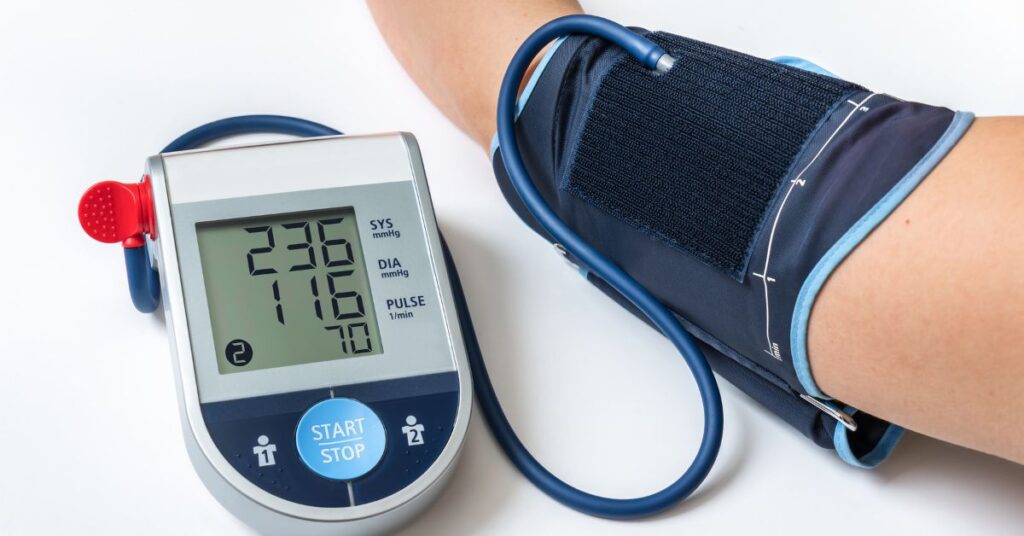
A blocked artery can raise blood pressure if it reduces kidney blood flow (renal artery stenosis); many blockages don’t directly raise BP.
It’s easy to connect “blocked artery” with a higher number on a blood pressure cuff. Sometimes that link is real. Sometimes it’s a mix-up about which artery is blocked and what the body does next.
You’ll learn when a blockage can drive hypertension, when it’s more of a shared risk story, and how to prepare for a smarter clinic visit.
What High Blood Pressure Means In Your Arteries
Blood pressure is the force of blood against artery walls. It rises when the heart pumps harder, when the body holds extra fluid, or when vessels stay tighter than they should. A single reading can jump after caffeine, nicotine, pain, poor sleep, or a rushed walk. A repeat pattern is what matters.
Over years, high blood pressure can injure the inner lining of arteries. That damage can speed plaque buildup and make vessels stiffer, which can keep pressure higher.
Where Blocked Arteries And Blood Pressure Connect
Blood pressure isn’t set by one “clogged pipe.” It’s controlled by heart output, vessel tone, and fluid balance. The kidneys guide fluid and hormone signals, so blockages that reduce kidney blood flow are the main blockage pattern tied to higher blood pressure.
| Artery Or Area | How It Can Affect Blood Pressure | Clues Clinicians Often Notice |
|---|---|---|
| Renal artery | Hormone signals raise pressure and keep salt and water | New or worsening hypertension; kidney lab shifts |
| Renal arteries (both) | Higher chance of resistant hypertension and fluid overload | Swelling; sudden breathlessness episodes |
| Aorta near renal branches | Plaque reduces renal inflow, acting like renal narrowing | Plaque elsewhere; bruit; leg pain with walking |
| Coronary arteries | Usually doesn’t raise pressure; it raises heart attack risk | Chest pressure with exertion; abnormal testing |
| Carotid arteries | Usually doesn’t raise pressure; it raises stroke risk | Prior TIA or stroke; bruit; plaque on ultrasound |
| Leg arteries | Often shares the same drivers as hypertension | Calf pain with walking; slow-healing sores |
| Artery stiffness | Stiffer vessels can keep pressure higher | Long history of high readings; enlarged heart |
| Fibromuscular dysplasia | Can narrow kidney arteries and drive secondary hypertension | Younger patient; few plaque risks; imaging pattern |
Does a Blocked Artery Cause High Blood Pressure? Kidney Vs Heart Differences
Many readers ask, “does a blocked artery cause high blood pressure?” The best answer starts with location. A blocked artery feeding the kidneys can push blood pressure up. A blocked artery feeding the heart muscle usually won’t.
Kidney artery narrowing and the hormone switch
Narrowing of the kidney artery is called renal artery stenosis. When a kidney receives less blood, it can respond as if the body is low on blood volume. Hormone signals tighten vessels and tell the body to hold salt and water. Blood pressure can climb and stay high.
This can look like blood pressure that starts suddenly, gets worse fast, or stays above goal on three medicines. It can also show up as rising creatinine after starting an ACE inhibitor or ARB.
The National Institute of Diabetes and Digestive and Kidney Diseases explains how renal artery stenosis can lead to renovascular hypertension and the tests used to confirm it.
Heart artery blockage and why blood pressure behaves differently
Coronary artery disease narrows arteries that feed the heart muscle. It can cause chest pain or a heart attack. Still, one narrowed heart artery usually doesn’t create persistent high blood pressure on its own.
More often, long-standing hypertension damages artery lining, speeds plaque buildup, and raises the odds of heart attack and stroke. The American Heart Association’s page on high blood pressure facts lays out those risks and the basics of control.
Other blocked arteries: shared risks, not a direct trigger
Blockages in the legs, neck, or belly usually mean atherosclerosis is present in more than one place. In that setting, blocked arteries and hypertension often travel together.
Blocked Artery And High Blood Pressure Links In Real Life
It’s common to have more than one reason for hypertension. Sorting the main driver matters because it changes which tests and treatments pay off. Clinicians often split causes into two buckets:
- Primary hypertension: no single cause is found; risk factors and genetics push it over time.
- Secondary hypertension: a specific condition drives the rise, such as renal artery stenosis, kidney disease, hormone disorders, or certain medicines.
If your blood pressure is hard to control, a secondary cause becomes more likely.
Clues That Suggest A Blockage Is Part Of The Story
Most people with high blood pressure won’t have renal artery stenosis. Still, certain patterns can raise suspicion and often lead to testing.
Blood pressure patterns
- Blood pressure that starts abruptly, especially after age 55 or before age 30
- Readings that stay above goal on three or more medicines
- A sharp worsening after a long stretch of stable control
Kidney and fluid clues
- Rising creatinine after starting an ACE inhibitor or ARB
- New swelling or sudden weight gain from fluid
- Sudden breathlessness episodes tied to fluid in the lungs
Exam and history clues
- A whooshing “bruit” over the belly on exam
- Known plaque in other arteries
- Smoking history, diabetes, or long-term high cholesterol
When To Treat It As An Emergency
Call your local emergency number right away if you have:
- Chest pressure, tightness, or pain that lasts more than a few minutes
- New weakness on one side, face droop, trouble speaking, or sudden vision loss
- Severe shortness of breath, fainting, or confusion
Those symptoms can signal heart attack, stroke, or a blood pressure crisis.
How Clinicians Check For A Blocked Artery Behind High Blood Pressure
Testing usually starts with repeat measurements, a review of medicines, and basic labs. After that, the workup is guided by your story and exam.
Confirming the numbers
Before labeling readings as uncontrolled, clinicians often want home numbers. Use an upper-arm cuff. Sit quietly for five minutes, keep your back against the chair, and rest your arm at heart level. Take two readings one minute apart and record both.
How to use a seven-day log
Write down the date, time, arm, and cuff size. Note what happened in the hour before the reading, like coffee, a missed pill, or a salty meal. If your monitor stores readings, still keep a paper log so you can add context. After seven days, look at the pattern, not the highest number. Many clinicians use the average of morning and evening readings to guide treatment changes. If your numbers swing wildly day to day, bring that detail too; it can point to triggers, pain, sleep issues, or medication timing, and it can guide next-step testing.
Lab work that narrows the list
Blood and urine tests can point toward kidney disease, diabetes, or hormone-driven hypertension. Creatinine and estimated GFR track kidney filtration. Potassium can hint at certain hormone patterns or medicine effects.
Imaging when renal artery stenosis is suspected
Duplex ultrasound of the kidney arteries is a common first imaging test. CT angiography and MR angiography can map vessels in more detail. In selected cases, catheter angiography confirms anatomy and can allow treatment in the same session.
What Treatment Can Look Like
Many people do well with medicine and risk-factor work. Some need a procedure, mainly when kidney artery narrowing is driving uncontrolled readings or kidney decline.
Blood pressure medicines
Many people need more than one drug to reach a target. Clinicians often pair a diuretic with other classes that relax vessels. When renal artery stenosis is present, ACE inhibitors or ARBs are common choices, with lab checks since kidney function can change in certain narrowing patterns.
Procedures for renal artery stenosis
Angioplasty or a stent can open a narrowed segment in selected cases. Procedures are more likely when blood pressure stays uncontrolled on medicines, kidney function is declining, or there are recurring fluid-in-lung episodes tied to the narrowing.
Steps You Can Take This Week While You Track Readings
While you line up care, focus on two things: clean measurements and fewer triggers that push numbers up.
Clean home measurements
- Check at the same times each day for a week, like morning and evening
- Avoid nicotine, caffeine, and exercise for 30 minutes before checking
- Use the same arm each time and note your cuff size
Food and medicine habits that move the needle
Cook more meals at home and read labels on bread, sauces, and canned foods to spot sodium. Also bring a full list of prescriptions, OTC drugs, and supplements to your visit; decongestants and NSAID pain relievers can raise blood pressure.
| Home Step | What To Do | When To Get Same-Day Care |
|---|---|---|
| Check readings | Two readings, one minute apart, seated and rested | Repeated readings ≥180/120 with symptoms |
| Track symptoms | Note chest pressure, breathlessness, neuro changes, swelling | Any stroke or heart attack signs |
| Review meds | List prescriptions, OTC drugs, and supplements | New fainting, confusion, or severe weakness |
| Cut sodium | Read labels; swap packaged meals for simple home meals | Rapid swelling or sudden weight gain |
| Follow up | Book a visit for uncontrolled readings or new symptoms | Blood pressure crisis symptoms at any reading |
| Bring questions | Ask what test would change the plan | New neurological symptoms or severe breathlessness |
Questions To Bring To Your Appointment
If you’re still asking does a blocked artery cause high blood pressure?, bring your home log and ask what cause is most likely: kidney-related, medicine-related, sleep-related, or primary hypertension. Ask what finding would change the plan, and what you should watch for while you wait for tests.
This article is general education and isn’t a substitute for care from a licensed clinician.

Mo Maruf
I created WellFizz to bridge the gap between vague wellness advice and actionable solutions. My mission is simple: to decode the research and give you practical tools you can actually use.
Beyond the data, I am a passionate traveler. I believe that stepping away from the screen to explore new environments is essential for mental clarity and physical vitality.