Yes, most people can climb stairs after knee replacement surgery when they follow a safe timeline, good technique, and their team’s advice.
You have a new knee, and the staircase that never bothered you now feels much steeper. Many patients ask the same thing: can you climb stairs after knee replacement without harming the implant or slowing healing? In day-to-day life the answer is usually yes, as long as you build up gradually and follow the plan given by your surgical and therapy team.
Hospitals rarely send people home until they can manage at least a few supervised steps. That does not mean charging up every flight at home right away. The new joint, the muscles around it, and your balance all need time to adjust before stair climbing feels normal again.
Can You Climb Stairs After Knee Replacement? Recovery Basics
Most people try stairs with a physiotherapist in the first days after surgery. Staff often list safe stair use as a discharge goal along with walking on level ground and getting in and out of bed. Educational material from large orthopedic groups describes short stair climbs as part of early activity once pain is controlled and you can stand steadily with a device.
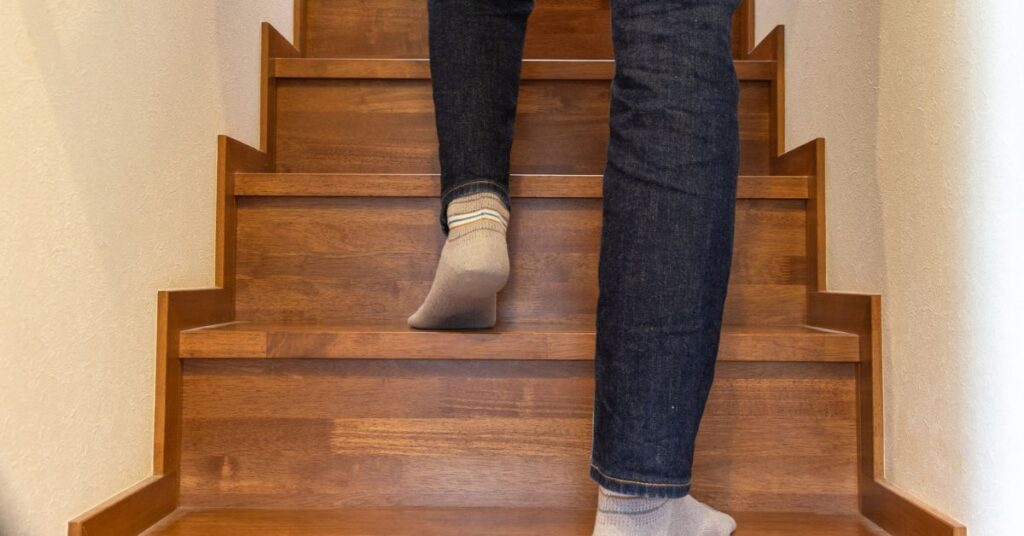
In the beginning you usually move one step at a time, with a hand on the rail and a cane or crutch in the other hand. Going up, you lead with the stronger leg so the operated knee does not take full body weight. Coming down, the operated leg steps first while the stronger leg stays above to catch you. Many therapists teach the phrase “good leg up, bad leg down” to keep that pattern in your head.
| Time After Surgery | Stair Ability | Main Tips |
|---|---|---|
| Hospital days 1–3 | Practice a few steps with a rail and walking aid under close guidance. | Move one step at a time, hold the rail firmly, and match your pace to pain levels. |
| Week 1 at home | Short flights once or twice a day if your team has cleared this. | Keep someone nearby, keep your cane or crutch close, and avoid carrying loads. |
| Weeks 2–3 | Most can manage several trips on stairs each day. | Still use the rail, place your whole foot on each step, and move slowly. |
| Weeks 4–6 | Many begin alternating steps on good days. | Only try alternating steps if pain is mild and swelling settles by the next day. |
| Weeks 7–12 | Stairs feel steadier, though you may still prefer the rail. | Stick with your exercise plan and keep using a handhold when you feel unsure. |
| 3–6 months | Daily stairs are part of routine life for most people. | Notice any new pain spikes and call your surgical team if they keep returning. |
| 6+ months | Many climb stairs with little thought, even if they still like a rail. | Keep walking, keep muscles strong, and avoid sudden heavy loads on the joint. |
Studies of total knee replacement show that most people can climb stairs after surgery, but they often move slower than people with natural knees and may keep a hand on the rail years later. That pattern is common and does not mean the implant failed; it simply reflects that an artificial joint behaves differently from the one you were born with.
Climbing Stairs After Knee Replacement Safely At Home
Once you are home, the question shifts from whether stairs are possible to how you can make each trip feel calm and steady. You do not need complicated routines. A simple pattern that you repeat every time lowers stress and reduces the chance of slips.
Basic Technique For Going Up Stairs
Use this pattern during the early weeks at home unless your physiotherapist gives different instructions.
- Stand close to the bottom step with your cane or crutch and one hand on the rail.
- Shift your weight toward the stronger leg while you watch the step ahead.
- Step up with the stronger leg first so the operated knee does not carry your whole weight.
- Bring the operated leg up to the same step, keeping your toes pointed forward.
- Move your walking aid up to meet both feet, then repeat one step at a time.
This pattern slows you down, gives your muscles time to react, and keeps bending demands modest while the new knee still feels stiff.
Safe Technique For Coming Down Stairs
Descending often feels scarier than climbing because gravity pulls you forward. Until your quadriceps recover strength and your balance improves, use the same careful rhythm every time.
- Stand tall at the top step with one hand on the rail and your walking aid close.
- Place the walking aid on the lower step first if you use one.
- Step down with the operated leg so the stronger leg stays above to catch you.
- Bring the stronger leg down to meet it on the same step.
- Repeat slowly, pausing if pain spikes or the leg feels shaky.
As strength grows and bending improves, your therapist may clear you to place one foot on each step in a more natural pattern. There is no medal for rushing this stage. It is fine to keep the cautious method on rough days and use alternating steps only when your leg feels steady.
Small Home Changes That Make Stairs Easier
A few simple tweaks around the house can turn stair climbing from a daily worry into a manageable part of life.
- Make sure at least one rail is solid and easy to grip; add a second rail on long flights where possible.
- Use bright tape or contrast strips on step edges if your vision is not perfect.
- Pick a small backpack or crossbody pouch for carrying light items so your hands stay free.
- Keep stairs clear of shoes, toys, cords, or loose rugs that can trip you.
When You Can Start Climbing Stairs After Knee Replacement
Most units check that you can handle a few steps before you leave hospital. Many discharge lists include stair practice with a rail and walking aid as a standard goal, along with walking on level ground and using the bathroom on your own.
Guidance from large orthopedic groups such as the AAOS stair-climbing advice after knee replacement and patient material from implant makers like Stryker knee replacement recovery tips both describe stair climbing as part of normal activity once pain is controlled and you can stand safely with a device.
Typical Week-By-Week Progression
Everyone heals at a slightly different rate, but some patterns show up again and again in clinic notes and research reports.
- Week 1: Short stair trips only, maybe once or twice a day, often with someone nearby.
- Weeks 2–3: Several trips daily, still one step at a time, still using the rail and often a cane or crutch.
- Weeks 4–6: Many people begin occasional alternating steps when swelling is mild and muscles feel steadier.
- Weeks 7–12: Stairs are part of daily life, though you may still feel slow, mainly later in the day.
- 3–6 months: Most people feel confident on stairs in both directions, even if they still like a rail.
Researchers who track function after total knee replacement find that many patients can climb stairs, but they often move slower than people with natural joints and rarely reach the same stair speed. That pattern is common and does not mean the implant failed; it simply reflects that metal and plastic behave differently from bone and cartilage.
Factors That Change Your Stair Timeline
Two people can have the same operation on the same day and still progress at different speeds on the stairs. Several common factors shift how soon you feel ready to tackle more than a few steps.
- Pre-surgery strength: If you walked regularly and trained your legs before surgery, you often regain stair skill faster.
- Pain control: Poorly managed pain makes it hard to put weight on the leg or bend the knee fully.
- Balance and confidence: A history of falls or fear of falling often leads to slower, more careful stair work.
- Other medical issues: Heart or lung disease, or severe arthritis in the other leg, can limit how quickly you climb.
- Stair layout: Steep, narrow, or winding staircases demand more care than a wide, straight flight.
If you live in a home with several levels, talk with your surgeon or physiotherapist before the operation about the best plan. You might set up a bed on the ground floor for the first week or two, or arrange extra help during the early days.
Exercises That Make Stair Climbing Easier
Stair climbing after knee replacement depends on three things: strength, flexibility, and balance. The quadriceps at the front of the thigh lift you up the step, the hamstrings and calf help control the way down, and the muscles around the hip keep your trunk steady.
Simple daily drills build these muscles and teach the new joint how to move again. Many hospital and clinic handouts include exercises such as ankle pumps, heel slides, quad sets, straight leg raises, and mini squats. Later, once you have basic strength, step-ups and balance work help you feel safer on each step.
| Exercise | Main Benefit | Common Starting Frequency |
|---|---|---|
| Ankle pumps | Boost blood flow and reduce swelling in the lower leg. | 10–20 reps every waking hour. |
| Heel slides | Increase knee bend so placing your foot on a step feels easier. | 10–15 reps, 3–4 times per day. |
| Quad sets | Wake up the thigh muscle that lifts you on stairs. | 10 reps, 3–5 times per day. |
| Straight leg raises | Build strength in the thigh without heavy knee bend. | 8–12 reps, 2–3 times per day. |
| Mini squats at a counter | Train hips and knees together for standing and stair use. | 8–10 reps, once or twice per day. |
| Step-ups on a low step | Practice the stair motion in a controlled way. | 5–10 reps per leg, once per day when cleared. |
| Single-leg balance near a rail | Sharpen balance so small slips are less likely. | 10–20 seconds per leg, once or twice per day. |
Ask your physiotherapist which exercises match your stage of healing. Some clinics hand out printed programs, while others use apps or videos to cue daily work. What matters most is consistency: small efforts stacked over weeks change how steady you feel on each stair.
Common Stair Problems And When To Slow Down
Most people regain steady stair use after knee replacement, but some patterns are red flags. Call your surgical office, health service, or emergency line without delay if you notice any of the following while climbing or soon after:
- Sudden, sharp pain in the knee that does not ease with rest and ice.
- A knee that gives way or feels as if it might buckle on every flight.
- Rapid swelling, heat, or redness around the joint paired with fever or feeling unwell.
- New chest pain, sudden breathlessness, or calf tenderness, which can signal a clot.
Other habits are not emergencies but still deserve attention. Rushing to alternating steps before muscles are ready, letting go of the rail just to prove a point, or carrying heavy loads on stairs can all lead to falls or stubborn pain. If you notice those patterns, slow down, return to the one-step method, and review your plan with your physiotherapist.
Stairs And Your New Knee: Daily Life Outlook
So, can you climb stairs after knee replacement and still protect that new joint? In most cases, yes. You start with short, supervised climbs in hospital, then build up at home using a clear pattern, a hand on the rail, and a walking aid when needed.
As strength grows and pain settles, you can move from single-step climbing to an alternating pattern on good days. Exercises that train your thigh, hip, and calf muscles pay off each time you reach a staircase. If anything feels wrong, sharp, or strangely unstable, slow down and talk with your surgical team instead of pushing through.
Stairs after knee replacement are not a test of bravery. They are one more daily skill to relearn with patience, practice, and clear guidance from the professionals steering your recovery.

Mo Maruf
I created WellFizz to bridge the gap between vague wellness advice and actionable solutions. My mission is simple: to decode the research and give you practical tools you can actually use.
Beyond the data, I am a passionate traveler. I believe that stepping away from the screen to explore new environments is essential for mental clarity and physical vitality.