Our readers keep the lights on and my smoothie glass nicely filled. As an Amazon Associate, I earn from qualifying purchases.
Specs are compiled from manufacturer listings and verified buyer reviews and can change over time — please confirm the key details on the product page before buying.
An outfield glove has one job: turn a ball hit into the gap into an out instead of a double. That means you want a 12.5-inch pattern, a web that swallows line drives, and leather that is either soft enough to play today or tough enough to still hold its shape three seasons from now. The seven gloves below cover both ends of that trade-off, and the first one is the safest place for most families to start.
I’m Mohammad Maruf — the founder and writer behind WellFizz. This guide is built by comparing the manufacturers’ published specifications and the patterns across verified customer reviews, so you get each pick’s real strengths and trade-offs instead of marketing spin.
The gap between a glove that plays well on day one and one that survives travel ball for years is smaller than most people think. Every pick here is a genuine outfield pattern built for fastpitch, and the roundup below explains which of these best fastpitch softball outfield glove options earns its place in your bag.
Our Picks at a Glance

How To Choose The Best Fastpitch Softball Outfield Glove
Outfield is the one position where a glove is asked to do something slightly different every inning. You need reach for a ball hit over your head, a deep pocket for a sinking liner, and enough structure that a line drive does not sting through the palm. Three things decide whether a glove handles that or fights you.
Size: the 12.5-inch standard, and who steps up to 13
A 12.5-inch glove is the outfield default because it adds reach over an infield pattern without making the ball hard to find in the pocket. Smaller hands and younger outfielders stay comfortable at that length because the glove still closes cleanly.
If you have larger hands or you play a lot of deep fly balls, a 13-inch pattern gives you extra reach. The trade-off is a heavier feel and a slightly slower transfer when you need to get the ball back in.
Web type: why outfielders get open webs
Outfield gloves typically use an open or semi-open web so you can see the ball into the pocket and shake dirt out easily. An H-web and a double post web both leave the pocket visible on a sinking liner.
Tighter webs are built for the infield, where the ball needs to be trapped fast. Outfield is the opposite problem, so the open design is doing real work for you out there.
Break-in: the honest cost of stiff leather
Break-in level is the single biggest difference between two gloves that look identical on the shelf. A ready-to-play glove is usable in the first week; an extra-stiff one can take a full season of catch before it shapes to your hand.
Stiff leather tends to hold its pocket longer once it is finally formed. That is the trade: less work now, or a longer-lasting shape later. Neither is wrong — it depends on how much practice time you actually have.
Quick Comparison
| Model | Best For | Glove Size / Pattern | Break-In Level | Web Type | Amazon |
|---|---|---|---|---|---|
| Easton Ghost NX★ Best Overall | Everyday travel and school ball | Outfield, H-Web | Ready-to-Play | H-Web | Amazon |
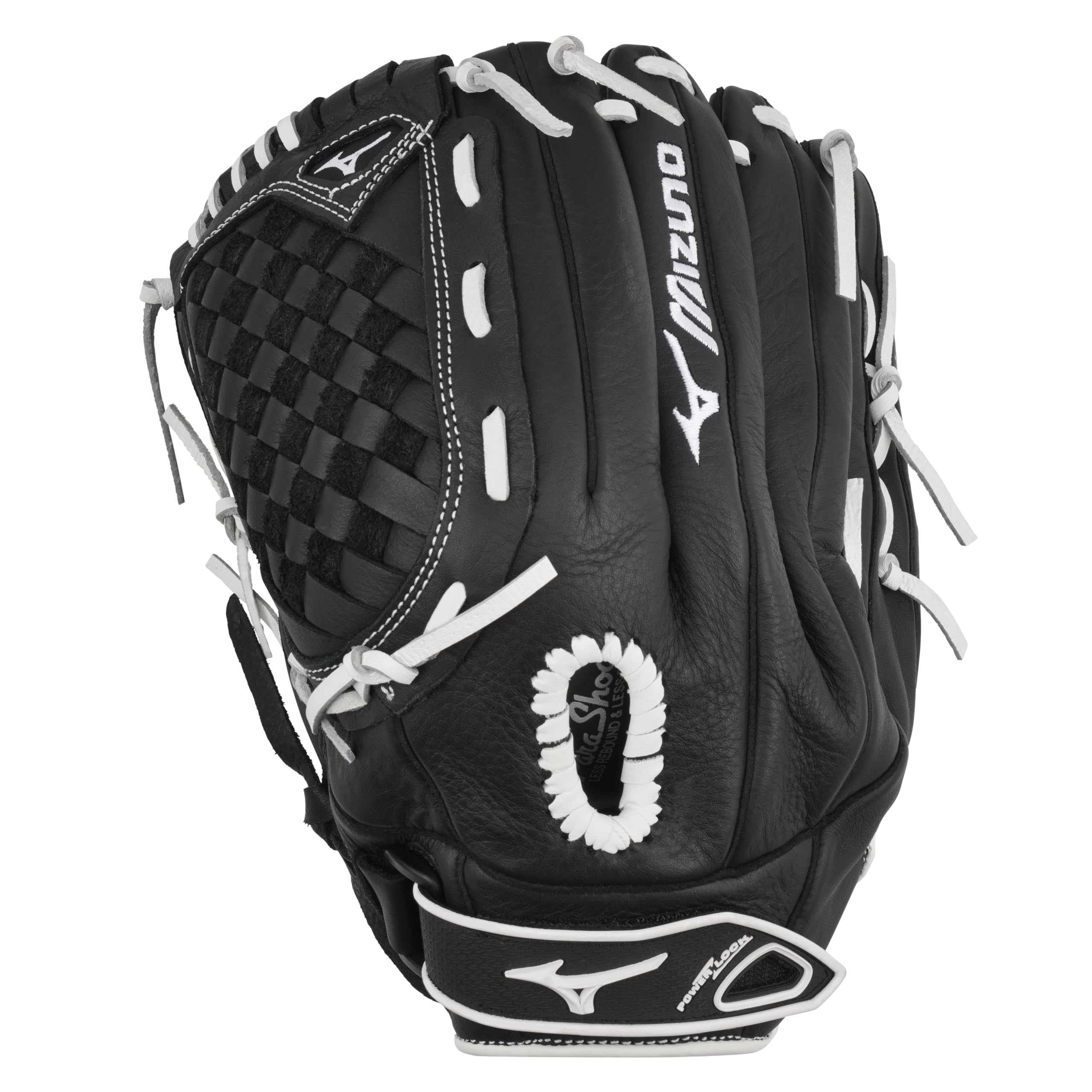
| Mizuno GPSL1250F3 Prospect SelectBest for Young Outfielders | Younger players moving up | 12.5″, Basket Web | Stiff | Basket | Amazon |
| Wilson 2026 A500 Siren | Youth outfielders growing into the position | 12.5″, Outfield, H-Web | Stiff | H-Web | Amazon |
| Mizuno MVP Prime | Serious players who want soft leather | Outfield, Modified Trapeze Web | Stiff | Modified Trapeze | Amazon |
| Wilson 2024 A1000 | Outfielders who want premium leather without the wait | 12.5″, Outfield, Double Post Web | Ready-to-Play | Double Post | Amazon |
| Easton Professional Collection | Elite outfielders chasing the deepest pocket | Outfield, Pro H Web | Extra-Stiff | Pro H Web | Amazon |
In‑Depth Reviews
1. Easton Ghost NX Fastpitch Softball Glove
Our pick — over 4.5★ from 200+ verified ratings; the strongest balance of quality and price.
The glove you can hand a 14U outfielder this week and let her play in this weekend.
Easton built this one around small hands and the fastpitch game rather than shrinking a baseball glove, and the H-web outfield pattern gives you an open pocket that swallows a sinking line drive. The leather is Diamond Pro Steer USA steerhide, and Easton rates the break-in as ready-to-play. In practice that means a couple of catch sessions, not a full winter of oiling.
This glove breaks in fast but does not go floppy, which is rare at this price. The Flex Notch closure system is a cut in the shell that helps the glove squeeze shut with less hand strength, so an outfielder who is still growing into her grip can actually close it on a ball away from her body. The Quantum Closure System adds an adjustable back, which is the piece that lets one glove fit through a growth spurt. Rolled leather welting along the fingers keeps the shape honest once it is formed and shortens that break-in window. Buyers put it plainly: “This glove is the real deal—great quality leather, easy to break in, and fits perfectly for a 14U player.”
The quality of the build is what wins people over, and the honest trade is the padding. Some owners find the palm cushioning spot-on, others want more of it, so if you take a lot of hard throws off the heel of the glove, that is the one thing to check in person. Weight and feel stay squarely in travel-ball territory rather than pro-stock heft, which is exactly why it suits a player logging innings in center and left instead of a college starter.
What earns it the top spot
- Ready-to-play break-in level, so it is game-usable almost immediately
- Adjustable Quantum Closure back grows with the player
- H-web outfield pattern with a deep, visible pocket
- Rolled leather welting holds the shape after the pocket forms
The fair caveat
- Palm padding draws mixed feedback — fine for most, thin for heavy ball-strikers
- Built for the fastpitch game and smaller hands, so it is not a men’s-league mitt
Grab this one if: you want an outfield glove that plays well now and still fits next season.
Look past it if: you need maximum palm cushioning against hard-hit balls, or you play a slower-pitch men’s game.
2. Mizuno GPSL1250F3 Prospect Select Series Fastpitch Softball Glove 12.5″, Left Hand Throw
A softer, easier-closing 12.5-inch pattern aimed at the player still building hand strength.
Mizuno tailors this one to the female athlete, and the standout detail is the thumb cut — a hinge in the thumb area that adds flexibility so the glove closes with less effort. If your daughter can catch but struggles to squeeze a stiff glove all the way shut, that hinge is the difference between a clean catch and a ball popping out.
Small hands can close this glove on a ball after a little glove oil and time, which is why younger players take to it fast. The shell is full grain leather with an MZO lining that moves sweat away from the skin, and the polyurethane power lock closure keeps the wrist secure with a simple pull tab. One parent summed it up as the leather feeling soft and already broken in. The other camp is the caution — buyers report at least one strap ripping free after two months of ownership, and there is a real note that the listing says adult while the glove itself is built for a 10-to-12-year-old.
Compared with the Ghost NX above, this is the softer, more forgiving leather and the roomier basket web, but it gives up some structural stiffness for that comfort. Treat it as a glove for the early travel years rather than a four-season investment, and the sizing question answers itself.
The honest fit note: the age label and the actual feel of the glove do not line up, so size it against the player’s hand rather than the listing. Requested as a left hand throw here, which wears on the right hand — the reverse of most stock photos you will see.
Confident call: buy it for a 7-to-12-year-old outfielder who needs a glove she can actually close.
Think twice if: a teen or adult will be the primary user, where the strap construction and soft leather will not hold up.
3. Wilson 2026 A500 Siren Fastpitch Softball Gloves

The 12.5-inch youth outfield option built around a wrist that actually hugs small hands.
A youth player whose hand is still growing gets a glove that hugs the wrist without a lace to retie, thanks to the Quick Fit Wrist. It is an elastic system that adjusts to hug the wrist instead of relying on a lace you have to retie. Top grain leather keeps the build light without going flimsy, and the H-web outfield pattern matches the reach you want in the grass. Buyers describe a glove that arrives already softened — one parent noted it came softened up already and needed very little oil — and a 13-year-old wearer called it the perfect fit for her hands with room to grow.
Wilson’s Rolled Dual Welting runs through the liner of the outfield model, which is the structural piece that helps the glove keep its shape over a season instead of pancaking. Feedback on the stiffness splits down the middle: some want it broken in further from the start, others find it ready to use immediately. Neither reaction is surprising for a stiff-rated youth glove, and a few rounds of catch settles it either way.
Against the A1000 later in this list, this one is the lighter and friendlier choice for a younger player, while the A1000 brings more leather under a bigger hand. For a 10U or 12U outfielder who is going to outgrow a glove before she wears one out, that points clearly here.
Why parents like it: the elastic wrist closure removes the guesswork of a loose, retied lace on small hands.
Reach for this if: you are outfitting a youth or 10U player and want a fit that holds through the season.
Skip the upgrade if: an older travel-ball player needs a glove that will stand up to a heavy daily practice load.
4. Mizuno MVP Prime Fastpitch Softball Glove

Built for the player who wants premium feel on the hand and does not mind working for the pocket.
Bio Soft Leather is the calling card — a smooth, oiled leather that Mizuno describes as striking the balance between softness and the firm control serious players want. The lining is leather, the laces are professional grade, and the modified trapeze web gives you a wide, open catching surface that suits an outfielder reading a fly ball off the bat.
Buyers describe a fair amount of break-in work before the pocket forms — yet the same glove is the one Mizuno designed specifically for the female softball player, right down to a silicon patch and a gender-engineered build. The payoff for that patience is a feel on the hand that softer, cheaper gloves do not match. Note the hand orientation: this is a left hand throw, meaning it is worn on the right hand.
If you want the softest leather feel on this list without stepping up to a full pro-stock price, this is the one. If you want a glove that is game-ready in a week, the Ghost NX or the A1000 below is the smarter pick.
Where it wins: premium-quality leather feel and a wide modified trapeze web for outfield reach.
Best suited to: a committed outfielder who wants a soft, high-grade leather feel and has the practice reps to shape it.
Not the pick if: you need something playable this month — plan for a real break-in period.
5. WILSON 2024 A1000 Outfield Fastpitch Softball Gloves

Premium full grain leather that Wilson rates ready-to-play — a combination that is rarer than it sounds.
You get a soft feel that forms to your hand without a meticulous break-in process, because Wilson rates the A1000 game ready from day one. The A1000 is built from the outermost layer of the hide so the natural grain shows. It is handcrafted in the same Pro Stock factory that produces the A2000, which is the detail that keeps the price well under that tier.
The outfitting details are where Wilson earns its keep. A DriLex wrist lining pulls moisture off your hand on a hot double-header, and adjustable rawhide laces run from the wrist closure so you can tighten the fit between innings without tools. On reach, the 12.5-inch frame and double post web give you a pocket you can see through on a sinking line drive.
Wilson’s own comparison data makes the value case sharp: this glove has 45 ratings against the Ghost NX’s 205, yet both earn the same 4.6 overall score. One honest caution from the field — a coach reported the break-in runs slow if you only use it in practices, and one player found the 12.5-inch frame plays larger than expected. Neither outweighs the leather quality for a dedicated outfielder.
Reasons to spend up
- Full grain leather from the outermost hide layer, with visible natural grain
- Ready-to-play break-in rating — usable without a long shaping period
- DriLex wrist lining keeps the hand dry through long games
- Adjustable rawhide drawstring laces for on-the-move fit tweaks
- Made in the same Pro Stock factory as the A2000
What to weigh first
- Practices-only use can stretch the break-in out longer than expected
- At 1.4 pounds it carries real heft on a long inning in the grass
- The 12.5-inch frame plays large for some younger players
The smart pick if: you want the leather quality and the easy break-in in the same glove.
Look elsewhere if: you want the absolute lightest feel — the A500 Siren is the lighter option for younger players.
6. Easton Professional Collection Fastpitch Softball Glove

The extra-stiff pro-pattern glove that a center fielder shapes into her own over a whole season.
Easton’s pitch for this one is simple: more than 50 D1 college softball programs, including UCLA, Alabama and Arizona, field the Professional Collection. That is a strong credential, and it comes with the build to back it — premium reserve USA steerhide, professional grade laces, and a pro style web designed for glove-to-hand transfer on a runner heading for third.
You are trading time for a glove that lasts, because Easton rates this extra-stiff. The feedback is consistent about what that means: a 12-year-old travel and center fielder’s parent described it as beautiful and very good quality, but stiff on arrival and still breaking in after a week. Another owner put it bluntly — tough to get the stiffness out, but the perfect glove once you do. Quality is clearly the strength here, and durability is the point people note as the most-discussed aspect, with the long break-in being the price of that durability. The Quantum Closure System with its adjustable open back is what lets a player dial in the wrist fit while the leather is still shaping.
Set against the Ghost NX, both score 4.7, but this glove is the deeper-pocketed, heavier 2-pound option built for high-velocity catches, while the Ghost NX is the easier one to get into the lineup right away. For a high school-level outfielder with a real offseason to work with, that extra leather is worth owning.
Who it is really for: an outfielder playing at a level where a hard-hit ball off the web is routine, and who will do the break-in work over a winter.
The case for buying it: elite outfield pattern, professional grade laces, and enough structure to hold a pocket for years.
The honest warning: extra-stiff means extra time — plan the break-in around your offseason, not your opening tournament.
Understanding the Specs
Glove Size and Outfield Position
Outfield patterns start around 12.5 inches and run to 13 inches, and that extra half-inch is not cosmetic. A longer glove gives you reach on a ball hit over your head, and a deeper pocket gives you a place for a line drive to land and stay. The cost is weight on the hand and a slightly slower transfer when you want to fire the ball back in. If you are a younger player with smaller hands, staying at 12.5 inches keeps the glove closeable and controllable.
Web Type and Break-In Level
You want to see the ball through the web on a sinking liner, so outfielders generally want it open enough for that. The web is the open lattice between the thumb and fingers. An H-web and a double post web both do that, while a basket or trapeze web widens the catching surface in a different way. Break-in level is the other half of the decision. Ready-to-play means the glove is usable within days, while stiff and extra-stiff gloves ask for weeks or a full season of catch before the pocket forms properly — and they tend to hold that pocket longer once it does.
FAQ
Is a 12.5-inch glove the right size for softball outfield?
What does right hand throw versus left hand throw mean on an outfield glove?
How long does an extra-stiff outfield glove actually take to break in?
Do outfield gloves need an H-web or a double post web?
Can a younger player use an adult outfield glove?
What is the difference between the Wilson A500 Siren, A1000 and A2000?
Does the padding in the palm actually matter for an outfielder?
Is an outfield glove different from an infield glove in the web and pocket?
Should I oil a stiff fastpitch outfield glove to speed up the break-in?
How do I keep an outfield glove holding its shape over a season?
Final Thoughts: The Verdict
For most families, the outfield glove that makes the most sense is the Easton Ghost NX, because it arrives ready to play yet still holds its shape once the pocket forms — and its adjustable back means it keeps fitting through a growth spurt instead of needing a replacement mid-season. If your priority is softer, more forgiving leather on a younger player, the Mizuno GPSL1250F3 Prospect Select closes easily for small hands. And for the dedicated outfielder ready to put in a full offseason of break-in work, the Easton Professional Collection is the one that returns the deepest pocket and the most durable build for years of center field.
How We Picked
We do not accept paid placement. Every pick is matched to a real buyer and a real use-case; we do not hands-on test units.
Sources & Methodology
Specifications: manufacturer listings and product documentation. Review insights: verified customer reviews, as of September 2026. Pricing: not shown on this page (it changes often); check the current price via the retailer link.
As an Amazon Associate, WellFizz earns from qualifying purchases. This does not affect which products we feature.
Related Guides

Mo Maruf
I created WellFizz to bridge the gap between vague wellness advice and actionable solutions. My mission is simple: to decode the research and give you practical tools you can actually use.
Beyond the data, I am a passionate traveler. I believe that stepping away from the screen to explore new environments is essential for mental clarity and physical vitality.