Our readers keep the lights on and my smoothie glass nicely filled. As an Amazon Associate, I earn from qualifying purchases.
Specs are compiled from manufacturer listings and verified buyer reviews and can change over time — please confirm the key details on the product page before buying.
Your phone takes fine photos, but the moment you try to film your kid’s soccer goal or a sunset from a moving car, you get shaky, soft footage. An EDC camera (a pocket-sized camera you carry daily) fixes that with a bigger sensor, a real lens, and stabilization your phone just can’t match. The best choice for most people is the DJI Osmo Pocket 3, because it packs a 1-inch sensor and 4K/120fps video into a body that truly disappears in your pocket.
I’m Mohammad Maruf — the founder and writer behind WellFizz. This guide is built by comparing the manufacturers’ published specifications and the patterns across verified customer reviews, so you get each pick’s real strengths and trade-offs instead of marketing spin.
Focusing on sensor size, lens reach, and stabilization, this edc camera roundup covers 11 pocket-ready models for travel, vlogging, and street shooting.
Our Picks at a Glance


How To Choose The Best EDC Camera
You want a camera you’ll actually carry every day, not one that stays home because it’s bulky. The key is matching the camera to your daily habits—whether that’s quick clips of your commute or weekend hikes. Here’s what makes a camera worth keeping in your bag.
Sensor Size Sets the Ceiling
The sensor is the light-catching chip inside, and bigger is better in low light. A 1-inch sensor (found in the DJI Osmo Pocket 3 and Sony ZV-1 II) handles dusk and indoor shots far better than the small sensors in cheap pocket cams. The Ricoh GR IIIx goes further with an APS-C sensor—the same size found in many professional mirrorless cameras—which is why its low-light image quality is in a different league than any zoom pocket camera.
Zoom Reach vs. Image Quality
You face a real trade-off: a big zoom range (like the 30x on the Panasonic LUMIX ZS99) lets you capture a distant mountain or concert stage, but the lens is slower in dim light. A fixed prime lens (like the 40mm on the Ricoh) is sharper and brighter but you can’t zoom at all. Decide which matters more for your week: reach or low-light sharpness.
Stabilization Keeps Footage Watchable
If you plan to shoot video while walking, a gimbal stabilizer—a motorized arm that physically holds the camera level, like the one in the DJI Osmo Pocket 3—delivers smoother results than any in-body sensor shift. For stills, optical image stabilization (lens elements that shift to counter your hand shake, as in the Canon PowerShot SX740 HS) is what keeps telephoto shots sharp.
Quick Comparison
| Model | Best For | Sensor | Zoom | Stabilization | Amazon |
|---|---|---|---|---|---|
| DJI Osmo Pocket 3★ Best Overall | Smooth 4K vlogging | 1-inch CMOS | Fixed wide | 3-axis gimbal | Amazon |
| Xtra MuseBest Value Gimbal | Budget gimbal vlogging | 1-inch CMOS | Fixed wide | 3-axis gimbal | Amazon |
| OM System Tough TG-7Rugged Adventurer | Underwater & rugged use | Back-illuminated CMOS | 4x optical | — | Amazon |
| Panasonic LUMIX TZ99 | Travel & concert zoom | — | 30x optical | — | Amazon |
| Panasonic LUMIX ZS99 Bundle | Travel zoom with extras | — | 30x optical | — | Amazon |
| Canon PowerShot SX740 HS | Birding & long reach | 20.3MP CMOS | 40x optical | Optical IS | Amazon |
| Canon PowerShot V1 | Vlogging & streaming | 1.4-type 22.3MP | 16-50mm wide | — | Amazon |
| Sony ZV-1 II | Selfie vlogging | 1.0-type | 18-50mm wide | — | Amazon |
| RICOH GR IIIx | Street photography | 24.2M APS-C | 40mm fixed | IBIS | Amazon |
| RICOH GR IIIx Urban Ed. | Stylish street shooting | 24.2MP APS-C | 40mm fixed | IBIS | Amazon |
| Sony RX100 VII | Compact high-end all-rounder | 20.1MP 1.0-type | 24-200mm | Active IS | Amazon |
In‑Depth Reviews
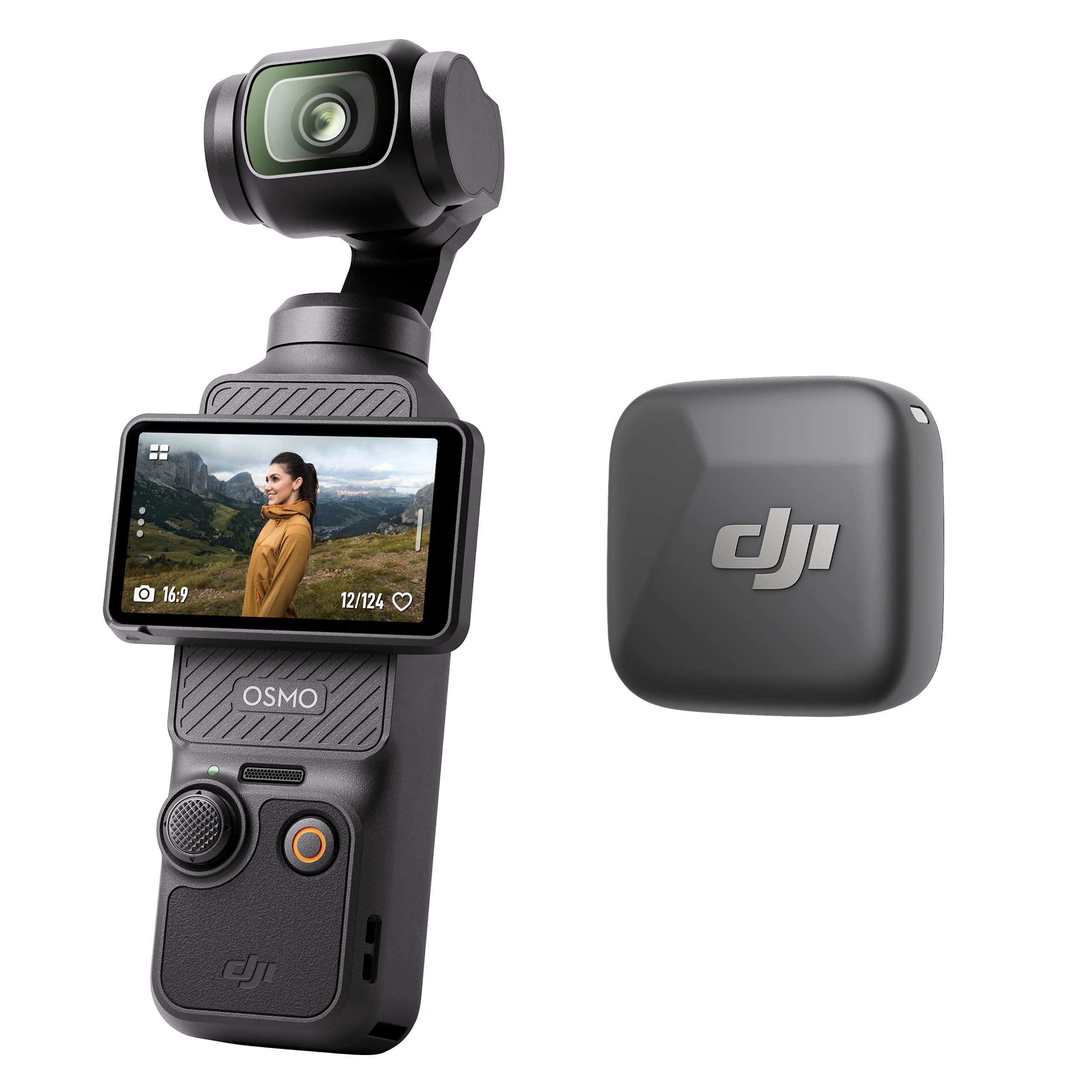
1. DJI Osmo Pocket 3 Vlog Bundle
Our pick — 4.5★ from 6,500+ verified ratings; the strongest balance of quality and price.
A 1-inch sensor and 3-axis gimbal deliver stabilized 4K/120fps video in a pocket-sized body.
You get crisp, detailed footage even in low light thanks to the 1-inch CMOS sensor (a larger-than-phone image chip that captures more light). It records 4K video at 120fps (120 frames per second, so you can slow motion smoothly). The 3-axis mechanical stabilization (a motorized arm that keeps the camera level) means your walking or running shots stay steady, so you don’t need a gimbal.
The 2-inch touch screen rotates for horizontal or vertical shooting, which is a godsend for quick switches between YouTube and TikTok or Reels. The bundle adds a DJI Mic Mini Transmitter, so your audio quality doesn’t lag behind your video. Buyers report the camera is lightweight, compact, and very easy to use—perfect for travel and everyday content creation, with the stabilization earning particular praise for producing perfectly smooth footage.
Buyers praise the built-in ActiveTrack 6.0 (a tracking mode that locks onto you and keeps you centered) even when you spin the camera on a tripod. Reviewers consistently rate overall build quality highest, with video quality close behind. However, some note the value is mixed because the charger isn’t included—you’ll need to buy the DJI 30W USB-C Charger separately for fast top-ups.
Why it wins
- 1-inch sensor beats phone video in low light
- 3-axis gimbal delivers silky handheld footage
- Rotating touchscreen simplifies vertical and horizontal shots
- ActiveTrack 6.0 keeps you centered on your own
What to know
- Charger is not included in the box
- Fixed wide lens means no optical zoom
Grab it if: you want the easiest path to professional-looking, stabilized 4K video without carrying any extra gear.
Think twice if: you need zoom reach for distant subjects—this is a wide-angle-only shooter.
2. Xtra Muse Vlogging Camera
A 1-inch sensor and 3-axis gimbal offer DJI-style stabilization at a lower price.
The Xtra Muse mirrors the DJI formula: a 1-inch CMOS sensor shooting 4K at 120fps, held steady by a 3-axis gimbal stabilizer. Owners mention the image quality rivals the DJI Osmo—some even prefer it—and the gimbal earns heavy praise for making footage look more professional. It’s portable enough to fit in a Coach purse, per one owner’s real-world test.
It’s not flawless. The 2-inch touchscreen and face/object tracking (Master Follow mode) perform reliably, but the XTRA companion app feels less polished than DJI’s—Android users report connection drops, while iOS pairs instantly. The battery lasts about 161 minutes per charge, enough for a typical outing, but plan for a power bank if you’re shooting all day.
Here’s the honest catch: reliability concerns exist. One buyer on a Hawaii trip reported repeated overheating and SD card format errors at 4K60, even with new SanDisk Extreme PRO cards. That’s a real risk for irreplaceable moments, so this is best as a budget pick when you have a backup option. The battery life also earns mixed feedback, with some wishing for an extender.
Who it suits: Creators who want gimbal-smooth 4K on a budget and don’t mind a less polished app experience than the DJI.
Reach for this if: you’re upgrading from phone vlogging and want professional-feeling footage without the premium price.
Look elsewhere if: you’re shooting once-in-a-lifetime events where a card error would be devastating.
3. OM System Olympus Tough TG-7
Waterproof to 15m, shockproof from 2.1m, and crushproof, this rugged camera fits in your palm.
This is the camera you grab when the adventure gets messy. It’s waterproof to 15 meters (50 feet), shockproof from 2.1 meters (7 feet), crushproof to 100 kilogram-force, and freezeproof down to -10 °C, so it handles snorkeling, rafting, and mountain snow without a case. The F2.0 lens with 4x optical zoom keeps the glass bright even in dim underwater light.
The macro system is the real standout: four macro modes let you capture subjects from as close as 1 centimeter from the lens, making it a favorite for beginners exploring tiny details. It shoots 4K video plus 120fps high-speed movies for slow motion, and includes 5 underwater modes including a microscope mode and underwater HDR.
Owners call it an excellent everyday carry that’s cheaper and more durable than a phone. The trade-offs are real: the 12MP sensor is dated, the small LCD is hard to see underwater, and the battery can die without warning, so carry spares. Image quality is below professional gear, but that’s not what this camera is for—it’s for the shots you’d never risk with anything else.
Built for the wild
- Waterproof 15m/50ft with 5 underwater modes
- Macro capture from 1cm away
- Freezeproof to -10°C and crushproof
Know the limits
- 12MP sensor limits cropping
- Battery dies without warning—bring spares
Choose this when: your week involves water, drops, or dirt—snorkeling, hiking, and rafting trips where a phone or premium camera would be at risk.
Pass on it if: you demand professional-level image quality for everyday street or portrait photography.
4. Panasonic LUMIX TZ99 Point and Shoot

A 24-720mm LEICA lens with 30x optical zoom brings distant subjects into clear view.
The headline here is the 24-720mm LEICA lens with 30x optical zoom—a focal range that goes from sweeping landscapes to far-away subjects, all in a compact body that slips in a pocket. For concerts and travel, this reach is the whole point: you can fill the frame with a performer from the back row, something no gimbal camera can do.
It records 4K video at 30p, captures 4K PHOTO bursts at 30fps, and shoots HD slow-motion at 120fps for creative flexibility. The 1,840k-dot tiltable touchscreen makes framing from odd angles easy, and USB Type-C charging means you can top up with the same cable as your phone.
Owners are split on the interface—some find it very user-friendly, others call it terrible—and image quality reviews are similarly mixed, with some praising photos while others report they fall short. The zoom and functionality get consistent praise, but note that one owner called it “heavy, not pocketable,” so it’s more of a small bag camera than a true jeans-pocket companion.
Best for: Travelers and concert-goers who prioritize zoom reach above all else and want one compact camera instead of binoculars and a phone.
Reach for it when: your subjects are far away—stadiums, safaris, and mountain vistas where every millimeter of zoom counts.
skip it if: you need a true pocket fit or demand consistent, pro-level image quality in low light.
5. Panasonic LUMIX ZS99 Bundle

Includes the TZ99’s 30x zoom plus a 32GB SD card, case, and 3-year warranty.
This is the TZ99’s smarter twin for first-time buyers: you get the identical 24-720mm LEICA lens and 30x optical zoom, plus a SanDisk 32GB memory card, a Slinger camera case, and Panasonic’s 3-Year Limited Warranty in the box. You won’t need to buy anything else before your trip. The 4K video at 30p, 4K PHOTO bursts at 30fps, and HD slow-motion at 120fps all carry over.
The 1,840k-dot tiltable touchscreen and USB Type-C charging keep it travel-friendly, and Bluetooth v5.0 with a dedicated Send Image button makes transferring shots to your phone painless. One safari-goer used it to capture a giraffe’s eyelashes on a Kenya trip, praising the zoom for excellent wildlife photos from such a pocket-sized camera.
Note that there’s no charger included—it charges via USB at 5V only, so pack a compatible power source.
Why bundle: If you lack a 32GB SD card or a padded case, this bundle covers both without extra shopping—plus the 3-year warranty protects your investment.
Grab this kit if: you want a ready-to-go travel camera with zoom reach and don’t want to shop for accessories afterward.
Pick the base TZ99 if: you already have a memory card and case and want to save the difference.
6. Canon PowerShot SX740 HS

A 40x optical zoom (24-900mm equivalent) captures distant wildlife with Optical Image Stabilizer.
If your EDC camera needs to capture things that are far away, this Canon is the reach champion. The 40x optical zoom with Optical Image Stabilizer pulls distant wildlife into frame, and the Zoom Framing Assist helps you re-find a moving subject after zooming in. The 20.3MP CMOS sensor and DIGIC 8 processor handle 4K video and 4K time-lapse movies as well.
The 3.0-inch tilt-type LCD flips 180° up for selfies, and built-in Wi-Fi and Bluetooth make sharing quick. A committed birdwatcher reported taking 30,000 photos in two months with the 960mm effective zoom, noting high-zoom shots are acceptable for identification even if they aren’t DSLR-sharp. The 7.4fps continuous shooting (up to 10fps with AF lock) helps capture fast-moving birds.
The honest downsides: there’s no viewfinder, and the LCD is hard to see in bright daylight. Battery life runs about 2 hours, and some buyers caution that certain listings ship a gray-market unit without a Canon USA warranty—so confirm the seller before you buy.
Reach matters here
- 40x optical zoom (24-900mm equivalent)
- Zoom Framing Assist tracks moving subjects
- 4K video and time-lapse built in
Before you buy
- No viewfinder; LCD washes out in sunlight
- Battery lasts roughly 2 hours
Pick it for: birdwatching, airshows, and any hobby where the subject is far away and moving fast.
pass on it if: you shoot mostly indoors or at night—the small sensor struggles in low light compared to 1-inch rivals.
7. Canon PowerShot V1 Hybrid Camera

A built-in cooling fan enables long 4K sessions without overheating, ideal for streaming.
The PowerShot V1 is built for content creation, and its standout feature is the cooling fan that enables longer high-resolution shooting sessions without overheating—a lifesaver for live streaming and long vlogs. The 1.4-type 22.3MP sensor captures 22.3MP stills and 18.7MP video, and the built-in 16-50mm F2.8-4.5 wide-angle zoom lens (35mm equivalent) keeps you in the frame when you’re holding it at arm’s length.
For serious color work, Canon Log 3 records with a wide dynamic range and 10-bit color depth starting at a base ISO of 800, giving editors room to grade footage. Hybrid autofocus scans 100 autofocus points, and owners note image quality rivals larger APS-C and full-frame Canons, with one full-frame user calling it an ideal everyday camera. Low-light performance matches larger cameras, per owner reports.
The caveats are real for an EDC fan: there’s no optical image stabilization (electronic stabilization is weak for walking shots), the 50mm max zoom is short for distant subjects, and there’s no charger included. Battery life earns negative feedback from multiple owners, so budget for spares if you plan long shoots.
Standout feature: The cooling fan and Canon Log 3 make this the only pocket camera here that won’t throttle your long-format content.
Choose it for: studio vlogging, live streaming, and creators who want flat, gradeable 10-bit video in a small body.
Pass if: you need handheld walking stabilization or a long zoom—this is a wide-angle, desk-and-tripod camera.
8. Sony ZV-1 II Premium Compact

An 18-50mm ultra-wide lens fits your face and background in one selfie frame.
The ZV-1 II’s defining feature is its 18-50mm ultra-wide zoom lens, which captures selfies at arm’s length without chopping your head off—a specific fix for vloggers. The large 1.0-type sensor and wide F1.8-4.0 aperture deliver professional-looking results even in low light, with beautifully defocused backgrounds (that creamy blur behind your subject) for a cinematic feel.
Sony’s Real-time autofocus tracking and Eye-AF (a mode that locks onto a person’s eye) keep you sharp while you move, and the directional 3-Capsule mic with a wind screen accessory captures clear audio outside. The camera is lightweight and portable, and the built-in smooth skin effect is a hit for selfie video. A dedicated side tripod mount and USB-C make livestreaming setup easy.
It’s not without trade-offs: the version here removed Sony’s Optical Steadyshot stabilization, so walking footage is less stable. Image quality gets mixed feedback, centered on low-light graininess, and autofocus needs a sharpness check for stills. Battery life earns negative mentions, so carry a USB-C power bank for long days out.
Made for creators
- 18-50mm ultra-wide fits selfie framing
- Eye-AF and real-time tracking keep focus locked
- Directional 3-capsule mic with windscreen
The catches
- No optical stabilization for walking shots
- Charger and cable not included in box
Grab it if: you’re a vlogger who shoots mostly indoors or in controlled outdoor settings and wants clean, wide selfie footage.
Reconsider if: your main shooting is handheld while you walk—the lack of stabilization will show.
9. RICOH GR IIIx Premium Compact

A full-size APS-C sensor in a jacket pocket, with the 40mm lens that matches how your own eyes see.
The GR IIIx is the choice for photographers who care about image quality above all. The 40mm focal length approximates the natural field of view of human vision, giving your shots a truthful, natural perspective that distinguishes them from phone photos. The 24.2M APS-C sensor is the same size found in professional interchangeable-lens cameras, and it shows in the sharpness.
It powers on in about 0.8 seconds and features a high-speed hybrid AF system, making it genuinely quick to grab from your pocket for a fleeting moment. Owners describe it as a “pocket rocket,” noting you can zoom into an eye reflection from 8 feet away due to the lens sharpness. The macro capability is also excellent, and film simulations (built-in color profiles) make it fun to shoot.
The trade-offs are significant for an EDC: battery life is poor (owners carry spares), autofocus can hunt in low light, there’s no built-in flash or viewfinder, and video is weak. There’s also a known dust risk on the sensor—use a filter adapter for protection. This is a pure stills camera for the street shooter, not an all-rounder.
Who it’s for: The photographer who wants professional-grade stills in a pocket—the ultimate “the best camera is the one you have with you” machine.
Pick it if: your EDC priority is stunning photo quality and you shoot mainly stills in daylight-to-dusk conditions.
Avoid if: you need video, zoom flexibility, or long battery life—this is a specialist, not a generalist.
10. RICOH GR IIIx Urban Edition

The same legendary GR IIIx optics, dressed in street-inspired metallic gray with a navy blue ring cap.
This is the GR IIIx for the photographer who wants their gear to look as good as their photos. The metallic gray body (inspired by asphalt pavement) with the navy blue ring cap around the lens barrel gives it a stealthy, urban aesthetic that blends into street environments. Underneath the styling is the same 26.1mm GR lens providing a 40mm angle of view on a 24.2MP APS-C sensor.
The GR ENGINE 6 processor handles advanced image processing, and continuous shooting reaches 15 frames per second—plenty for capturing a decisive street moment. The sensor can push to ISO 102400 (an extreme sensitivity setting for near-darkness) thanks to the high-performance processor. Owners call it the best pocket point-and-shoot, praising the superb DNG raw files (uncompressed photo files that give editors maximum flexibility) that work beautifully in Lightroom.
The recurring gripes mirror the standard GR IIIx: slow autofocus that hunts, limited battery life, and no 4K video. There are also durability concerns—one owner’s motorized lens failed to retract within days, and another had two units die over three years with light use. For street photography, snap focus mode (pre-setting a focus distance to shoot instantly) partially solves the AF issue.
The appeal: A collector-grade finish on an already-cult-classic camera—for owners who want their daily carry to reflect their personal style.
Buy it for: the street photographer who values image quality and wants a distinctive, stylish body they’ll enjoy carrying for years.
Think twice if: reliability is your top concern or you need video functionality—the motorized lens has shown fragility.
11. Sony RX100 VII Premium Compact

The do-everything pocket flagship: a 24-200mm zoom and autofocus so fast it blinks at 0.02 seconds.
The RX100 VII packs more capability into a pocket than any other camera here. The 20.1MP 1.0-type stacked CMOS sensor pairs with a Zeiss Vario Sonnar T 24-200mm F2.8-F4.5 lens—an 8.3x zoom range that covers everything from wide landscapes to distant subjects. The autofocus is the star: 0.02-second AF speed with 357-point phase detection and 425-point contrast detection, plus AI-based real-time tracking and Eye-AF for both humans and animals.
It shoots up to 20fps blackout-free (continuous shooting where the screen never goes dark, so you never lose sight of your subject) with incredibly fast AF/AE calculations. Video is serious too: 4K with S-Log3 for color grading, a microphone jack, Active mode image stabilization (which shifts the sensor to counter shake during video), and interval shooting for timelapses. Owners praise the image quality, especially clear video in sunlight, and note it fits easily in purses or pockets.
The premium price is the main question. Owners call it “well worth the pricetag” for travel and portraits, but note it’s poor for wildlife and not weather-sealed. The body is small to the point of being slippery (a grip accessory helps), the LCD has a documented adhesive failure issue after about two years, and there’s no real charger—just USB. Battery life lasts hours or hundreds of shots, though.
Why it leads
- 24-200mm zoom covers every shooting situation
- 0.02s AF with AI eye tracking
- 20fps blackout-free burst shooting
Price of the crown
- Premium cost for an older design
- No weather sealing; LCD durability concern
Chose it if: you want one pocket camera that genuinely replaces a full kit—zoom, speed, and video in a single small body.
Look past it if: your budget is tighter and you don’t need the 200mm reach—a 1-inch gimbal camera covers most daily needs.
Understanding the Specs
Sensor Size
The sensor is the light-catching chip inside the camera, and its physical size matters more than megapixel count. A 1-inch sensor (found in the DJI Osmo Pocket 3 and Sony ZV-1 II) captures noticeably more light than the small sensors in budget pocket cams, which means cleaner images at dusk and indoors. The Ricoh GR IIIx goes larger with an APS-C sensor—the same size used in many professional mirrorless cameras—delivering the best low-light stills in this list. Bigger sensor equals better low-light performance, period.
Optical Zoom
Optical zoom uses lens elements to magnify a scene physically, so image quality holds up as you zoom in—unlike digital zoom, which simply crops the image and loses detail. The range matters hugely for your use case: a 30x zoom (like the Panasonic LUMIX ZS99) or 40x (Canon SX740 HS) lets you fill the frame with a far-away concert stage or bird. A fixed lens (like the 40mm on the Ricoh) is sharper and brighter but offers zero reach. There’s no free lunch: big zoom usually means a dimmer lens and a bulkier body.
Stabilization
Stabilization counters the natural shake in your hands so your footage stays smooth. A gimbal stabilizer, like the 3-axis system in the DJI Osmo Pocket 3, is a motorized arm that physically holds the camera level—it delivers the smoothest walking video by far. Optical Image Stabilization (OIS) shifts lens elements to counter shake and is ideal for stills at high zoom. In-body stabilization (IBIS) moves the sensor itself. For handheld vlogging, a gimbal wins; for telephoto stills, OIS wins.
Video Capabilities
If video is part of your daily carry, check both resolution and frame rate. 4K/120fps (120 frames per second) means you can shoot ultra-smooth footage and slow it down to 120fps without any judder—it’s the spec creators care about most. Canon Log 3 or S-Log3 are flat color profiles that record a wide dynamic range (detail in both shadows and highlights), giving editors room to grade the footage in post. A microphone jack or bundled wireless mic makes a bigger difference to your videos than a slightly sharper lens.
FAQ
Is an EDC camera better than my smartphone?
What is the 1-inch sensor and why does it matter?
How much zoom do I really need in a pocket camera?
What is the difference between a gimbal and optical image stabilization?
Is 4K/120fps video worth paying extra for?
How do I pick between the DJI Osmo Pocket 3 and a traditional compact camera?
Are these cameras waterproof enough for the beach or pool?
What memory card speed do I need for 4K video?
How long do the batteries last on these pocket cameras?
Are these cameras good for taking photos in low light?
Final Thoughts: The Verdict
For the majority of shoppers, the Best EDC Camera winner is the [DJI Osmo Pocket 3](https://www.amazon.com/dp/B0GWD8599F/) because it delivers the most impressive combination of pocket-size portability, professional 4K video quality, and gimbal stabilization that makes every shot look smooth. If you want a long zoom for travel and concerts, grab the [Panasonic LUMIX ZS99](https://www.amazon.com/dp/B0DQYCXLT9/) or the [Canon PowerShot SX740 HS](https://www.amazon.com/dp/B07FXPY6SF/). And for the ultimate in image quality for street photography, the [RICOH GR IIIx](https://www.amazon.com/dp/B09GL1L694/) is the one to reach for—it’s the only pick that can truly rival a professional camera in your pocket.
How We Picked
We do not accept paid placement. Every pick is matched to a real buyer and a real use-case; we do not hands-on test units.
Sources & Methodology
Specifications: manufacturer listings and product documentation. Review insights: verified customer reviews, as of August 2026. Pricing: not shown on this page (it changes often); check the current price via the retailer link.
As an Amazon Associate, WellFizz earns from qualifying purchases. This does not affect which products we feature.
Related Guides

Mo Maruf
I created WellFizz to bridge the gap between vague wellness advice and actionable solutions. My mission is simple: to decode the research and give you practical tools you can actually use.
Beyond the data, I am a passionate traveler. I believe that stepping away from the screen to explore new environments is essential for mental clarity and physical vitality.