Our readers keep the lights on and my smoothie glass nicely filled. As an Amazon Associate, I earn from qualifying purchases.
Specs are compiled from manufacturer listings and verified buyer reviews and can change over time — please confirm the key details on the product page before buying.
Choosing the right learning toy can feel like a gamble. You want something that genuinely teaches a skill, but it also has to be fun enough that a kid actually reaches for it. This guide focuses on toys that turn real skills—reading, math, engineering, phonics—into play, so you can feel good about the time your child spends with them.
I’m Mohammad Maruf — the founder and writer behind WellFizz. This guide is built by comparing the manufacturers’ published specifications and the patterns across verified customer reviews, so you get each pick’s real strengths and trade-offs instead of marketing spin.
We’ve filtered through the options to spotlight toys that kids love and that teach real skills, so your gift feels like play, not homework. Top educational toys combine engaging design, durable build, and replay value to keep kids coming back.
Our Picks at a Glance

How To Choose The Best Educational Products
The best learning toys disguise education as play, so kids practice skills without realizing it. A math game that feels like a video game, or a robot that teaches coding, will always beat a worksheet. Start by matching the toy to the child’s specific skill gap and interest.
Match the Skill to the Age
A toddler needs large, safe pieces that build fine motor skills, while a 10-year-old needs a challenge that rewards patience and logic. A toy that is too simple will bore them, and one that is too hard will frustrate them. Look for age ranges that overlap with the child’s current stage, not their birthday next year.
Screen-Free vs. App-Based
Many parents are actively seeking toys that don’t add to daily screen time. The best screen-free options use audio and tactile feedback to teach. This often means more verbal engagement and less passive watching, which is better for retention in reading and math.
Quick Comparison
| Model | Best For | Skill Focus | Battery / Power | Play Value | Amazon |
|---|---|---|---|---|---|
| Sillbird STEM Robot★ Best Overall | Budding Engineers | STEM & Coding | Rechargeable (40 min) | 5-in-1 Builds, 596 pcs | Amazon |
| Educational Insights Sight Word SlamBest for Early Readers | Early Readers 5-7 | Reading & Phonics | 3 AAA (Not Inc.) | 185+ Words, 2 Modes | Amazon |
| alilo Math GamesBest for Travel | Math Practice on the Go | Arithmetic | Replaceable Batteries | 19 Games, 50K Questions | Amazon |
| Educational Insights Math Whiz | Math Fluency 6-8 | Arithmetic | 2 AAA (Not Inc.) | 3 Modes, 8 Levels | Amazon |
| JoyCat Kids Learning Tablet | Preschool Phonics | Language & Phonics | Lithium-Ion (USB) | 156 Pages, 600+ Words | Amazon |
| Qirptey STEM Building Toys | Creative Construction | Fine Motor & Logic | None (Manual) | 125 Pieces, Idea Booklet | Amazon |
| SYNARRY Wooden Puzzles | First Puzzles (1-3) | Motor & Recognition | None (Manual) | 6 Sets, Storage Rack | Amazon |
| The Fidget Game SquishyLand | Family Phonics Fun | Phonics & Reading | None (Manual) | 2-6 Players, 15 Min | Amazon |
| KOKODI Talking Pen Books | Independent Toddlers | Language & Vocabulary | 2 AAA (Not Inc.) | 2 Books, 450+ Words | Amazon |
In‑Depth Reviews
1. Sillbird STEM Robot Building Kit
Our pick — over 4.5★ from 850+ verified ratings; the strongest balance of quality and price.
The buildable 5-in-1 robot that rewards patience with a working, screen-free tech toy.
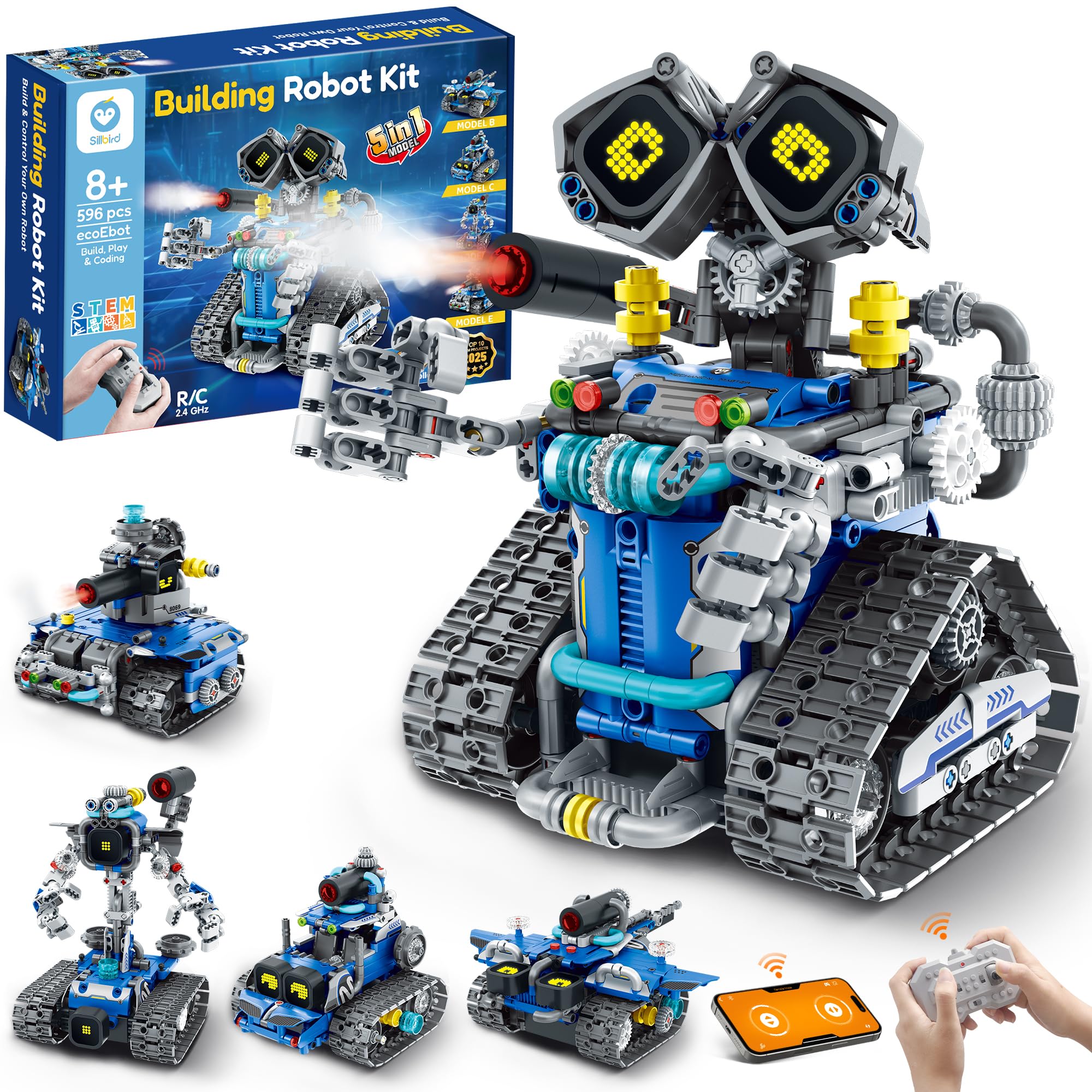
This is the kit for a kid who loves to build and wants a payoff at the end. It packs 596 blocks that assemble into five different models, each with its own difficulty level, so a child can start with the simpler designs and work up to the full robot. The final build features digital LED eyes that change expressions and a mist-spray feature you activate by adding a little water, which turns the finished project into an interactive toy, not just a display piece.
It runs on a rechargeable battery that gives up to 40 minutes of continuous play per charge, so there’s no constant buying of replacement cells. The build time is substantial, and the instructions are detailed and colorful, though the hands of a younger 8-year-old might not yet be strong enough to push the tube connectors into place. The effort is part of the appeal, though. Buyers report that “difficulty of assembly is inline with age suggestion (8-14),” and the payoff is a high-quality robot that feels worth the work.
This isn’t a quick activity; it’s a project that keeps kids occupied and engaged for hours. When it’s done, the Bluetooth app control and coding options add a whole second layer of learning. You are getting a toy that transitions from engineering to programming, making it a long-term investment in STEM skills. It is markedly heavier than the pocket-sized math games on this list, which actually speaks to the solid, substantial feel of the finished robot.
The Big Win
- Buildable fun with 596 pieces that create 5 different models
- Rechargeable battery provides up to 40 minutes of play per charge
- App control and coding add a second skill layer for older kids
The Honest Trade-Off
- Assembly requires patience and some tricky steps that need adult help
- Younger kids may lack the finger strength to push connectors in
Grab this for: a child aged 8-14 who loves construction toys and is ready to move from building to basic coding.
The fine print: be prepared to sit down and help with the complex steps—it’s a team effort for younger builders.
2. Educational Insights Sight Word Slam
The phonics flashcard upgrade that replaces drilling with a satisfying, physical slam.
If you have a child who is struggling with sight words, this handheld game turns rote memorization into a fast-paced challenge. It has four LCD windows and three pressable buttons, and it teaches over 185 sight words across two modes. In Word Slam mode, kids hear a word and slam the matching button; in Letter Slam mode, they find the missing letter in a word. The physical act of slamming the answer makes it feel less like a quiz and more like a game, and it’s an approach that gets the job done better than traditional flash cards.
The consensus is that it’s a great learning tool that is genuinely fun, and it’s a big help for kids who resist flash-card quizzes. It is right at home in a classroom or a playroom, and because it runs on 3 AAA batteries, it can travel easily. The main criticisms center on longevity: some owners mention the unit breaking within a few months of use, and the quality control isn’t perfect. Some find that the rounds feel too short, at about 10 words, and would prefer a longer play cycle or a mode that resets on mistakes.
If your child is in pre-K through early 1st grade, this toy helps them move from recognizing letters to reading fluently. The built-in voice occasionally mispronounces a word—a rare but frustrating hiccup for a reading tool. At 0.9 kg, it is chunkier and more permanent, so you will likely keep it on a desk or in a playroom rather than toss it in a bag; still, it is a sturdy companion for daily reading practice.
What Wins It
- Makes sight-word practice into an active game kids want to play
- Two distinct modes cover whole-word recognition and spelling
- A great blend of tech and learning that feels innovative to kids
Watch Out For
- Some units arrive with quality issues or break within months
- Rounds can feel short at about 10 words before a reset
Reach for this if: your 5-7 year old needs a fun alternative to flash cards to master those first 185 words.
Look elsewhere if: you want a toy that will survive years of heavy, unsupervised play—treat it gently.
3. alilo Math Games
The pocket-sized math tutor with the build of a toy phone and the brain of a quizmaster.
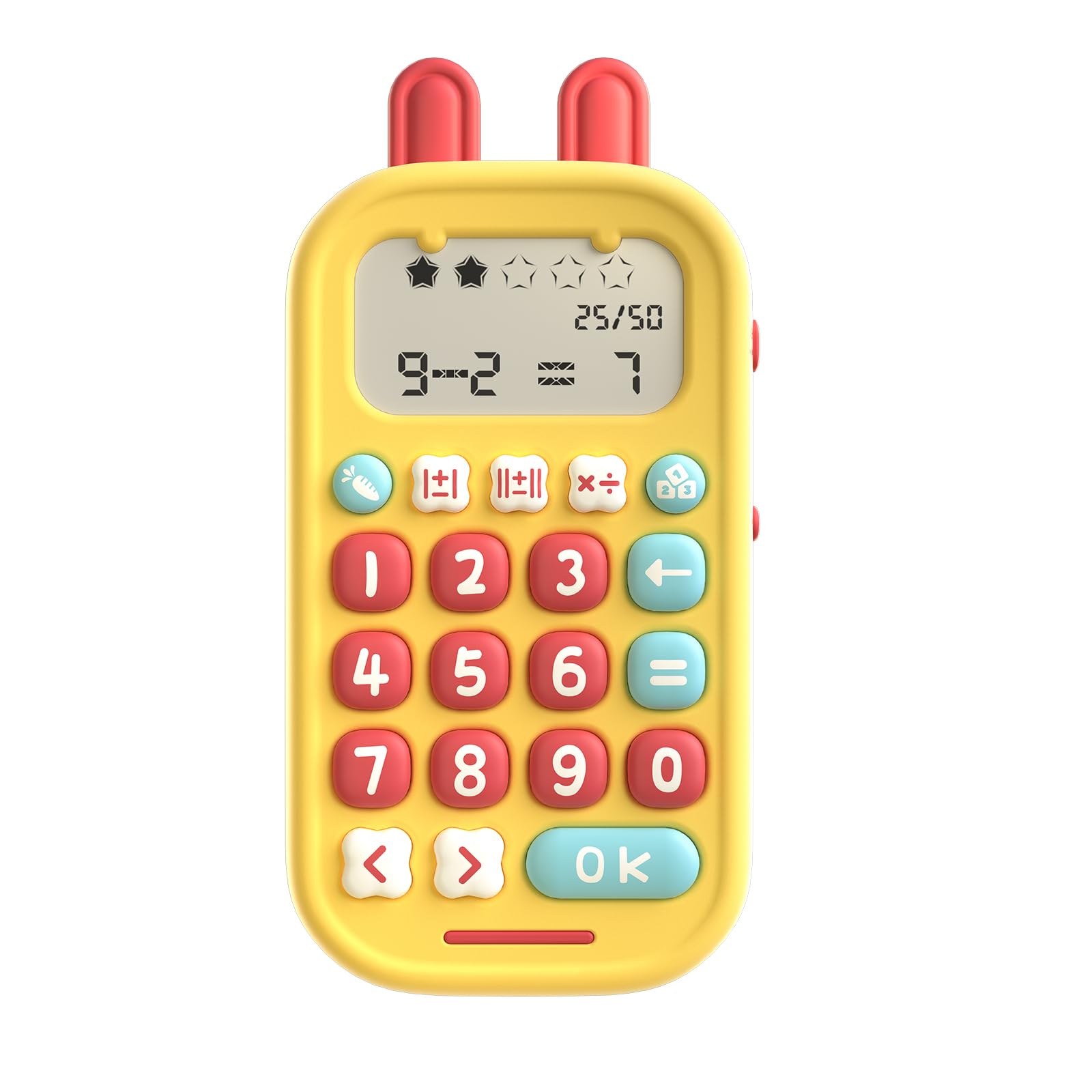
This yellow handheld is the definition of a stealth learning tool—kids love it because it looks and feels like a mini phone. It packs 19 interactive games and a library of 50,000 math questions covering addition, subtraction, multiplication, and division. It features a timed challenge mode with 5s or 10s limits to sharpen calculation speed, making it a great fit for kids aged 5-12 who are beyond basic counting.
Weighing in at only 0.16 kg, it’s the lightest option here, a full 5.6x lighter than the Sight Word Slam. This makes it a no-brainer for the car, a restaurant, or a waiting room. It includes a portable lanyard so kids can sling it over their wrist, and the adjustable volume and silent mode help keep the peace on long trips. When a kid answers, they get instant voice encouragement and earn star rewards, which keeps the practice loop going.
The thing everyone raves about is the engagement. It feels like a toy, so kids use it to “pretend it’s a phone” while actually drilling math facts. The battery compartment has a lock and key for safety, and the build is drop-resistant. A few buyers mention the volume is loud with no obvious way to turn it down, so test the settings before a quiet car ride. For a child who needs to build speed and accuracy, this is a much more notable alternative to worksheets.
Why it works: the disguise. Kids think they’re playing with a phone, and you know they’re practicing 50,000 math questions across 19 different games.
The catch: the default volume can be too loud for some, and the sound quality is decent but not premium.
4. Educational Insights Math Whiz

The serious practice tool that scales from first-grade addition to fourth-grade multiplication.
Where the alilo is a toy with math inside, the Math Whiz is a math tool that happens to be fun. It’s a handheld game that practices addition, subtraction, multiplication, and division, and it scales up with the child. It has eight different difficulty levels for each skill in Drill mode, which means a 6-year-old can start with basic addition and the same device can still challenge an 8-year-old with harder multiplication. This is a toy that grows with the child.
Parents report that kids don’t realize they are learning because the game format is so engaging, and the adjustable difficulty is the standout feature. It offers three ways to play: a Drill mode with progressive sequences, a Challenge mode that plays a numbers elimination game, and a Calculator mode for everyday use. Runs on 2 AAA batteries. The build is sturdy and compact, and while it’s heavier than the alilo at 0.28 kg, it still slips easily into a backpack for trips.
The recurring gripe is functionality—a small number of buyers receive units that simply don’t work from the start. But when you get a good one, it’s an endlessly reusable supply of problems that keeps kids occupied for hours. Compared to the alilo above, this one feels more like a dedicated learning device and less like a toy phone, which will appeal to parents who want a more “serious” educational object.
Built to Last
- Eight difficulty levels per skill extend its usefulness across grades
- Three modes prevent boredom and add real calculator utility
- Screen-free design keeps kids engaged without passive watching
Potential Issues
- Occasional units arrive with functional defects
- Plastic build feels sturdy but not premium
Best suited for: the child who loves math and constantly asks for more practice problems.
skip it if: you need a toy that entertains first—this one reads as “educational” more than “fun toy” to some kids.
5. JoyCat Kids Learning Tablet
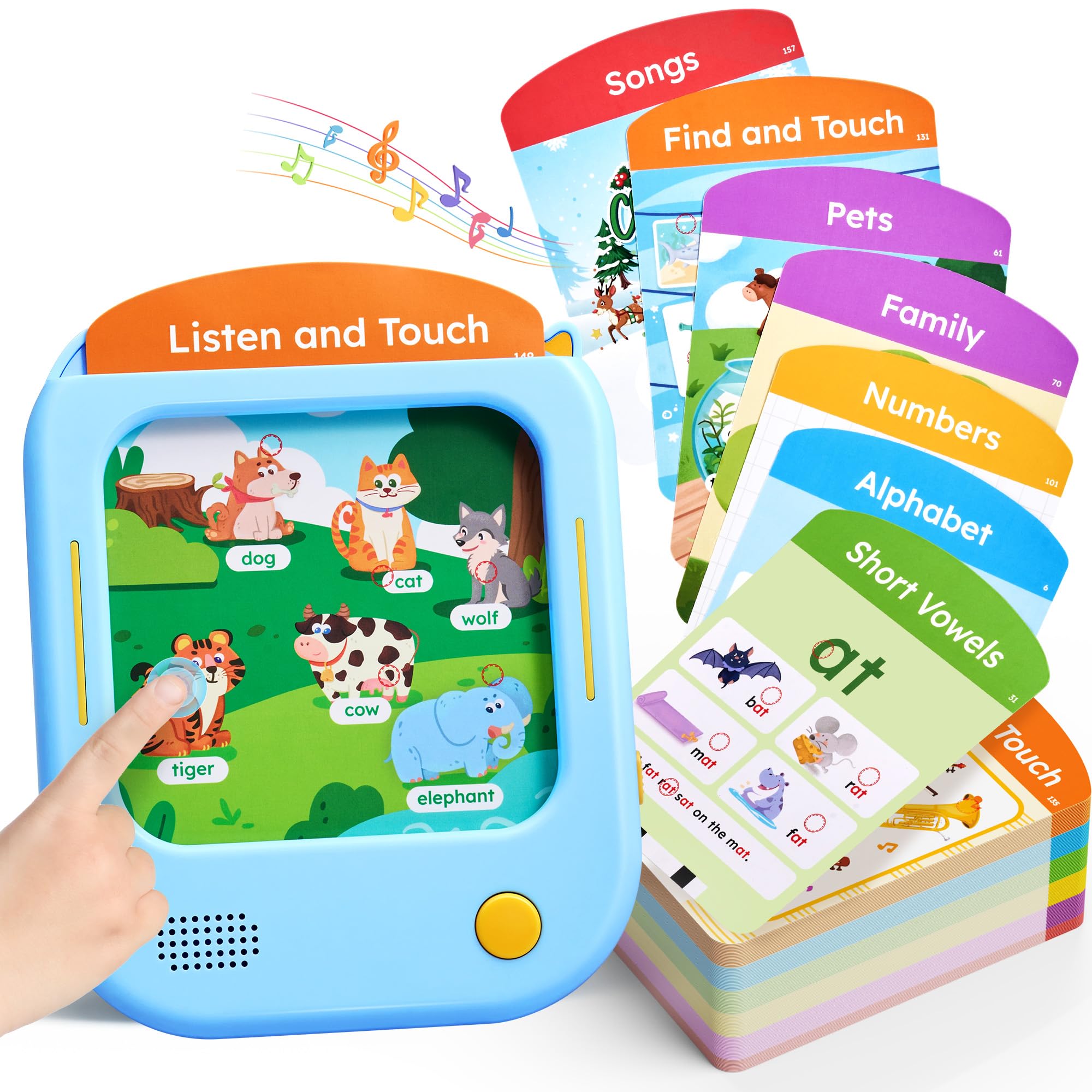
The “tablet” that’s completely screen-free, using 156 pages of talking flash cards to teach.
This is a brilliant workaround for parents who want the convenience of a tablet without the screen. The JoyCat is a physical pad with a slot on top. You insert any of the 156 talking flash cards, and the child taps a red circle on the card to hear the word pronounced with a standard American accent. It covers 600+ words, letters, short vowels, math, and songs, making it a strong all-in-one phonics introduction for ages 2-6.
The cards are made from FSC-certified paper, and the whole set is designed to be intuitive for independent play. Kids can start with letter sounds, move to short vowels and word building, and then reinforce it all through 100+ interactive games. It builds fine motor skills and hand-eye coordination, and it keeps kids engaged without visual stress. It is easy to carry in a car, and the rechargeable lithium-ion battery charges via cable, so you won’t be hunting for AAA cells.
Parents report clear gains in vocabulary and phonics from regular use. Because it uses a standard American accent for pronunciation, it’s a useful tool for language development. It’s a fantastic gift for a 2-5 year old, and the card variety means there is always something new to try. The main consideration is that it is a preschool tool; once kids are reading fluently, they will outgrow it.
The appeal: you get the variety of a tablet with none of the screen time, plus a rechargeable battery that saves you money on disposables.
The boundary: this is strictly a preschool learning tool—capable first-graders will quickly move past it.
6. Qirptey Kids STEM Building Toys

The unfussy classic with 125 pieces and an idea booklet that open up infinite imagination.
This is the perfect counterpoint to the high-tech electronic toys on this list. It’s a simple set of 125 colorful, interlocking plastic blocks that require no batteries, no screen, and no app. Kids can follow the idea booklet to build a race car, robot, truck, or dinosaur, or they can simply invent their own structures. It’s a straightforward way to build problem-solving skills, creativity, and fine motor control.
The blocks are non-toxic, odorless, and have rounded edges so little hands stay safe. It includes a sturdy toy box, which gently teaches a child to tidy up after themselves. It’s the kind of toy that entertains a 3-year-old as much as an 8-year-old, which is rare. The tool-free hand assembly means no frustration with screws or fiddly connectors, and it fits neatly into its carry case for trips.
Its open-ended design encourages daily, repeated use. It’s a great choice for a kid who loves to build but isn’t ready for the complexity of the Sillbird robot. There is no motor or electronics here, so the play is entirely driven by the child’s imagination. It’s a durable, screen-free STEM gift that keeps kids engaged without batteries or screens.
Why it earns its spot: the simplicity is the genius. It provides endless creative opportunities and requires zero power or screen time.
A fair note: it lacks the “wow” factor of electronic toys, so kids who need flashy lights might lose interest.
7. SYNARRY Wooden Puzzles

The sturdy wooden set that gives toddlers their first taste of problem-solving success.
For the youngest learners, ages 1-3, these wooden puzzles are an ideal first introduction to matching and sorting. The set comes with six puzzles covering numbers, letters, shapes, dinosaurs, animals, and vehicles. The pieces are large, thick, and solid with smooth edges, which is exactly what you want for tiny hands that are still developing coordination. The bright, vibrant images are printed on the wood with a scratch-resistant and waterproof coating.
The included storage rack is a smart touch. It keeps the pieces organized and the desktop clean, and it helps foster good organizing habits early. A 1.5-year-old can enjoy slotting pieces into place, while a 4-year-old can use the same puzzles to learn shape names. It’s a rare toy that genuinely spans that age gap, making it high value for a growing family. The quality is a highlight—this is not a flimsy cardboard puzzle but a solid wooden set that holds up to daily play.
The main thing to watch is the stickers. A few customers note that some decorative stickers can peel off with rough handling, so it’s worth being gentle at first. Despite that, the educational value and the quality of the wood are consistently praised. It’s a beautiful, reliable gift that encourages fine motor skills, hand-eye coordination, and memory, all without a single battery.
Solid Foundation
- Large, thick pieces are perfectly sized for toddler hands
- Scratch-resistant and waterproof coating survives daily play
- Storage rack keeps the set organized and tidy
Small Detail
- Some decorative stickers may peel off over time
- Barely 0.04 inches thick, so pieces are flat, not chunky blocks
Perfect for: a first birthday or a toddler who is just learning to match shapes and colors.
Think twice if: you’re buying for a 4+ year old who needs more of a challenge—this is early-stage learning.
8. The Fidget Game SquishyLand in Rainbow Reef

The CandyLand-style board game that sneaks serious phonics drills into family game night.
This is the rare educational toy that the whole family will fight over. Described as “CandyLand on educational steroids,” SquishyLand is a board game for 2-6 players that teaches foundational reading skills. It’s designed for Pre-K through 2nd grade, covering blending sounds, phoneme manipulation, rhyming, and decoding syllables. The game is built around tactile mochi squishy toys, which add a sensory element that kids absolutely love.
The educational design is serious, developed entirely by teachers and aligned with both U.S. State Standards and Canadian Provincial Standards. Yet it plays like a pure game—it takes about 15 minutes per round, and the squishy pieces keep kids engaged. It’s an inclusive choice that supports all learners, including those with autism, ADHD, or dyslexia, because the multi-sensory approach (sight, sound, and touch) boosts focus and reduces stress.
The gameplay is the reason families love it. It feels like play, not homework, and kids repeatedly request to play. Each of the eight card decks focuses on a different phonics skill, and the cards even prompt extra questions for parents or tutors to ask. The downside is durability—the squishies are a hit but some buyers find they don’t hold up to aggressive squeezing, and a few feel the price is high for what it is. Still, for a family game that builds real reading skills, it’s a standout.
What makes it special: the multi-sensory squishies and vibrant board make phonics feel like a treat, and the teacher-designed curriculum is the real deal.
The reality check: if you squeeze the squishies too hard, they may not last, so keep play gentle.
9. KOKODI Talking Pen Books Sets
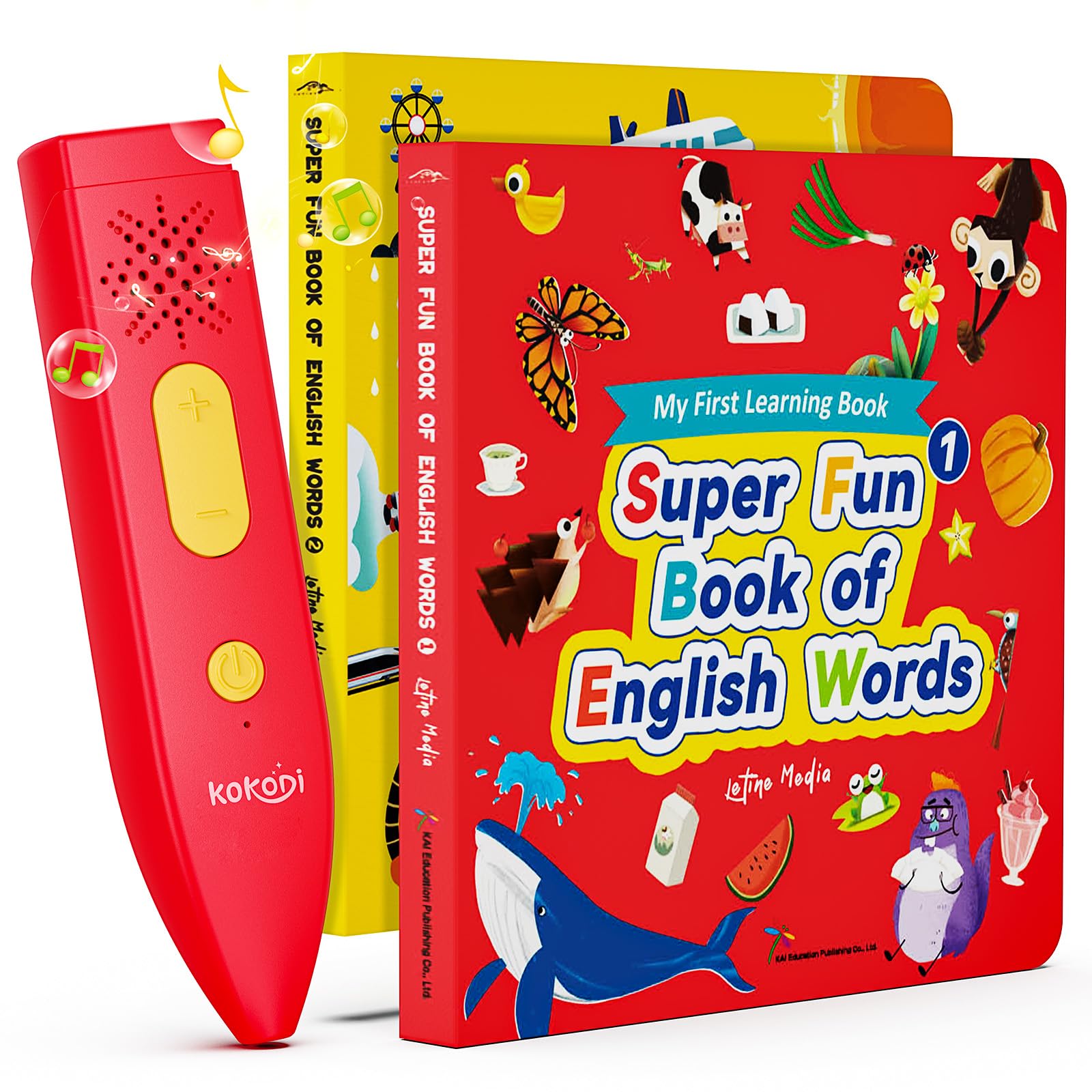
The tap-to-read pen set that lets toddlers learn independently without any downloads or setup.
Its instant, no-setup design lets toddlers play independently, freeing parents for other tasks. The set includes a talking pen and two books, and it works instantly from the start—no downloads, just insert 2 AAA batteries and turn it on. A child simply taps the pen on a word or image, and it reads the content aloud. The two books feature 22 themes, over 450 words, and over 10,000 touch-read positions, providing a staggering amount of content to explore.
It’s designed for children aged 2-6, and toddlers grasp the mechanics almost immediately. The pen responds with sound effects, spoken words, and interactive games—there are over 500 interactive games and 1,500+ pure American English pronunciations. The talking feature keeps kids engaged, and the variety of books means they don’t get bored. It’s a fantastic screen-time substitute that kids can use anywhere, from the car to the living room.
The standout feature is the recording function. Parents can record their own voices to serve as a messaging tool, which is a wonderful way to stay connected during the day. The books are made with eco-friendly ink, are crease-resistant and tear-proof, and have rounded corners. Kids learn correct pronunciation without needing an adult to drill them, and the pen works with additional books from the same brand. The main quirk is that you must tap slowly and accurately—tapping too quickly can cause the audio to cut off or skip.
The big advantage: true independent learning. The child masters the pen instantly, freeing you up while they build vocabulary and pronunciation skills.
The quirk: impatient toddlers who tap too fast will trigger audio cut-offs, so gentle, deliberate tapping is required.
Understanding the Specs
Screen-Free Design
Several top picks here deliberately avoid screens to reduce visual stress and passive consumption. They rely on audio, tactile pieces, and physical actions instead. This often leads to better active engagement, as kids must listen, think, and physically respond rather than just watch.
Replay Value
A toy’s longevity depends on its content depth and adjustability. Look for large question banks, multiple game modes, or difficulty levels that scale with age. A toy with 50,000 questions or 8 difficulty levels will stay relevant far longer than a single-session novelty, giving you more educational value per dollar.
Portability
Consider where the toy will be used. Handheld math games weighing around 0.16 kg are ideal for car rides and restaurants, while heavier wooden sets (0.9 kg+) are better suited for a playroom or desk. Match the weight and size to your intended use case to ensure it actually gets used.
Battery Life & Power
Check how a toy is powered before buying. Some use standard AAA batteries (which you must buy), while others offer a rechargeable lithium-ion battery for convenience. A rechargeable battery saves money over time and reduces the frustration of a dead toy at the worst moment.
FAQ
At what age should I introduce educational toys to my child?
Are screen-free toys really better for learning than apps?
How long does the battery last on these electronic toys?
Can these toys be used while traveling in the car?
What is the difference between the Math Whiz and the alilo math game?
Are the wooden puzzle pieces safe for a 1-year-old?
Do I need to buy extra books or cards for these toys later?
My child struggles with sight words. Which toy is the best fit?
Are these toys suitable for children with learning differences like autism or ADHD?
How do I keep my toddler from breaking these electronic toys?
Final Thoughts: The Verdict
Across the board, the best educational product is the Sillbird STEM Robot because it covers the most ground, combining engineering, coding, and creative play. If you want to build early reading skills, grab the Sight Word Slam. For a family game night that secretly teaches phonics, the SquishyLand board game is the one to reach for.
How We Picked
We do not accept paid placement. Every pick is matched to a real buyer and a real use-case; we do not hands-on test units.
Sources & Methodology
Specifications: manufacturer listings and product documentation. Review insights: verified customer reviews, as of August 2026. Pricing: not shown on this page (it changes often); check the current price via the retailer link.
As an Amazon Associate, WellFizz earns from qualifying purchases. This does not affect which products we feature.
Related Guides

Mo Maruf
I created WellFizz to bridge the gap between vague wellness advice and actionable solutions. My mission is simple: to decode the research and give you practical tools you can actually use.
Beyond the data, I am a passionate traveler. I believe that stepping away from the screen to explore new environments is essential for mental clarity and physical vitality.