Our readers keep the lights on and my smoothie glass nicely filled. As an Amazon Associate, I earn from qualifying purchases.
Specs are compiled from manufacturer listings and verified buyer reviews and can change over time — please confirm the key details on the product page before buying.
Lactic acid is the exfoliant that actually plays nice with your skin. It dissolves the dead cells sitting on top while pulling moisture in, which is why it leaves you glowing instead of flaky. The hard part isn’t finding a cream with lactic acid — it’s finding one with the right concentration, texture, and supporting ingredients for your specific skin type.
I’m Mohammad Maruf — the founder and writer behind WellFizz. This guide is built by comparing the manufacturers’ published specifications and the patterns across verified customer reviews, so you get each pick’s real strengths and trade-offs instead of marketing spin.
Whether you’re chasing a daily dewy finish or tackling darker patches, the right face cream with lactic acid makes the difference between skin that glows and skin that just feels greasy.
Our Picks at a Glance
How To Choose The Best Face Cream With Lactic Acid
Not every lactic acid cream is built for every face. Some are gentle enough for twice-daily use, while others are strong enough to cause a burning sensation if you overdo it. Before you buy, you need to figure out what your skin actually tolerates.
Know Your Skin’s Sensitivity Level
Lactic acid is an alpha hydroxy acid (AHA), meaning it works by loosening the bonds between dead skin cells on the surface. If you have sensitive skin, you want a formula that pairs lactic acid with soothing ingredients like hyaluronic acid or squalane. If you have oily skin, you want something lightweight that won’t leave a sticky residue behind.
Check for Supporting Ingredients
The best formulas don’t rely on lactic acid alone. Look for creams that combine it with hydrating workhorses like hyaluronic acid, squalane, or glycerin. Retinol and vitamin C boost the brightening effect, but both can irritate, so patch test first. Avoid creams with mineral oil, parabens, or phthalates if you prefer a cleaner ingredient list.
Decide on Your End Goal
Are you chasing a daily glow, or are you treating a specific concern like dark patches or enlarged pores? A daily moisturizer with a low acid concentration keeps things gentle. A targeted treatment cream with retinol packs more punch but demands careful use. Match the product to the problem, not the other way around.
Quick Comparison
| Model | Best For | Size | Key Actives | Skin Type | Amazon |
|---|---|---|---|---|---|
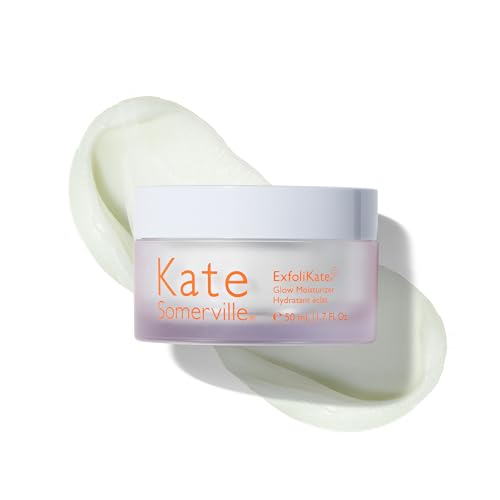
| Kate Somerville ExfoliKate Glow★ Best Overall | Daily radiance + hydration | 1.7 oz | Glycolic + Lactic Acid | Normal to dry | Amazon |
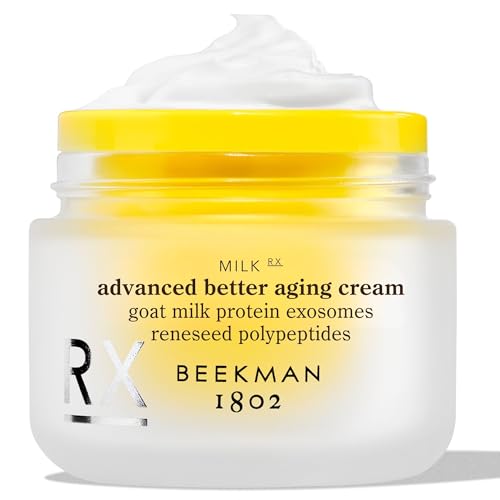
| Beekman 1802 Milk RXFirming Pick | Firming + gentle exfoliation | 1.69 oz | Goat milk exosomes + Polypeptide | Sensitive, dry | Amazon |
| Glo Skin Beauty Hydra-Bright | Instant glow + hydration | 1.7 oz | Vitamin C + Lactic Acid | All skin types | Amazon |
| Obagi Nu-Derm Blend Fx | Brightening + spot fading | 2 oz | Arbutin + Vitamins C & E | Normal to dry | Amazon |
| TOSOWOONG Pore Refiner | Pore minimization + oil control | 1.76 oz | Glycolic + Lactic Acid | Oily, combination | Amazon |
| FIXDERMA Nigrifix | Targeted dark patches | 1.76 oz | Retinol + Lactic Acid + Urea | Body areas, not just face | Amazon |
In-Depth Reviews
1. Kate Somerville ExfoliKate Glow Moisturizer
Our pick — over 4.5★ from 450+ verified ratings; the strongest balance of quality and price.
The daily moisturizer that earns its “Glow” name with a clinically backed punch of exfoliating acids.
This one does the heavy lifting so you don’t have to. It pairs glycolic acid with lactic acid to smooth texture and fade dullness, then backs it up with hyaluronic acid and squalane so you never feel stripped. In an independent study, 100% of participants showed improved moisturization and 97% showed better luminosity after a single use.
The formula avoids mineral oil, parabens, phthalates, SLES, and SLS, which makes it a gentler pick for daily use. It’s a favorite for dry skin — buyers report using it for six years straight and still loving it, especially when layered over a basic hyaluronic acid serum.
Owners say it keeps skin soft, clear, and breakout-free across both winter and summer. The most-praised trait is moisturizing, which makes sense given how well it balances exfoliation with hydration.
What wins people over
- Non-greasy formula that doesn’t feel sticky
- Free of mineral oil, parabens, and phthalates
- Layers well over serums or under makeup
What to weigh
- Value for money draws mixed feedback — it’s a premium price point
- Contains exfoliating acids, so pair with SPF during the day
Reach for this if: you want one daily cream that exfoliates and hydrates without a greasy film — it’s the crowd favorite for a reason.
Note the cost: it sits at the premium end of the range, so it’s a splurge if you’re on a strict budget.
2. Beekman 1802 Milk RX Advanced Better Aging Face Cream
A doctor-formulated cream that firms and smooths using goat milk’s naturally occurring lactic acid.
Beekman approaches lactic acid differently — it comes built into goat milk, which has the same pH as human skin. That means you get gentle exfoliation plus vitamins and minerals that help keep the microbiome balanced and prevent visible irritation. It’s a clever way to get acid benefits without the sting.
The formula goes further with goat milk protein exosomes and reneseed polypeptide to boost the appearance of skin collagen and improve visible firmness. It’s marketed as a 4x retinol alternative — smoother, more elastic skin without the irritation that retinol often brings. This 1.69-ounce jar delivers hydration that lasts 24 hours, which is a big part of why moisturizing is the most-praised trait among owners.
The texture is soft and non-greasy — buyers describe it as lightweight, silky, and fast-absorbing, with a light scent that doesn’t linger. Some report it visibly blurs forehead lines and pairs beautifully with a toner for that “glass skin” effect. There’s even a refill pod available for when you run out.
Why it stands out: it’s the gentlest way to get lactic acid benefits — goat milk’s natural pH means sensitive skin types tend to tolerate it beautifully.
The trade-off: at 1.69 ounces it’s slightly less product than the Kate Somerville at 1.7 ounces, yet it carries a higher price tag, so value-conscious buyers will feel it.
Best for: anyone with sensitive or dry skin who wants firming and exfoliation without retinol-style irritation.
skip it if: you’re hunting for aggressive acid strength — this one stays gentle by design.
3. Glo Skin Beauty Hydra-Bright AHA Brightening Moisturizer

A brightening moisturizer that delivers visible shine immediately — not just after weeks of use.
Most brightening creams make you wait. This one gives you a “lit-from-within” glow on day one, thanks to a mica-infused mineral complex that adds a subtle, non-glittery shimmer. The lactic acid and vitamin C work underneath to fade dullness and smooth texture over time, while the 1.7-ounce formula delivers deep hydration that plumps and nourishes.
Owners with sensitive skin call it their go-to, noting the very tiny hint of sparkle adds “beautiful shine” without looking like straight-up glitter. It’s not tinted, so it works under makeup or alone. The texture draws positive feedback for being non-greasy — though a few note it runs slightly heavy if you prefer an ultra-light feel.
The dual-action brightening is the standout: vitamin C boosts clarity while the AHA exfoliating acids refine the appearance of pores, fine lines, and wrinkles. It’s suitable for all skin types, which makes it a safe bet if you’re not sure what your skin will tolerate.
Best for: the makeup-free days where you want skin that looks awake — the shimmer is the whole point.
Keep in mind: that same micro-shimmer won’t suit everyone; if you prefer a completely matte finish, look elsewhere.
Grab this if: you want a moisturizer that doubles as a subtle highlighter and fades dullness at the same time.
Think twice if: you can’t stand any visible shimmer on your face — this formula wears its glow proudly.
4. Obagi Nu-Derm Blend Fx
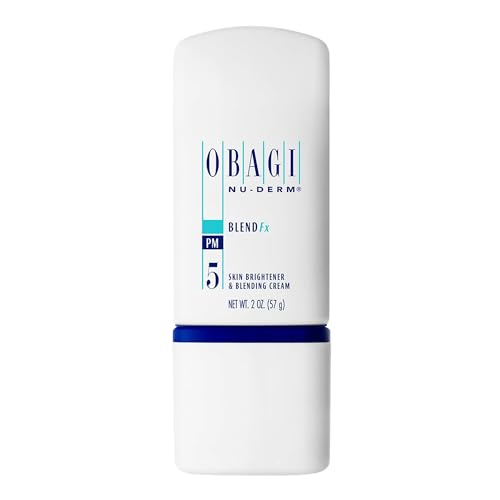
A derm-favorite brightening cream that fades sun spots with a slow, steady hand.
Obagi comes from the medical side of skincare, and this 2-ounce cream shows it. The formula pairs lactic acid with arbutin (a gentler brightener) and vitamins C and E to soften skin and fade pigmentation. It’s a bigger jar than the others here — 2 ounces vs. 1.7 ounces for the Kate Somerville and Glo — so the sticker shock is partially offset by more product.
Effectiveness is the most-praised trait, with owners noting it lightens sun spots and delivers a healthier, more vibrant glow. One buyer’s dermatologist handed over the first bottle, which says something about how it’s regarded in clinical circles. The recommended method is mixing a pea-size portion with your regular moisturizer and applying nightly — results can take up to three weeks, so patience is part of the protocol.
The catch is the scent. Several buyers describe it as “terrible” and “not that pleasant,” which is the recurring gripe. It’s a functional cream, not a pampering one. If you can get past the smell and the wait, it’s a proven workhorse.
What wins: the brightening power — it’s been a nightly staple for some users for seven years straight, often paired with tretinoin.
The honest trade-off: the fragrance is polarizing, and at this price point the scent feels like an oversight.
Choose this if: you’re targeting stubborn dark spots and want a clinically oriented brand that delivers.
Pass if: scent matters deeply to you and a strong, medicinal smell would ruin the experience.
5. TOSOWOONG Pore Refiner Cream

A Korean pore-minimizing cream that cuts total pore volume by 32.5% over four weeks.
If oily skin and visible pores are your main issues, this is the formula engineered for you. The hydra-fresh blend of glycolic acid, lactic acid, and a Fruit AHA Complex works to release and minimize pores, control excess oil, and balance sebum production — all without that sticky sensation. At 1.76 ounces, it’s the most product in this lineup alongside the FIXDERMA.
Clinical testing measured a 32.5% drop in total pore volume after 4 weeks, powered by advanced France Skinperf LWG ingredients. Owners describe it as lightweight and fast-absorbing, with one calling it “my favorite moisturizer ever” for how it goes on smooth and leaves a beautiful glow with softer, minimized pores.
Pore reduction is the most-praised trait, and the smooth application follows close behind. But results aren’t universal — one buyer used it for at least a month with minimal results, and a few noted a mild burning sensation when washing their face after days of use. If your pores are deep and stubborn, this may refine rather than erase.
What owners love
- Fast-absorbing, non-clogging texture that works under makeup
- Controls oil and balances sebum for a dewy, not shiny, finish
What to watch
- Results vary — some see little pore change after a month
- Can cause a mild burning sensation on sensitive days
For oily, congested skin: this is your best shot at visibly tighter pores without a heavy cream.
For already-sensitive skin: the acid trio may sting — patch test before committing to daily use.
6. FIXDERMA Nigrifix Cream
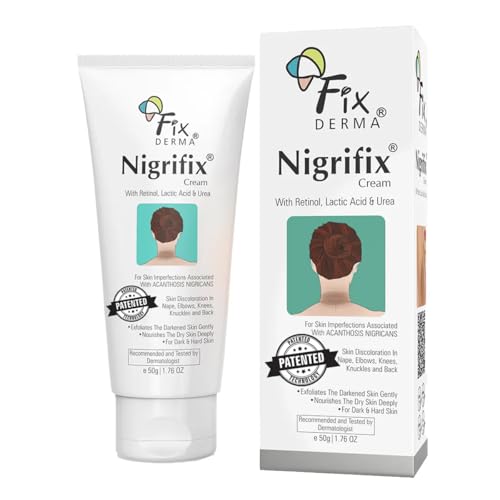
A medicated-style treatment aimed at acanthosis nigricans — the dark, velvety patches in body folds.
This one’s not a pretty daily moisturizer; it’s a targeted treatment. FIXDERMA formulated Nigrifix specifically for acanthosis nigricans, a skin condition marked by dark, velvety discoloration on the back of the neck, ankles, knuckles, armpits, thighs, and elbows. The key ingredients — lactic acid, retinol, tea tree oil, urea, and sweet almond oil — work to exfoliate, soften, and even out those hardened, darker areas.
At 1.76 ounces, it matches the TOSOWOONG for the largest size here. Owners who use it correctly see real change: apply daily to affected areas, use at night, and wear sunscreen if you’re heading outside. One buyer saw results in about three weeks, another cleared their neck within a month. The formula absorbs quickly and stays non-greasy without a tacky feel.
But this formula demands respect. The urea and tea tree oil can irritate sensitive skin — patch test for two to three days before full use. And results split opinion sharply: some call it “miraculous,” while others report no change after a full tube. The sticking point is consistency — this cream works for those who follow the protocol.
For the right user: it’s a genuinely effective treatment for dark body patches that most face creams never touch.
For everyone else: the results are polarizing — support it with sunscreen and nightly application, or risk disappointment.
Pick this up: if dark patches on your neck, elbows, or armpits are the specific problem you’re fighting.
Look elsewhere: if you just want a glowing face — this is a body-focused treatment, not a daily face cream.
Understanding the Specs
Lactic Acid vs. Glycolic Acid
Both are alpha hydroxy acids (AHAs), meaning they exfoliate by dissolving the bonds between dead skin cells. Lactic acid has a larger molecular size than glycolic acid, so it penetrates more slowly and gently. That makes lactic acid the better choice for sensitive or dry skin, while glycolic acid delivers faster, stronger results for those who can tolerate it. Many of the best creams — like the Kate Somerville — blend both for balanced exfoliation.
pH and Skin Compatibility
Your skin’s natural pH sits around 4.5 to 5.5, and acids work best when the formula lands in a similar range. The Beekman 1802 cream leans into this by using goat milk, which naturally matches human skin pH — that’s why it tends to cause less irritation than synthetic acid blends. When a cream is too acidic, you feel it as a burn; when it’s well-balanced, you just get the glow.
FAQ
How often should I use a lactic acid face cream?
Will lactic acid cause irritation on my sensitive skin?
Can I use a lactic acid cream with retinol?
How long until I see results from lactic acid?
Is lactic acid safe for acanthosis nigricans?
What’s the difference between a daily moisturizer and a treatment cream?
Can lactic acid help reduce the appearance of pores?
Should I use sunscreen with a lactic acid face cream?
Which lactic acid cream works best for dry skin?
Are there lactic acid creams without fragrance?
Final Thoughts: The Verdict
For the majority of shoppers, the best face cream with lactic acid is the Kate Somerville ExfoliKate Glow Moisturizer because it pairs powerful clinical results with a non-greasy texture that suits daily use. If you want firming with a gentle touch, grab the Beekman 1802 Milk RX. And for oily skin chasing visibly smaller pores, the TOSOWOONG Pore Refiner is the one to reach for.
How We Picked
We do not accept paid placement. Every pick is matched to a real buyer and a real use-case; we do not hands-on test units.
Sources & Methodology
Specifications: manufacturer listings and product documentation. Review insights: verified customer reviews, as of August 2026. Pricing: not shown on this page (it changes often); check the current price via the retailer link.
As an Amazon Associate, WellFizz earns from qualifying purchases. This does not affect which products we feature.
Related Guides

Mo Maruf
I created WellFizz to bridge the gap between vague wellness advice and actionable solutions. My mission is simple: to decode the research and give you practical tools you can actually use.
Beyond the data, I am a passionate traveler. I believe that stepping away from the screen to explore new environments is essential for mental clarity and physical vitality.