Our readers keep the lights on and my smoothie glass nicely filled. As an Amazon Associate, I earn from qualifying purchases.
Specs are compiled from manufacturer listings and verified buyer reviews and can change over time — please confirm the key details on the product page before buying.
When a horse is diagnosed with Cushing’s, the hay you feed can feel like a minefield — sugar and starch hide in plain sight, and getting it wrong can trigger laminitis. The right feed for Cushing’s horses avoids high-NSC ingredients while still delivering fat, fiber, and protein daily. This guide compares three trusted low-starch, low-sugar options to help you match one to your barn.
I’m Mohammad Maruf — the founder and writer behind WellFizz. This guide is built by comparing the manufacturers’ published specifications and the patterns across verified customer reviews, so you get each pick’s real strengths and trade-offs instead of marketing spin.
You need a feed that keeps your horse’s insulin steady, and that means checking the starch and sugar numbers, not just the label. We compared the exact specs, ingredient lists, and owner feedback for each feed for horses with cushing’s below, so you can see which one fits your horse’s needs before you buy.
Our Picks at a Glance
How To Choose The Best Feed For Horses With Cushing’s
Your main goal with a metabolic feed is to keep insulin steady. For a horse with Cushing’s (PPID — a hormonal condition affecting the pituitary gland) or EMS (Equine Metabolic Syndrome), even a mild insulin spike can raise the risk of laminitis, which is the painful inflammation of the hoof laminae. The feed you choose either helps you manage that risk or quietly works against you.
Keep NSC and starch figures low
NSC (Non-Structural Carbohydrates) is the combined sugar and starch total inside the feed, and the lower it sits, the safer the meal is for an insulin-resistant horse. Look for feeds that print their actual NSC percentage on the bag — a number like “less than 6.5% NSC” tells you far more than a vague “low sugar” promise. Starch on its own should also be minimal, since starch converts to glucose quickly after eating.
Check for cereal grains and sweeteners
Cereal grains like oats, corn, and barley are starch bombs that can undo all your careful hay choices. Molasses is the other offender — it is pure sugar poured on top of forage. A feed that is explicitly “cereal grain free” and free of molasses is a strong starting point, and skipping soy can also help if your horse has other sensitivities. When the ingredient list is short and recognizable, you can actually trust what goes in the bucket.
Quick Comparison
| Model | Best For | Form | Key Nutritional Claim | Added Support | Amazon |
|---|---|---|---|---|---|
| MetaStable Pellets★ Best Overall | Targeted metabolic correction | 5 lb Pellet | Stabilizes insulin in 60 days | Resveratrol, Leucine | Amazon |
| Hygain Zero | Complete low-NSC feeding | 44 lb Grain | Less than 6.5% NSC, 35% fiber | Biotin, Vitamin E | Amazon |
| AnimoTrace+ | Vitamin-mineral topping | 5 kg Pellet | Low-NSC ingredients, no added iron | Copper & Zinc | Amazon |
In‑Depth Reviews
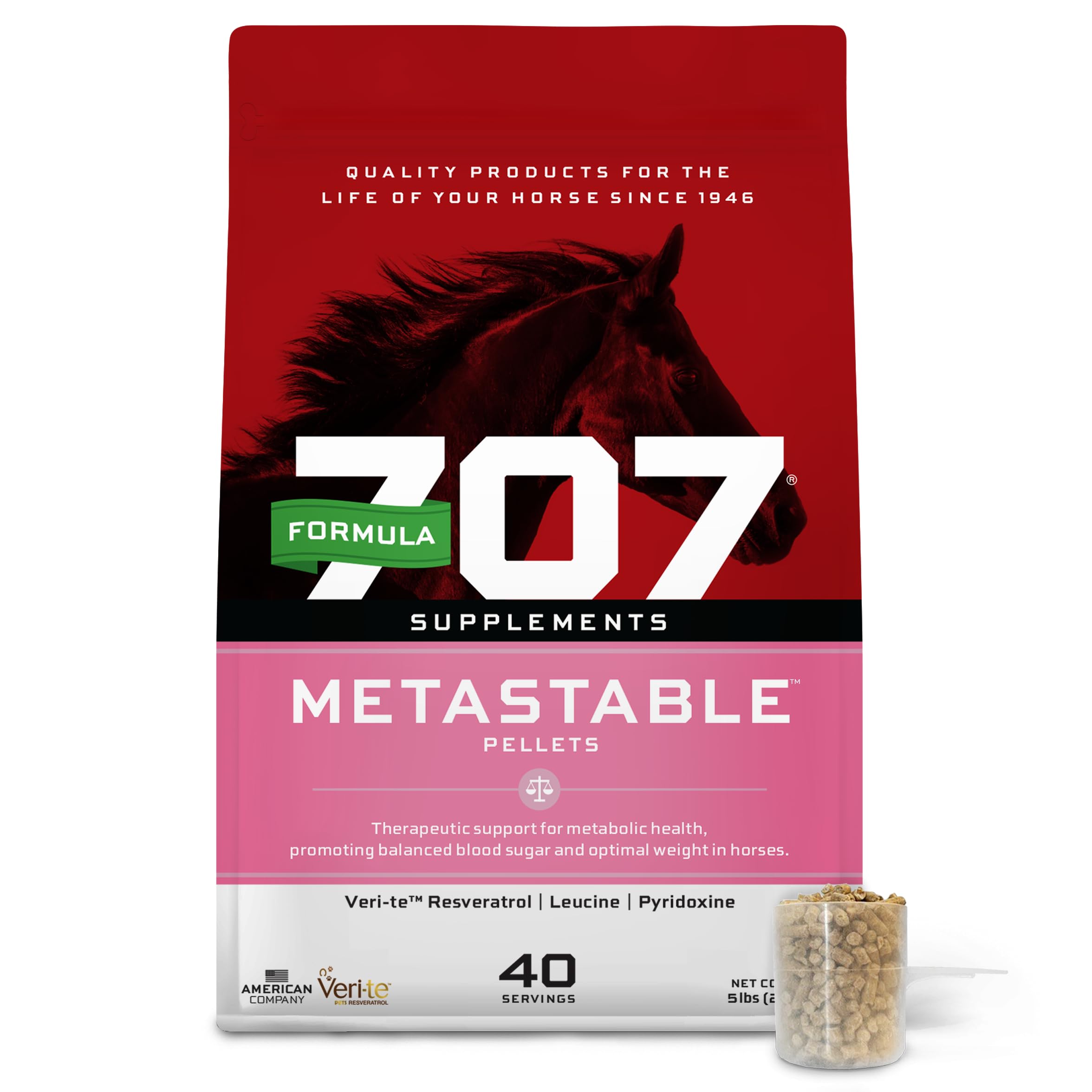
1. MetaStable Pellets for Horses, 5 lb, 40 Servings
Our pick — 4.5★ from 100+ verified ratings; the strongest balance of quality and price.
The targeted pellet that visibly trims fat pads and steadies insulin, backed by a 60-day study.
This is the feed that owners describe with genuine surprise, because the changes show up in the mirror. The formula is built around leucine to hold onto muscle, pyridoxine (Vitamin B6) to help insulin work properly, and Veri-Te resveratrol — a highly bioavailable antioxidant that supports metabolic health without upsetting the gut. A 60-day study showed it stabilized insulin and supported healthy weight in horses.
Results often land faster than that, though. Buyers report seeing improvements in as little as 3 weeks, with fat pads shrinking, necks trimming down, and horses looking “trim and fit” again. That rapid turnaround is what wins people over — the effectiveness is the thing owners praise most, and the pellets are easy to mix straight into the daily feed with no powder mess or complicated dosing.
For horses with EMS, insulin resistance, Cushing’s (PPID), or laminitis risk, this delivers targeted nutritional support that goes beyond plain forage. It comes from Formula 707’s own Colorado facility, so every 5 lb bag (40 servings) carries consistent quality control. The crowd favorite here — 4.5 stars across 100+ ratings — is a genuinely strong signal when the topic is metabolic health.
What Wins Owners Over
- Visible fat-pad reduction and trimmer crest in weeks
- University-studied formula for insulin and weight support
- Easy pellet form that mixes cleanly into daily feed
Fair Trade-offs
- Sits at a premium price point for a 5 lb bag
- Not a full ration — pairs best with a base forage diet
Reach for this if: your horse needs visible metabolic correction (fat pads, crest, weight) and you want a studied, targeted pellet rather than a general balancer.
Look elsewhere if: you need a complete meal replacement to feed as the sole ration — this is a targeted supplement, not a full feed.
2. Hygain Zero – Ultra-Low Starch, Low Sugar, Low NSC, Cereal Grain Free, Fully Fortified Horse Feed – 44LB
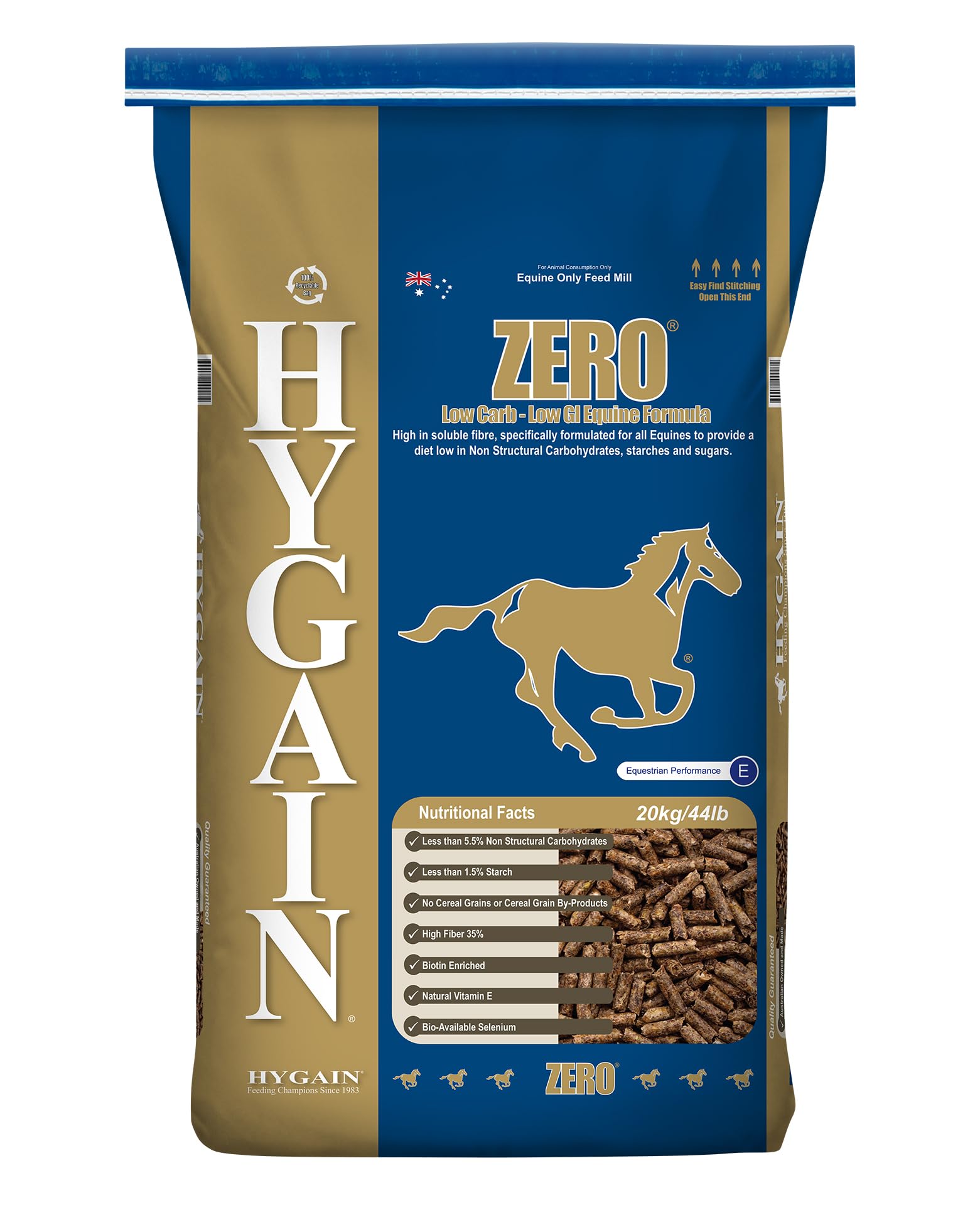
A complete low-NSC ration at 44 lb that makes full feeding safe for metabolic horses.
This is the rare bag that can actually anchor a full meal, not just top it off. Hygain Zero holds less than 6.5% NSC (non-structural carbohydrates, the sugars and starches that spike insulin) and less than 1.5% starch, which puts it squarely in the safe zone for insulin-sensitive horses. It delivers a hefty 35% fiber to keep the hindgut happy and the horse feeling full. It is also cereal grain free, so there are no oats, corn, or barley hiding inside to spike glucose after the meal.
The ingredient list is exactly what your veterinarian wants to see. The product contains no molasses, corn, or soy, which is precisely why vets point owners toward it — as one reviewer noted, their vet recommended it for a horse with Cushing’s because of those clean ingredients. Compared to the MetaStable pellets above, this is a full 44 lb bag meant to be fed as the primary ration, which changes the value picture completely for multi-horse barns.
It is also fully fortified with vitamins and minerals, plus biotin for hoof strength and natural Vitamin E for antioxidant protection. Hygain claims the lowest sugar content of any complete feed on the market., and while that claim needs your own verification, the printed numbers back up the safety case. This is the honest workhorse of the group — built to be fed daily, in volume, without guilt.
The Practical Wins
- Complete feed — safe to feed as the main ration at 44 lb
- Printed NSC and starch numbers you can actually verify
- Biotin and natural Vitamin E add hoof and immune support
Keep In Mind
- Shipping a 44 lb bag is heavy — plan your setup
- Fewer total owner reviews than the top pick
Best for: barns feeding multiple metabolic horses a safe complete ration without juggling several supplement scoops.
Watch out for: the bulk size; if you only have one small pony, a 44 lb bag may go stale before you finish it.
3. AnimoTrace+ 5kg | Supports Hoof Growth | Horse Vitamin and Mineral Supplement
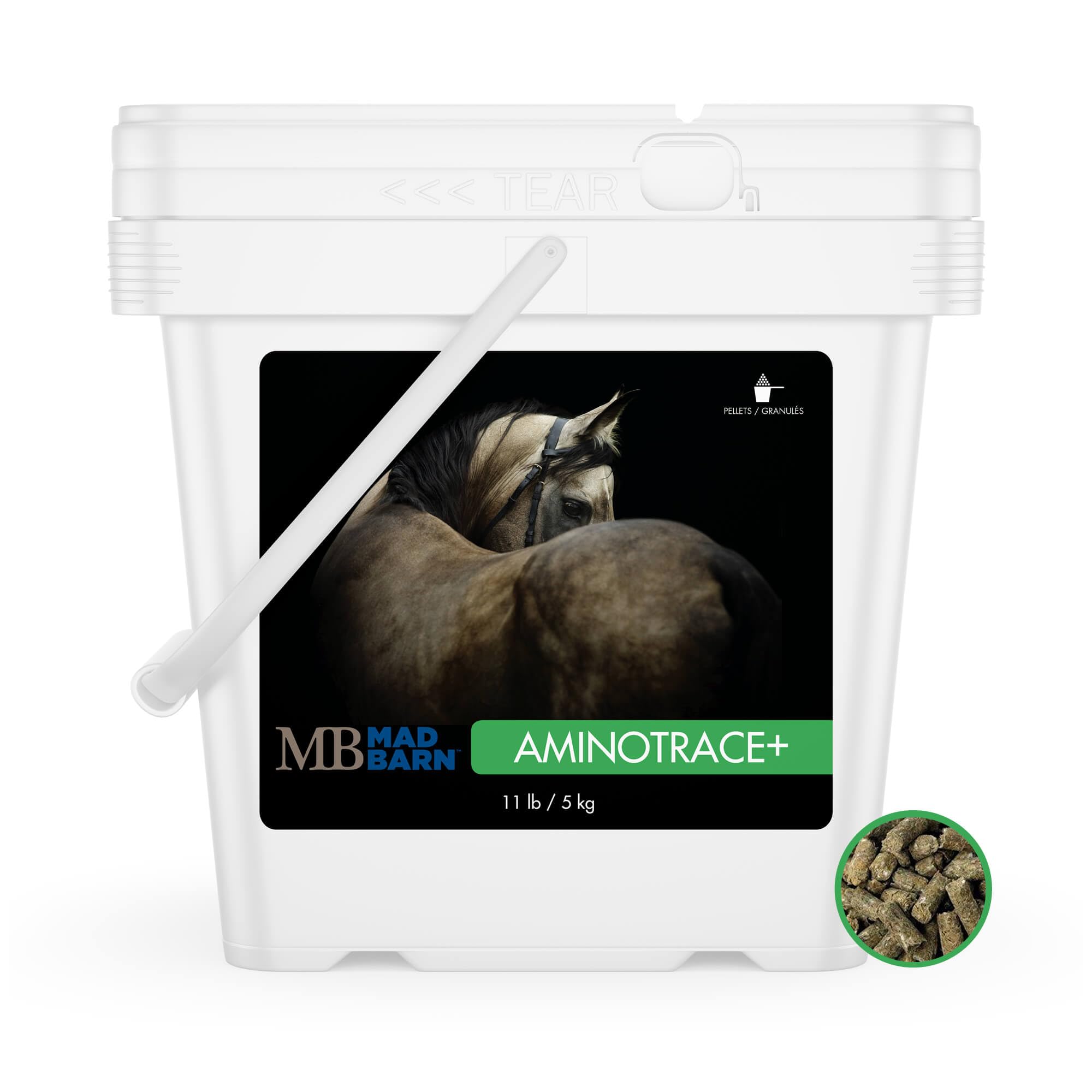
A farrier-favorite mineral balancer that rebuilds hooves while feeding the metabolic system cleanly.
AnimoTrace+ is a vitamin-mineral supplement from Mad Barn, Trusted by Dr. Eleanor Kellon, VMD for metabolic horses and recommended by farriers for hoof strength.. It uses 100% organic trace minerals with improve copper and zinc, which are the exact building blocks weak, shelly hooves crave.
The label is refreshingly strict for a metabolic horse: only low-NSC ingredients and no added iron. That matters because excess iron can interfere with insulin regulation, so keeping it out of the scoop is a quiet form of protection. Owners mention real outcomes here — improved feet, voluntary running, weight gain, and a horse that simply looks younger — though the full picture takes patience.
One honest wrinkle: some horses refuse these pellets at first. Customers note a gradual reintroduction to 120g over 2.5 weeks eventually wins them over, and once accepted, the horses come running for that morning scoop. This is more expensive than a standard ration balancer and the standout results (topline rebuilding, hoof quality) show up over months rather than days, so it rewards consistency over instant gratification.
Where It Shines
- Organic copper and zinc target hoof strength directly
- No added iron — a smart safeguard for insulin handling
- Veterinary and farrier endorsement for metabolic horses
Be Prepared For
- Some horses need weeks of gradual introduction to accept it
- Priced as a premium balancer, not a budget topping
Choose this if: hoof quality is your main worry and you already feed a clean base forage that just needs mineral completion.
skip it if: you want an instant visible change — this is a long-game supplement that pays off over months of daily use.
Understanding the Specs
NSC and Starch
NSC stands for Non-Structural Carbohydrates — the combined sugar and starch in a feed. For a horse with Cushing’s or EMS, keeping NSC low is the entire game, because these carbs convert to glucose quickly and push insulin up. A feed that prints “less than 6.5% NSC” or “less than 1.5% starch” gives you hard numbers to trust, whereas a bag that only says “low sugar” without a figure leaves you guessing.
Complete Feed vs Supplement
A complete feed like Hygain Zero is meant to be the main meal — it carries fiber, energy, and fortification all in one bag. A supplement like AnimoTrace+ or MetaStable is a targeted addition to your existing hay-based diet, filling specific gaps like insulin support, muscle maintenance, or hoof minerals. Knowing which one you are buying changes how you measure value and how you feed it daily.
FAQ
What NSC level is safe for a horse with Cushing’s?
Can I feed these products as the horse’s only meal?
Why does my Cushing’s horse refuse new pellets at first?
Is molasses-free the same as low sugar?
How quickly should I expect to see results?
Why does added iron matter for a metabolic horse?
Will a low-starch feed alone prevent laminitis?
Can I use these feeds for my pony or donkey?
Final Thoughts: The Verdict
For most owners, the best feed for horses with cushing’s is the MetaStable Pellets because it delivers the fastest, most visible metabolic correction — with fat pads shrinking in weeks and insulin support backed by a 60-day study. If you want a complete ration that safely feeds a whole barn of metabolic horses straight from the bag, grab the Hygain Zero at a lower per-pound cost. And for the horse whose hooves need rebuilding alongside metabolic care, the AnimoTrace+ organic mineral balancer is the one to reach for.
How We Picked
We do not accept paid placement. Every pick is matched to a real buyer and a real use-case; we do not hands-on test units.
Sources & Methodology
Specifications: manufacturer listings and product documentation. Review insights: verified customer reviews, as of August 2026. Pricing: not shown on this page (it changes often); check the current price via the retailer link.
As an Amazon Associate, WellFizz earns from qualifying purchases. This does not affect which products we feature.
Related Guides

Mo Maruf
I created WellFizz to bridge the gap between vague wellness advice and actionable solutions. My mission is simple: to decode the research and give you practical tools you can actually use.
Beyond the data, I am a passionate traveler. I believe that stepping away from the screen to explore new environments is essential for mental clarity and physical vitality.