Our readers keep the lights on and my smoothie glass nicely filled. As an Amazon Associate, I earn from qualifying purchases.
Specs are compiled from manufacturer listings and verified buyer reviews and can change over time — please confirm the key details on the product page before buying.
Your fall food plot will only pull deer if the mix sprouts quickly in cooling soil and stays appetizing after the first frost. Most brassica and clover blends grow, but the best ones match your planting window—late summer to early fall—and the deer pressure you’ll face through winter. Here are the top blends, judged by germination speed, cold tolerance, protein content, and how many acres each bag covers.
I’m Mohammad Maruf — the founder and writer behind WellFizz. This guide is built by comparing the manufacturers’ published specifications and the patterns across verified customer reviews, so you get each pick’s real strengths and trade-offs instead of marketing spin.
Whether you are planting a hidden honey hole or a wide-open field, the best fall food plot mix should sprout quickly, survive early frosts, and keep deer coming back through the late season.
Our Picks at a Glance


How To Choose The Best Fall Food Plot Mix
A great fall mix isn’t about the bag’s buck photo. Match the seed’s biology to your soil, planting date, and ground-prep effort. These four factors matter most.
Match the mix to your planting window
If you’re planting in late summer for a bow season, you want a fast-establishing mix that puts on leafy growth in a few weeks. If you’re planting closer to first frost, a mix heavy in turnips and radishes is better because those bulbs sweeten after a frost and draw deer deep into the late season.
Know your coverage reality
Most bags advertise a coverage area — commonly ½ acre or a full acre. The real number depends on your seeding method and how thick you like your plot. If you broadcast by hand, expect to use more than the stated rate to get even coverage.
Check the protein and cold tolerance
Higher protein fuels antler growth and winter survival, so check the bag’s protein percentage before buying. Cold tolerance is just as critical — a mix that dies at the first hard frost leaves you with bare dirt by December.
Quick Comparison
| Model | Best For | Coverage | Key Plants | Cold Tolerance | Amazon |
|---|---|---|---|---|---|
| Whitetail Institute FUSION★ Best Overall | Year-round perennials | — | Clover & Chicory | Extreme | Amazon |
| Antler King Honey HoleBest Value | Quick fall attraction | ½ Acre | 5 Varieties of Rape & Turnips | High | Amazon |
| Brassica Mix (Hit List)Top Performer | Late-season bulbs | ½ Acre | Turnips, Radish, Brassica | High | Amazon |
| Domain Hot Chic | Perennial plots | ½ Acre | Chicory & 2 Clovers | High | Amazon |
| Whitetail Institute No-Plow | Remote, hard-to-reach spots | — | Cereal Grains, Clover, Brassica | Extreme | Amazon |
| Winter Bulbs & Sugar Beets | Late-winter nutrition | — | Bulbs & Sugar Beets | High | Amazon |
| Domain Bombshell | Tough conditions | ½ Acre | Cabbage, Collards, Brassica, Turnip | Severe | Amazon |
| No Till Annual Mix | Minimal-prep planting | 1 Acre | Clover, Rye, Turnip, Oats | High | Amazon |
In-Depth Reviews
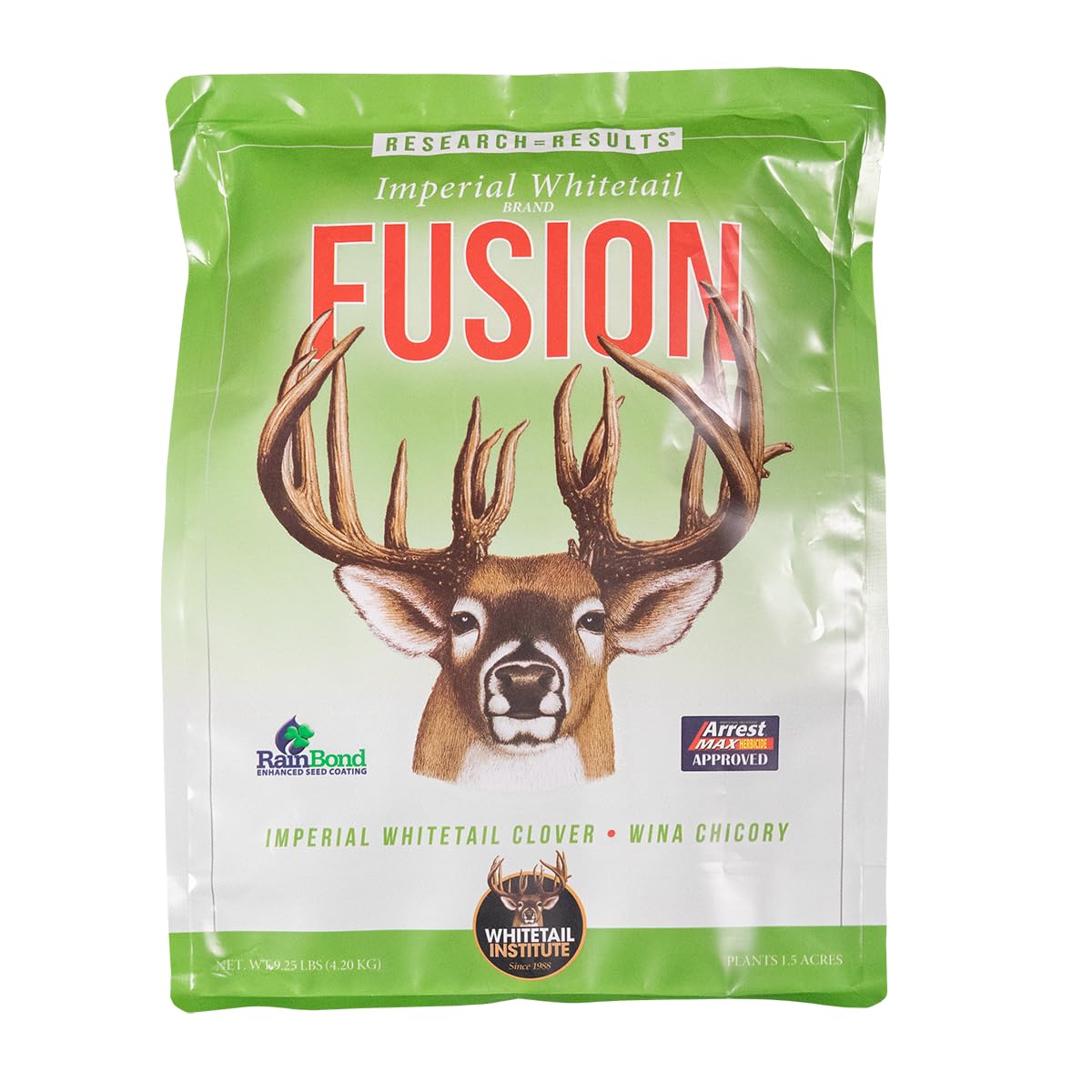
1. Whitetail Institute FUSION Deer Food Plot Seed
Our pick — over 4.5★ from 850+ verified ratings; the strongest balance of quality and price.
The perennial powerhouse that keeps a plot productive long after annuals have faded.
The defining trait here is the patented clover and chicory pairing, engineered specifically for deer plots. It delivers up to 44% antler-building protein, which is a standout number for anyone focused on herd health rather than just filling a freezer. The chicory is what the reviewers keep coming back to — deer and turkey both hammer it, and it stays attractive even when clover is still establishing.
What wins people over is the durability. The seed is coated with RainBond, a treatment that boosts seedling survival, and it shrugs off cold, drought, and heat that would kill a less hardy blend. Buyers report that germination shows in 7-10 days, and one owner noted it thrived even through flooding. As one happy planter put it: “This seed worked really well for me! It grew fast, it attracted deer and they seemed to enjoy it.”
The catch is that this is a perennial, so it takes longer to hit its stride than an annual mix. One owner used it to establish a base in September, then drilled oats and brassica right into it. That is the right playbook — think of this as the foundation of a long-term plot, not a quick fall fix.
Why It Earns The Top Spot
- Up to 44% protein for antler growth
- Survives cold, drought, and heat
- GMO free and coated for better survival
Before You Buy
- Perennial — slower to establish than annuals
- Some buyers found the price on the higher side
Reach for this if: you want a low-maintenance perennial plot that pulls deer all winter and returns year after year.
Look elsewhere if: you need fast fall growth for an immediate hunting season — an annual mix will get you there quicker.
2. Antler King Honey Hole Mix
The fast-growing annual that turns a small clearing into a deer magnet within weeks.
This mix is built for speed. Comprised of 5 varieties of rape and turnips, the 3 lb. bag covers half an acre, and the germination is the thing buyers rave about most — the review pattern is one of the strongest in this lineup. One northern owner planted August 8th near the Canadian border and reported growth around a foot high by mid-September. That pace makes a plot visible from a stand in one season.
The seeds are treated with Antler King’s Ultra Coat Orange, a coating designed for higher germination rates and increased forage yield. It thrives even in poor soil and shade, which makes it forgiving for newer plot managers. Owners mention it sprouted in as little as one week with lime and fertilizer, and heavy vegetation followed in about a month and a half.
There is one honest caveat to size against your expectations: the coverage claim. Several owners noted the bag does not come close to covering a full half acre as advertised. For a smaller hidden plot it is the stuff of legend — one owner called it his best mix ever and expanded his plot with more. Just plan your seeding rate accordingly.
The Fast-Grow Edge
- Sprouts in about a week with prep
- Survives poor soil and shade
- Cold tolerant for northern zones
The Real Trade-Off
- Coverage falls short of the ½ acre claim
Best for: the hunter who wants a quick, low-effort fall plot that deer and turkey both work night and day.
Think twice if: you need to plant a full half acre from this single bag — you may need a second bag.
3. Brassica Food Plot Seeds for Deer — Hit List Seed
A brassica blend so simple you can “spread and go” and still get a plot.
The hook here is undeniable convenience. This blend of Purple Top Turnips, Daikon Radish, and Forage Brassica can provide up to 3 tons of forage per acre, and it is designed for beginners who may not own a tractor. The number of owners describing it as their “go-to year after year” tells you it delivers on its promise of minimal effort. One owner summed up the appeal perfectly: “This is a great way to make you a little honey hole for hunting that only you know about.”
The versatility is the real strength. Leafy forage from the brassica attracts deer in the early season, while the turnip and radish bulbs become the draw after the first frost when the forage turns sweet. It is also drought tolerant, with one buyer reporting it came up even after weeks without rain.
The honest caveat is that germination is genuinely mixed — some customers note maximum growth while others say it did not produce well. That split is the reality of brassica, which is sensitive to planting depth and soil contact. If you broadcast it properly, the odds swing heavily in your favor. One reviewer grew it in a tilled garden with zero care and everything came up great.
The Convenience Angle: Spread it, rake it, and come back in a week — this is about as close to set-and-forget as food plotting gets.
The Fit Note: Brassica needs good seed-to-soil contact to germinate reliably; a simple drag or rake makes all the difference.
4. Domain Outdoor Hot Chic Food Plot Seeds

A hardy perennial blend that rewards patience with years of attraction.
The standout feature is longevity. This is a hardy mixture of pH-tolerant cold-season perennials — chicory plus two varieties of clover — that can last several years from a single planting. The 3 lb. jug covers 22,000 sq. ft. of ground, which translates to half an acre, and it arrives in a reusable container you will actually keep for other uses. The germination reports are strong, with buyers noting fast growth and large plants when given full sun.
Where this mix shines is in establishing a brand new plot location. It tolerates high-acid soils, withstands drought, and crowds out weed competition — all traits that matter when you are fighting a fresh clearing. One owner reported great results even when just casting the seed on top of the soil. Deer and turkey both find it highly attractive across spring, summer, and fall.
The honest knock is the price. Several buyers call it expensive for what you get, with one noting it is “pricey but ideal for small fields.” It tolerates partial shade, but the best results come in full sun—a couple of owners found it struggled in low-light logging trails. If you have a sunny clearing, this is a great long-term investment.
The Value Read: Pricier per bag than annuals, but the multi-year lifespan spreads that cost out across several seasons.
The Placement Call: Stick to full-sun clearings for maximum growth; save the shaded trails for a shade-tolerant annual.
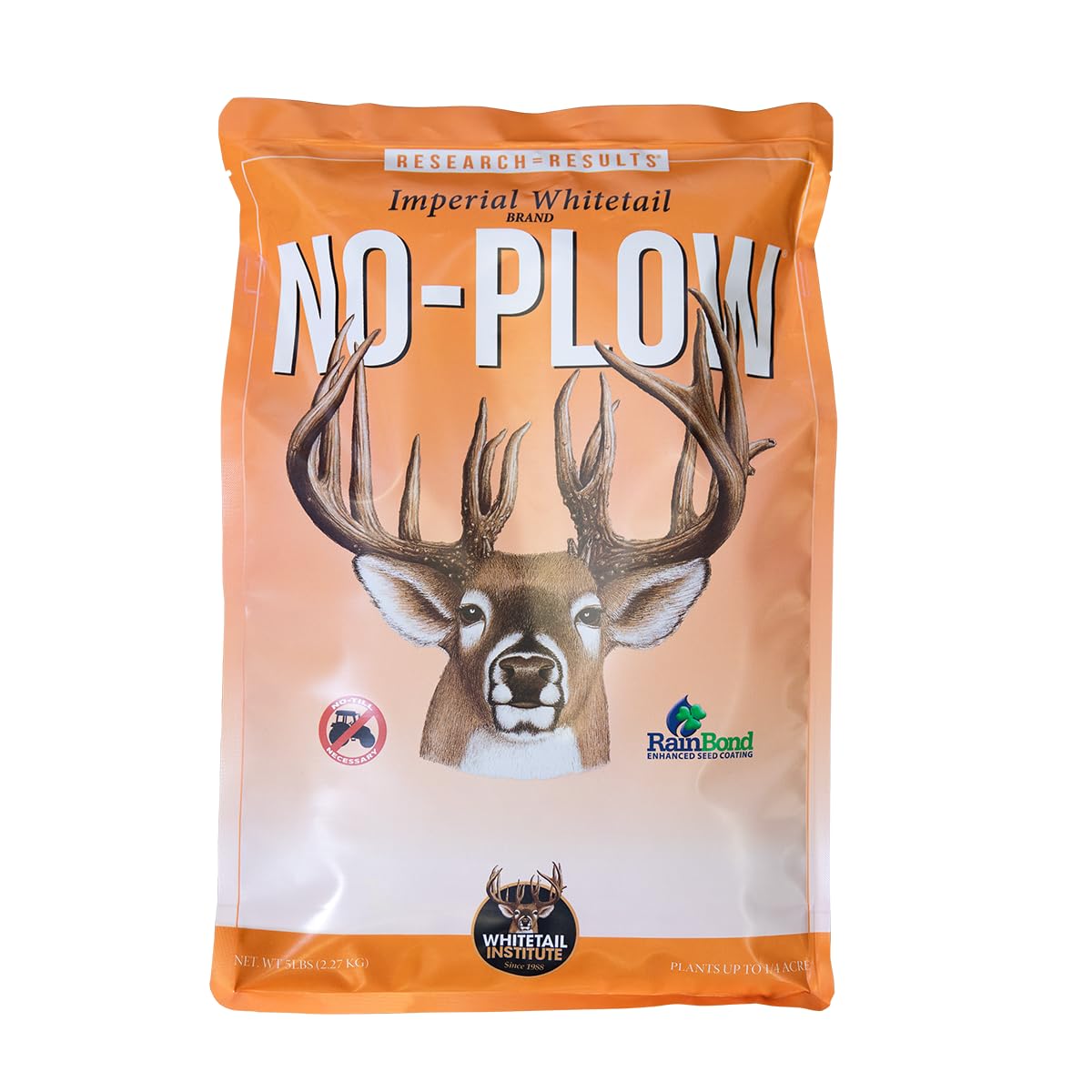
5. Whitetail Institute No-Plow Deer Food Plot Seed
The remote-plot specialist that thrives on logging roads and hidden clearings.
This mix exists for one scenario: spots you cannot get a tractor into. It combines cereal grains, annual clovers, brassica, radish, and lettuce into a highly attractive annual forage designed for minimal ground prep. The key spec is the shade tolerance—it handles as little as 3-4 hours of broken or filtered sunlight a day—making it the best choice for timber edges and logging roads where other mixes starve.
The establishment story is impressive. One Oklahoma owner planted on a new plot with no soil test or lime, used 400 lbs/acre of fertilizer, and had ankle-deep thick cover after a month. Another owner used a no-till approach with just a glyphosate spray and got growth even without rain after planting. It is extremely drought and cold tolerant, and deer will find it — one reviewer noted new bucks showing up shortly after establishment.
The trade-off is germination speed. Compared to the FUSION mix above, this one is a slower starter. Some buyers found it took longer to establish than rival annuals, though it caught up quickly and grew thick once it got going. If you are planting very close to your hunting season, you might want a faster mix; if you can plant six weeks out, this is a reliable workhorse.
Built For The Bush
- Thrives in just 3-4 hours of sunlight
- Grows without tilling
- Drought and cold tolerant
Plan Around This
- Slower initial germination than some annuals
Choose this when: your plot is a pain to reach and you need a mix that forgives rough ground prep.
skip it if: you are planting inside a month of opening day and need instant growth.
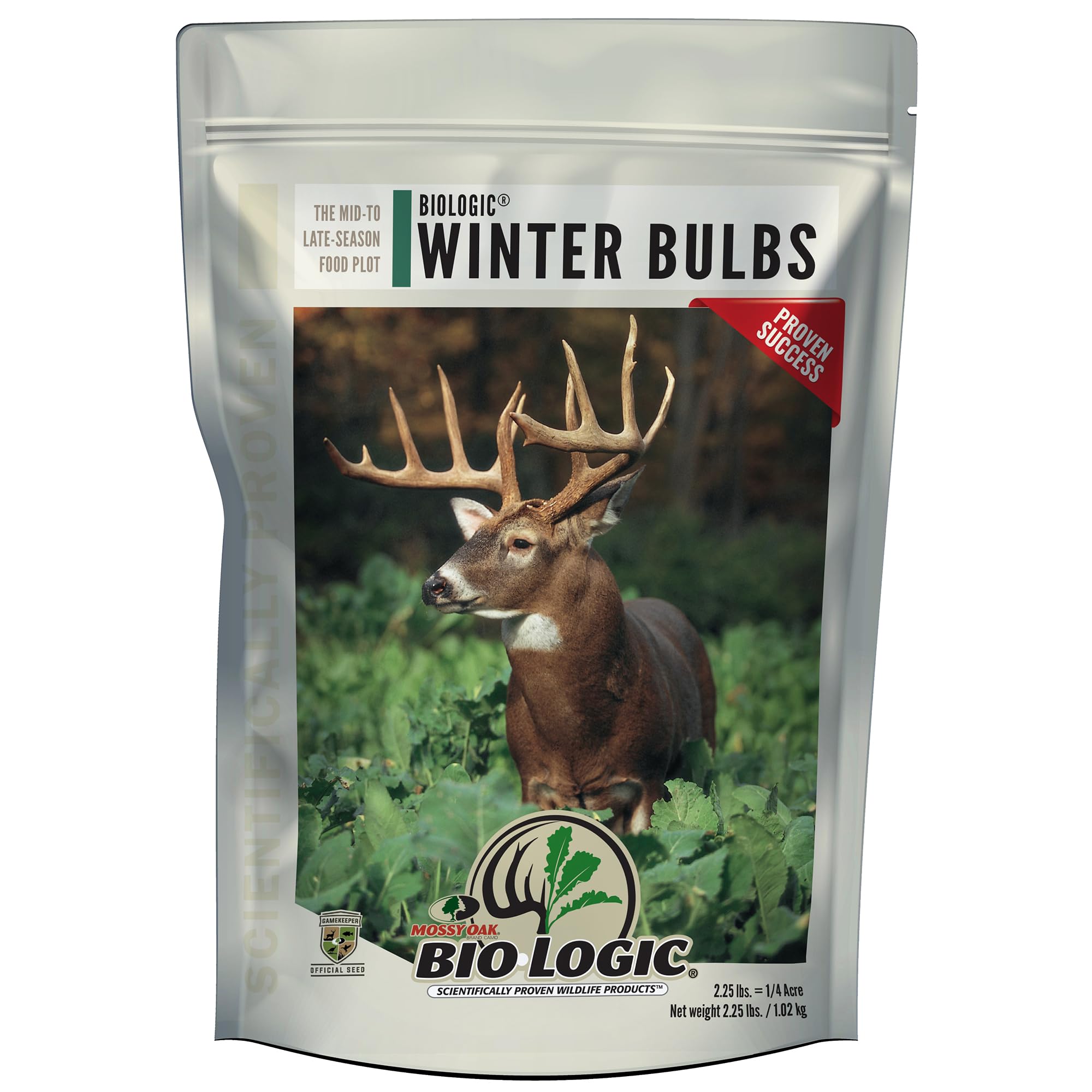
6. Biologic Winter Bulbs & Sugar Beets
The late-winter staple that deer will cross better food to reach.
If you hunt the tail end of the season, this is the mix that keeps deer on your property when everything else is picked clean. The root bulbs provide up to 38% protein — with averages in the mid-to-low 30s — and they are relished from late winter through the following spring. It is a proven late-season performer, and buyers describe deer grazing heavily on it until the snow flies.
What impresses is the resilience. These bulbs germinate in drier conditions than other common fall crops, and they grow in all soil types as long as there is adequate moisture. One Delaware owner planted on July 1st and was in shock at how big the plot got, with no weeds at all. Another planted in Mid-Michigan in August and reported the deer “would step over other food for this stuff.”
The honest limitation is water dependence. One owner lost most of his crop after seven weeks without rain, which is a real risk with root crops in a dry fall. That said, a last-minute planter without any prep still got green growth in dry weather — the germination across the reviews is genuinely strong. Plant it at least 30 days before your first frost date for the best bulb development.
The Late-Season Payoff
- Up to 38% protein for winter nutrition
- Bulbs stay attractive into spring
- Germinates in drier conditions than most
The Weather Risk
- Needs rain to size up bulbs properly
Reach for it if: you hunt late into winter and need forage that stays desirable after the first hard frost.
Look elsewhere if: you cannot count on fall rain — a leafy annual is more forgiving of drought.
7. Domain Outdoor Bombshell Food Plot Seed

The all-season bruiser engineered to handle heat, drought, and severe cold.
This blend reads like a who’s who of deer forage: Ethiopian Cabbage, Forage Collards, Hybrid Forage Brassica, and Forage Turnip. The 3 lb. jug covers 22,000 sq. ft. (half an acre) and is designed to mature quickly and survive the toughest conditions you can throw at it. One owner in north Florida had it do well, and a livestock owner planted it as forage and watched it survive winter — a sign of its genuine hardiness.
The real-world results are hard to argue with. One family planted very late — around October 25th — and still managed to get clover sprouted before snow hit on November 20th. The deer kept rooting in the snow even after that. Another buyer reported seeing significantly more bucks and does on their cameras after planting, tagging an 8+ point buck near the plot. That’s the outcome every food plotter wants.
The trade-off is that this is a mix for someone who wants all-season attraction with minimal fuss. It requires minimal tilling, which is great, but the brassica-heavy lineup means you need to plant it at the right time to get full value. Plant it late and you will still get growth, just maybe not the full bulb development the mix is capable of.
The Toughness Angle: Cold and warm season forages together mean this plot keeps working from early bow season through late firearms.
The Timing Call: Give it as much growing time as you can before frost — it will reward you with bigger roots and more attraction.
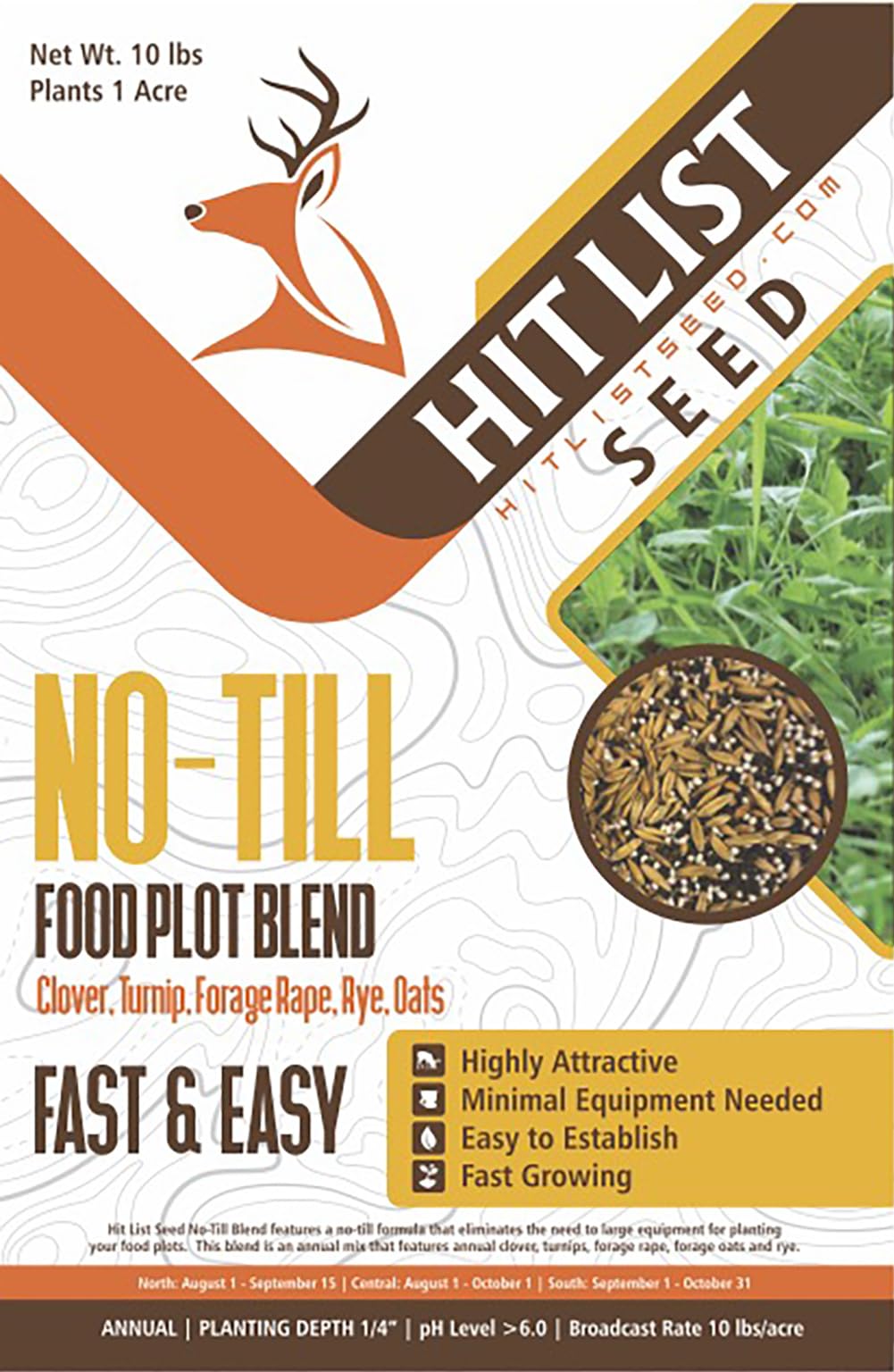
8. No Till Annual Mix — Hit List Seed
The one-acre no-till blend that can sprout in four days flat.
For the biggest coverage at the lowest cost, this 10 lb. bag is the value king. It blends Crimson Clover, Purple Top Turnips, Forage Brassica, Forage Oats, and Rye into a no-till mix designed to germinate and grow quickly with minimal equipment. The most impressive report has sprouts appearing in just four days with zero soil prep on a half-acre plot. That’s about as fast as food plot seed gets.
The leafy forage is attractive from early fall bow season through late firearms season, which covers the entire hunting calendar. It is drought tolerant, and reviewers point out the deer like it. One owner on a 1/16-acre deer plot cut the grass, hand-spread, and raked the seed in — sprouts followed within four days of a light rain. The seed quality draws consistent praise across the reviews.
There are two honest caveats. First, germination in untilled areas is genuinely mixed — some shoppers say no growth at all when the seed was not worked into the soil. Second, the coverage claim is a bit optimistic; one owner doubts it truly covers a full acre at a thick rate. Treat it as a solid acre bag for casual broadcasting, not a precision seeding.
The Big-Acre Value
- 10 lbs covers up to 1 acre
- Can sprout in 4 days
- Drought tolerant
What To Expect
- No-till germination can be inconsistent
- Coverage is more casual than the stated acre
Grab this if: you have a large area to cover on a budget and can rake the seed into the dirt.
Pass it by if: you need every seed to germinate — a tilled, prepared seedbed gets more reliable results.
Understanding the Specs
Coverage (lbs per acre)
Seed bags state how much ground they cover — often half an acre or a full acre. A 3 lb. bag covering half an acre is a common rate for brassica and clover blends. If you broadcast by hand, plan to use more than the stated rate for even, thick coverage. The reality of coverage also depends on your soil prep and how thick you like your plot.
Protein Content
Protein percentage tells you how much nutritional value the forage provides to deer. Higher protein — like the 44% in the FUSION mix or 38% in the Winter Bulbs — fuels antler growth and winter survival. A mix heavy in clover and chicory tends to run higher in protein than a pure brassica blend.
Cold Tolerance & Planting Window
Fall mixes live or die by their ability to survive frost. Annual brassicas become sweeter after a frost, which makes them excellent late-season draws. Perennials like clover and chicory are built to survive multiple winters and return each year. Match the mix to your planting date — fast annuals for late planting, slower perennials for early fall.
No-Till vs. Prepared Seedbed
Some mixes are specifically designed to germinate in minimally prepared ground — logging roads, remote clearings, or grassy spots you cannot plow. These “throw and grow” blends need seed-to-soil contact to work. A simple rake or drag after broadcasting dramatically improves germination rates compared to just tossing seed on top.
FAQ
What is the best time to plant a fall food plot mix?
Will a no-till mix really grow without plowing?
How much seed do I need for a half-acre plot?
What is the difference between perennial and annual food plot mixes?
Which mix attracts deer best in the late season?
Do I need to add fertilizer and lime to my food plot?
Will these mixes grow in shaded or wooded areas?
How long does it take for food plot seed to germinate?
What is the difference between forage brassica and turnips?
Can I mix different food plot seeds together?
Final Thoughts: The Verdict
Across the board, the winner is the Whitetail Institute FUSION because it combines high protein, extreme cold tolerance, and a perennial lifespan that keeps working season after season. If you want fast fall attraction for an immediate hunt, grab the Antler King Honey Hole. And for a large plot on a budget, the No Till Annual Mix is the acre-level value pick. Whatever you choose, match your mix to your planting window and give it good seed-to-soil contact — that is the difference between a plot that feeds deer all winter and one that fades by October.
How We Picked
We do not accept paid placement. Every pick is matched to a real buyer and a real use-case; we do not hands-on test units.
Sources & Methodology
Specifications: manufacturer listings and product documentation. Review insights: verified customer reviews, as of August 2026. Pricing: not shown on this page (it changes often); check the current price via the retailer link.
As an Amazon Associate, WellFizz earns from qualifying purchases. This does not affect which products we feature.
Related Guides

Mo Maruf
I created WellFizz to bridge the gap between vague wellness advice and actionable solutions. My mission is simple: to decode the research and give you practical tools you can actually use.
Beyond the data, I am a passionate traveler. I believe that stepping away from the screen to explore new environments is essential for mental clarity and physical vitality.