Our readers keep the lights on and my smoothie glass nicely filled. As an Amazon Associate, I earn from qualifying purchases.
Specs are compiled from manufacturer listings and verified buyer reviews and can change over time — please confirm the key details on the product page before buying.
Buying a fast bicycle is a game of balance between weight, gears, and brakes, and most first-time buyers get lost in the marketing jargon. The real test is whether the bike helps you hold speed on flats and still climbs without feeling like a drag. This guide cuts through that noise to show you the ten models that genuinely deliver on the promise of speed, matched to how and where you actually ride.
I’m Mohammad Maruf — the founder and writer behind WellFizz. This guide is built by comparing the manufacturers’ published specifications and the patterns across verified customer reviews, so you get each pick’s real strengths and trade-offs instead of marketing spin.
You’ll leave knowing exactly which fast bicycle fits your riding style, budget tier, and speed goals without overpaying for brand badges.
Our Picks at a Glance


How To Choose The Best Fast Bicycle
Choosing a fast bicycle means more than picking the lightest bike or the one with the most gears. Speed on the road comes from a mix of a stiff frame, low weight, and components that transfer your energy efficiently. Here’s what actually moves the needle.
The Frame Material Trade-Off
Aluminum frames are the most common at entry and mid-range levels because they’re strong, light, and affordable. Carbon fiber takes over at the premium end, offering a significant weight reduction that makes climbing and accelerating noticeably easier. In this list, you’ll see carbon bikes dropping to 8.9 kg (19.6 lb), which is a massive difference in feel compared to a heavier aluminum commuter.
Gears Are About Range, Not Just Count
A 21-speed bike isn’t automatically faster than a 14-speed model. What matters is the groupset — the brand and quality of the shifters and derailleurs. A quality Shimano Claris or SORA setup shifts smoothly under load, while a poorly tuned budget groupset will grind and skip regardless of how many speeds it claims.
Brakes: The Speed Safety Net
You need to slow down as confidently as you speed up. Rim brakes are light and simple but struggle in wet conditions. Mechanical disc brakes offer better stopping power, while hydraulic disc brakes provide the strongest, most consistent stopping force with the least finger effort. If you ride fast descents in varied weather, hydraulic is the clear choice.
Quick Comparison
| Model | Best For | Frame Material | Speeds | Brake Type | Amazon |
|---|---|---|---|---|---|
| Tommaso Imola★ Best Overall | Entry-level performance | Aluminum | 24 (3×8) | Rim | Amazon |
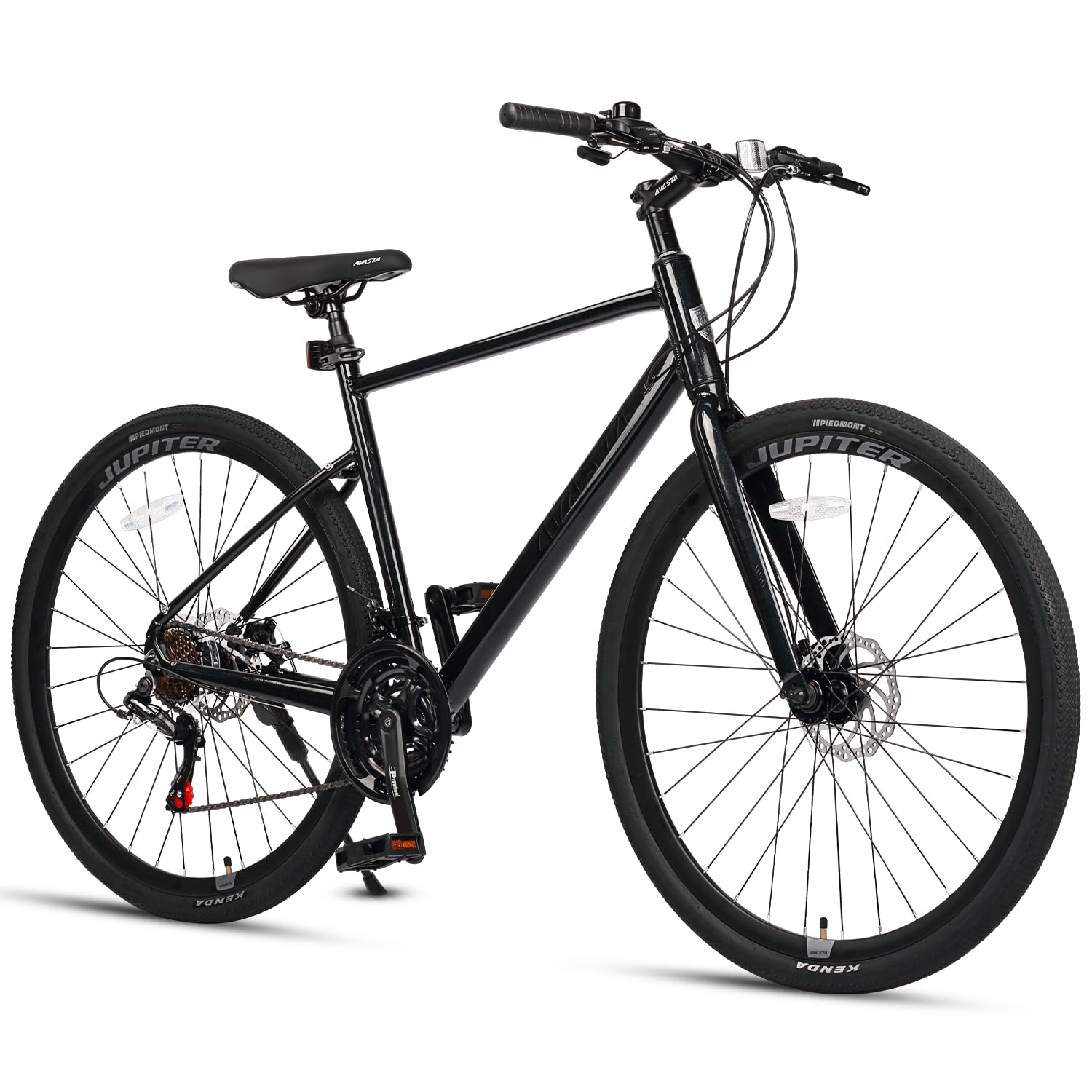
| Jupiter 700CBest Value | Versatile hybrid value | Aluminum | 21 | Dual Disc | Amazon |
| Schwinn Volare 1300Budget Champion | Budget road riding | Aluminum | 14 | Caliper | Amazon |
| Schwinn Phocus 1.6 | High-speed commutes | Aluminum | 16 | Disc | Amazon |
In‑Depth Reviews
1. Tommaso Imola Sport Bike
Our pick — over 4★ from 300+ verified ratings; the strongest balance of quality and price.
The aluminum rocket that rewards beginners with race-bike manners and a proven 1,000-mile-plus track record.
This is the crowd favorite for a reason — its quality earns the most praise by far, with over 90 owners singling it out, and the value-for-money nod comes second with nearly 50 mentions. The 700x25c tires and lightweight aluminum build make it feel quick on San Diego-style boulevards and tight city loops alike. It’s a bike that turns heads while you ride, which is part of the appeal.
Under the hood, the Shimano Claris 3×8 drivetrain delivers 24 total speeds that shift predictably once you learn the lever push inward. Buyers report 1,000+ miles over 2 years with no issues, which is a strong durability signal for an entry-level price point. The steel fork absorbs some road chatter, although it adds a little weight up front compared to carbon-legged rivals like the SAVADECK models further down this list.
The honest trade-off is the setup. A few owners found the front derailleur very touchy to adjust, and some had to visit a bike shop to get it dialed in perfectly. The saddle is notoriously hard, so budget for a replacement or padded shorts. Once adjusted, it rides smoother than many bikes costing more, and the Claris shifting is among the best in its class.
Why Riders Love It
- Rock-solid build quality with flawless welds and paint
- Smooth, responsive Shimano Claris shifting on hills
- Lightweight feel that accelerates eagerly from stops
Before You Buy
- Front derailleur can be difficult to adjust perfectly
- Factory saddle is very firm and often replaced
- Assembly instructions are minimal
Your best first race: If you want a fast, dependable entry into road cycling without a premium carbon budget, this is the one to beat.
Think twice if: You want disc brakes or zero assembly fiddling — this is a rim-brake bike that rewards a little mechanical patience.
2. Jupiter 700C Hybrid Bike
A featherlight hybrid that gives you 21 speeds and disc brakes for less than most road bikes cost.
This one wins on pure versatility. The 21-speed Shimano EF500 Easyfire system shifts smoothly for a hybrid, and the dual disc brakes give you confident stopping power in wet or dry conditions. It’s built for multiple terrains — paved roads, unpaved trails, and mountain paths — so you aren’t locked into one riding style. The adjustable ergonomic saddle and handlebars let you find a position that reduces strain on longer rides.
Owners mention that this bike is lighter and more responsive than a comparable Schwinn GTX Elite they owned, with one rider logging 500+ miles with no issues after a 25-mile ride confirmed its comfort. The elegant pearl paint finish isn’t just for looks; it offers solid protection against scratches, keeping the bike presentable for years. Assembly is straightforward — most riders note it arrives almost fully assembled, and the included tool kit covers what’s left.
The catch is the shifting. A few owners note it sometimes doesn’t shift perfectly, though they remain happy with the purchase overall. The saddle is also a common swap-out, but that’s a cheap fix on a bike this affordable. For riders 5’2″ to 5’5″, the 17-inch frame is a great fit, though taller riders should check the geometry carefully.
The Good Stuff
- Great value for money with strong build quality
- Lightweight aluminum frame and pearl paint finish
- Dual disc brakes provide reliable stopping power
What to Watch
- Gear shifting can be slightly inconsistent at times
- Factory saddle is uncomfortable for longer rides
- Hybrid geometry is less aero than drop-bar road bikes
Who this suits: Commuters and weekend trail riders who want one bike that does a bit of everything without a big spend.
Not for: Pure road cyclists chasing maximum aero speed — a drop-bar road bike will serve you better.
3. Schwinn Volare 1300
The simplest ticket to drop-bar speed, with a 130-year-old brand name and a 14-speed drivetrain that just works.
Schwinn has been building bikes for over 130 years, and the Volare 1300 is their entry point into drop-bar road riding. The lightweight aluminum frame and rigid alloy fork give a nimble, responsive feel that’s best for high-speed performance. The 700c x 28c road tires roll smoothly on pavement, and the high-profile alloy wheels add both strength and a touch of visual appeal.
Assembly is genuinely easy — customers note it’s a straightforward build with a light overall weight and a great ride. One rider who needed a bigger seat simply swapped the factory saddle, which is a common theme across this price tier. The 14-speed A050 shifters and rear derailleur provide quick, precise gear changes for changing terrain, though a few note the shifters take some getting used to.
The honest drawback is the braking. A few reviewers point out the brake levers feel unresponsive, with one noting they’re designed for V-brakes rather than the side-pull calipers installed. This is a potential fix but worth checking on arrival. The freewheel rear hub also limits upgrade options, so this is best kept as a solid starter rather than a platform for serious modification.
Why It Works
- Very easy to assemble from the start
- Lightweight aluminum frame with true wheels
- Reliable Shimano Tourney drivetrain
Where It Cuts Corners
- Brake levers can feel unresponsive
- Seat is uncomfortable for longer rides
- Limited upgrade potential due to freewheel rear
Pick this if: You want a dependable, low-cost way to try drop-bar road riding and don’t plan heavy customization.
Look elsewhere if: You need strong, reliable braking from the start — the Phocus or a disc-brake model is safer.
4. Schwinn Phocus 1.6 Disc

Schwinn’s aero answer for fitness riders — a 25.7 lb package designed to hold speed on long paved stretches.
This is the Schwinn for riders who want the drop-bar speed position with the safety of disc brakes. The lightweight aluminum frame is paired with an alloy carbon fork that soaks up road vibration, letting you stay comfortable while pushing harder. The aerodynamic drop handlebar position is best for high-speed performance, and the 700c x 28c tires roll swiftly on pavement.
Riders find it very light and extremely well made — one owner called it the best bike they’ve ever owned, noting it’s around 33 lbs and great for strength training. The shifting on the brake lever housing works perfectly from the start with no tuning needed, which is a welcome change from budget bikes that need immediate adjustment. It’s a confidence-inspiring ride with a clean, professional look.
The honest weak spot is gear quality. One owner reported grinding noise unless the gears are set in a very specific combination, which can be frustrating. Another found it heavier and chunkier than an older version they owned. And occasionally, a unit arrives missing hardware like pedals or handlebar bolts — so check the box carefully on day one.
Best Features
- Light, well-made frame with a stable ride
- Disc brakes give strong stopping power
- Shifting works smoothly from the start
Fair Warnings
- Gears can grind unless set in a specific combination
- Heavier than some premium alternatives
- Occasional missing hardware on delivery
Grab this for: Paved-road fitness rides where you want aero speed, disc brakes, and an honest brand name.
skip it if: You want the lightest possible frame or plan serious racing — carbon SAVADECK models are lighter and stiffer.
5. SAVADECK Carbon SORA
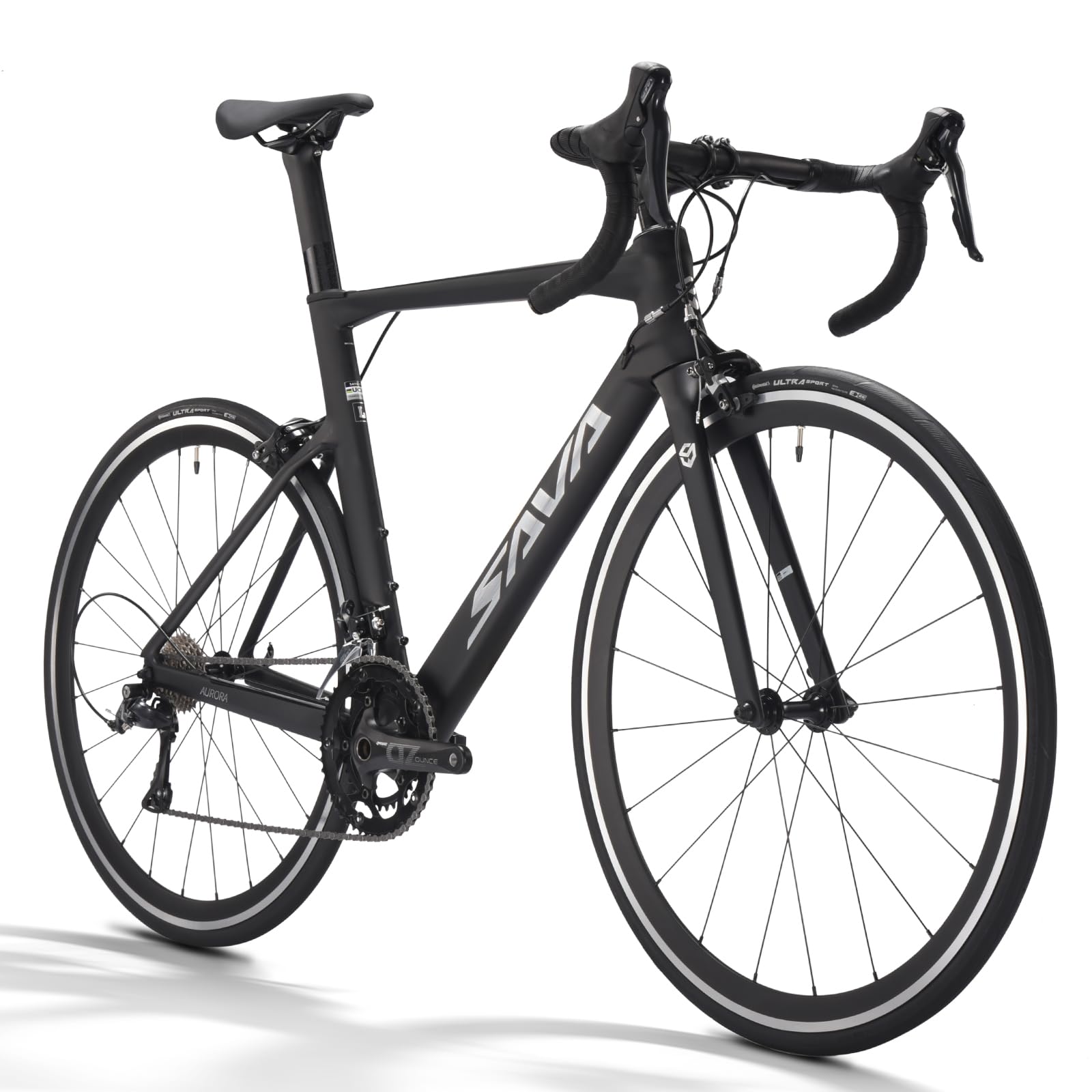
Your first taste of carbon — an 8.9 kg (19.6 lb) frame that climbs and accelerates with featherlight ease.
This is the gateway drug to carbon fiber. The T800 carbon frame, fork, and seat tube cut weight to 8.9 kg (19.6 lb), making r is used for the frame, fork, rims, and seat post, bringing the total weight down to 9.6 kg (21.1 lb). The Shimano SORA R3000 18-speed groupset — with shift lever, front derailleur, and rear derailleur — shifts smoothly and durably, making it a proven choice for riders finding their racing legs.
The fully internal cable routing keeps airflow clean for a faster, tidier ride, and the tapered head tube boosts torsional rigidity for precise handling. It rolls on 700x25C Continental tires suited to different road conditions, with free pedals included. One 78-year-old rider replaced a too-tall bike with this and found it light as a feather, with smooth, silent shifting — a strong endorsement for accessibility.
The catch is setup. While most riders are riding within 20 minutes, a few have hit snags like misleading instructions, a binding front disc brake, or a misaligned stem. The quality praise is strong — over 70 owners give it a 4.5-star average, with build quality and weight earning the most positive mentions. If you can handle a little assembly patience, this is a serious performer.
Where It Shines
- High-quality TORAY carbon is super light and fast
- Disc brakes offer confident stopping in all weather
- Fully internal cables improve aero and looks
The Small Print
- Setup instructions are not always clear
- Some units arrive with a binding front brake
- Rims may have minor scratches from the start
Reach for this if: You want a light carbon race bike you can ride confidently in variable weather without a huge budget.
Look elsewhere if: You want zero assembly fuss — this one occasionally needs a little mechanical patience.
6. SAVADECK A7L Carbon 105
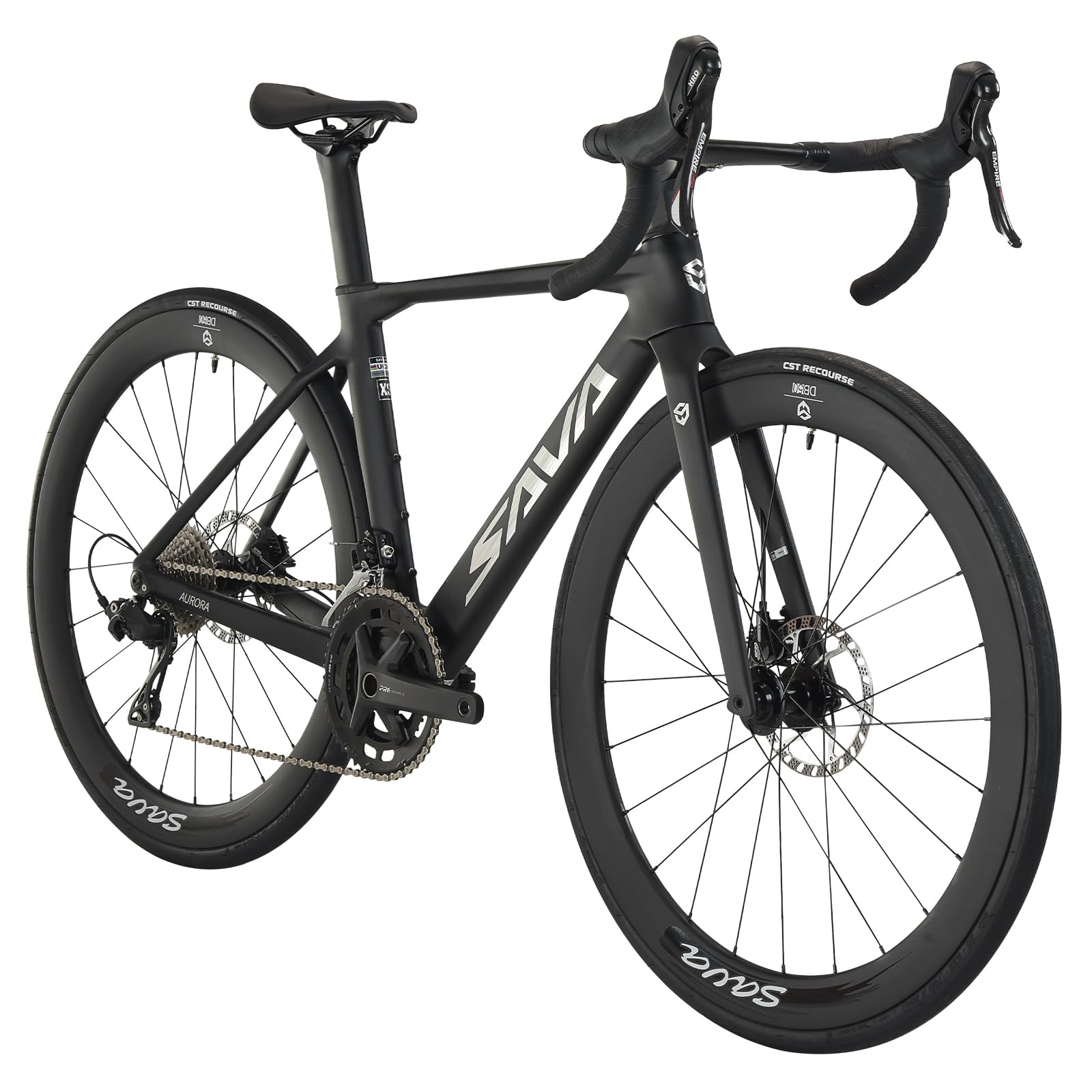
A complete carbon build at 8.8 kg (19.4 lb) with hydraulic discs — the value king that outrides bikes far above its tier.
This model earns its place with a 4.6-star average across 75 owners, and the quality praise is overwhelming — nearly 25 owners call out the build quality, with value-for-money second at 15 mentions. Full carbon construction across frame, fork, seat post, and wheelset trims weight to 8.8 kg (19.4 lb). This stiffness transfers every watt of pedaling force into forward motion.
The Shimano R7120 2×12-speed groupset — with R7100 front and rear derailleurs — delivers smooth, durable shifting that race cyclists expect. The R7120 hydraulic disc brake levers paired with R7170 calipers provide long-lasting, powerful braking that outperforms conventional V-brakes by a wide margin. It rolls on 700x25C carbon wheelsets with JETTY PLUS tires that grip confidently when cornering at speed.
Buyers consistently note it delivers the feel of a top-tier competitor, with quick acceleration and great cornering. The main gripe is assembly — the manual isn’t very helpful, and the loud freewheel cassette needs grease spread by a bike shop. But the frame finish is flawless, gears and brakes arrive pre-tuned, and the ride quality makes those quirks fade quickly.
What Wins People Over
- Full carbon frame and wheelset at 8.8 kg (19.4 lb)
- Hydraulic disc brakes are smooth and responsive
- Performance on par with bikes costing thousands more
Minor Annoyances
- Assembly manual is not very helpful
- Loud freewheel cassette needs shop attention
- Included pedals are cheap and best replaced
Grab this if: You want a full-carbon race machine with pro-level braking and don’t mind a little setup learning curve.
Consider another if: You’re new to bike assembly and want a perfectly straightforward manual and zero tuning quirks.
7. SAVADECK A7L Pro
Groupset: The Heart of Shifting
The groupset — the shifters and derailleurs — determines how smoothly your gears change. Shimano Claris is a solid entry point, SORA adds performance, 105 is race-ready, and Ultegra Di2 is electronic and instantaneous. A quality groupset shifts cleanly under load; a budget one grinds and skips.
Brake Types: Stopping Power Explained
Rim brakes are light and simple but struggle in wet conditions. Mechanical disc brakes offer better stopping power. Hydraulic disc brakes provide the strongest, most consistent stopping force with the least finger effort — the clear choice for fast descents and variable weather.
Speeds: More Isn’t Always Better
A 14-speed bike can feel faster than a 21-speed if the groupset is higher quality. What matters is the range of gears and how smoothly they shift. More gears give you finer steps between ratios, but the groupset quality is what makes them usable in practice.
