Our readers keep the lights on and my smoothie glass nicely filled. As an Amazon Associate, I earn from qualifying purchases.
Specs are compiled from manufacturer listings and verified buyer reviews and can change over time — please confirm the key details on the product page before buying.
Wind noise is the silent killer of cycling audio — a steady roar that turns podcasts into static and forces you to crank the volume past safe levels. The fix isn’t just louder earbuds; it’s a design that physically blocks and digitally cancels that low-frequency rumble before it reaches your ears. This guide focuses on exactly how to pick a pair that stays quiet at speed, prioritizes situational awareness for safety, and keeps you riding comfortably for hours.
I’m Mohammad Maruf — the founder and writer behind WellFizz. This guide is built by comparing the manufacturers’ published specifications and the patterns across verified customer reviews, so you get each pick’s real strengths and trade-offs instead of marketing spin.
Finding the best earbuds for cycling wind noise means balancing snug fit, effective noise canceling, and dependable battery life that lasts through long rides, all without blocking out the traffic you need to hear.
Our Picks at a Glance
How To Choose The Best Earbuds For Cycling Wind Noise
Choosing earbuds for cycling is a test of priorities. You need a secure fit that won’t be shaken loose, a seal or noise-canceling system that tames wind, and a battery that survives your longest rides. Here’s what actually matters before you buy.
Passive Seal vs. Active Cancellation
The first defense against wind is physical. A deep-fitting tip that fully seals your ear canal blocks more hiss than any processor. Active noise canceling (ANC) uses microphones to generate opposing sound waves, which is great for constant droning like a motor, but wind is unpredictable gusting noise that microphones sometimes amplify into a louder whoosh. For cycling, a secure tip delivering a good passive seal is your baseline; clever ANC or a dedicated wind filter is the bonus that handles the rest.
Battery Life vs. Feature Load
Running ANC and transparency modes constantly drains the battery faster than plain Bluetooth streaming. On a long day in the saddle, you need to know whether the earbuds survive the whole ride with the features you plan to use on. Check the stated battery average life carefully and compare it against your typical ride duration.
Safety and Situational Awareness
Shutting out the world entirely is dangerous on the road. The best approach is a transparency or ambient mode that lets in traffic sounds and conversation while still reducing the specific annoyance of wind. You want to hear the truck behind you, not the gale around your helmet.
Quick Comparison
| Model | Best For | Wind Noise Tech | Battery Life | Bluetooth | Amazon |
|---|---|---|---|---|---|
| AXIL XCOR PRO★ Best Overall | Riders wanting hearing-safe pass-through | Wind Resistant Design | 12 hours | 5.2 | Amazon |
| Sony WF-1000XM6 | Premium calls and adaptive noise control | AI Wind Noise Reduction | 8 hours | 5.3 | Amazon |
| Bang & Olufsen Beoplay Eleven | High-fidelity sound with wind filtering | Wind Guard + Wind Filtering | 8 hours | 5.2 | Amazon |
In‑Depth Reviews
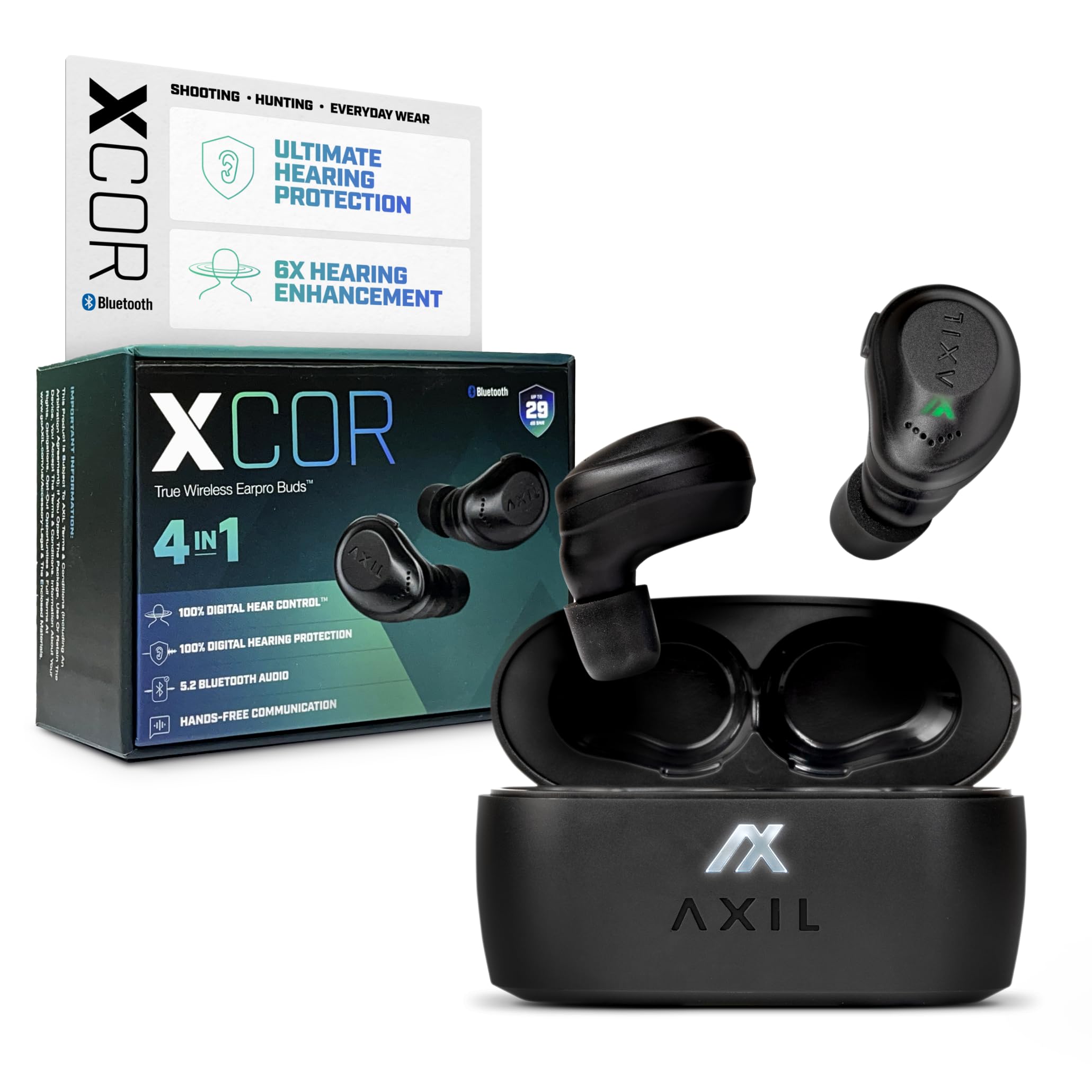
1. AXIL XCOR PRO
Keeps your ears safe from gust noise and loud traffic while still letting you hear the road around you.
The AXIL XCOR PRO’s shooting-range pedigree means it’s engineered for harsher noise than any road throws at it. Its key feature is digital hearing protection that compresses loud noises over 85dB (decibels, a measure of sound pressure) instead of cutting them out entirely. So a truck’s air horn or a sudden jackhammer gets safely dampened, while the wind whistle stays manageable — though some riders note the pass-through mode can still pick up wind and sound a touch treble-heavy.
Its 12-hour battery average gives you a longer ride window than the Sony’s 8 hours before needing the case. Bluetooth 5.2 holds a solid 10-meter range, though it lacks the 5.3 version’s connection efficiency. With multiple silicone and foam tips included, finding a canal-sealing fit is straightforward, and the secure hold means it stays put even when you’re out of the saddle over bumps.
The real-world catch is that this isn’t a music-first product. Buyers report the sound leans treble-heavy with weaker lows, making it a better companion for podcasts, directions, and staying alert than for bass-driven playlists. There’s no ANC or EQ customization, and no wireless charging — just a straightforward, tactical build. This is the pick for riders who treat their ears as safety equipment first and an entertainment system second.
Ride-Ready Strengths
- Longest battery in this lineup at a full 12 hours of playback
- Compresses loud noises over 85dB to protect hearing while riding
- Multiple ear tips in the box help lock out wind with a deep seal
Know Before You Buy
- Pass-through mode picks up some wind hiss at speed
- Treble-heavy tuning lacks the bass punch for music lovers
- No wireless charging or active noise canceling
Reach for this if: you want a wind-resistant, hearing-safe earbud that prioritizes situational awareness and long battery life over studio-grade music quality.
Look elsewhere if: you’re chasing deep bass and wireless charging convenience, because this is a functional tool, not a luxury audio player.
2. Sony WF-1000XM6
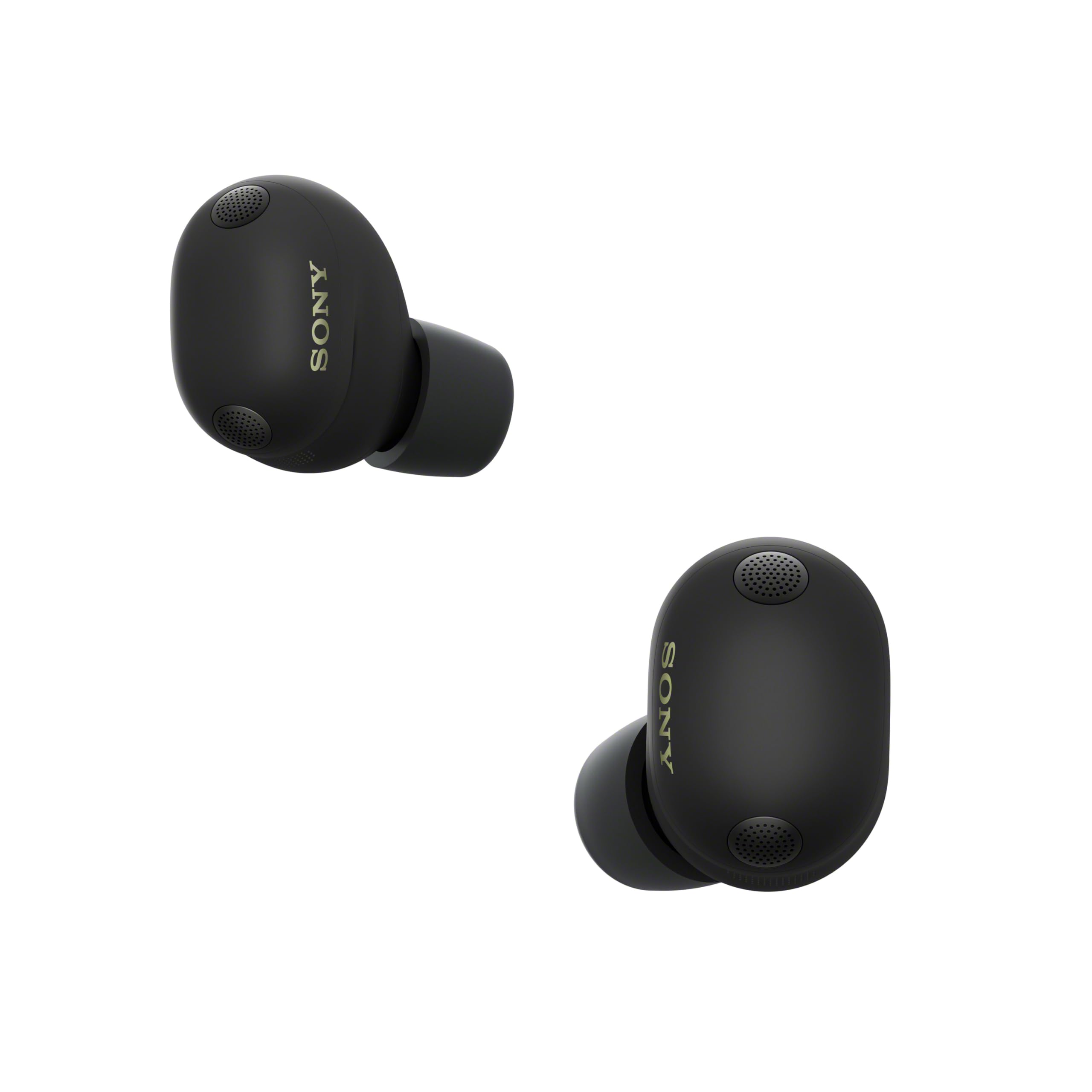
Adaptive noise canceling that hunts down wind while eight microphones keep your voice clear on calls.
The Sony WF-1000XM6 attacks wind from two directions at once. For call quality, it pairs dual beamforming microphones with a bone conduction sensor and AI-powered noise reduction that specifically targets and blocks background and wind noise, so the person on the other end hears you, not the gale. For listening, the Adaptive NC Optimizer uses eight adaptive microphones to track ambient sound and adjusts the noise-canceling profile in real time — meaning it can tighten up the cancellation when gust noise spikes.
That intelligence runs on the HD Noise Cancelling Processor QN3e, which Sony claims is an upgraded processor over the previous model. An 8.4-millimeter dynamic driver delivers studio-level tuning co-created with mastering engineers. The trade-off for all this processing is battery life: 8 hours with ANC on, stretching to 12+ with it off, which is exactly the 8-hour figure listed in the spec sheet. The Sony’s 8-hour run is shorter than the AXIL’s 12-hour run, so you’ll want the charging case on longer endurance rides.
Owners mention the ANC is superb with no hiss, and the transparency mode stays clear for traffic awareness. The main gripes center on fit — the larger shell isn’t ideal for side-sleepers or rougher terrain, and some riders found stock tips needed swapping for foam to stop the left earbud from clicking. If you want the smartest wind-fighting tech and don’t mind the reduced runtime, this is a formidable contender.
Bottom line: Sony’s adaptive system gives you the best of both worlds — heavy wind reduction for calls and listening — but it its battery life is shorter than the AXIL’s, and its bulkier fit demands attention.
Why it leads on tech: The 5.3 Bluetooth chip (the wireless standard version) is the most current in this comparison, edging out both rivals on 5.2, and the eight-microphone suite is class-leading for isolating your voice from wind.
The honest catch: Expect only 8 hours of battery with noise canceling on, and be ready to experiment with ear tips to get that perfect, wind-blocking seal.
3. Bang & Olufsen Beoplay Eleven

High-fidelity sound with a dedicated wind filtering system for the rider who refuses to compromise on audio.
The Bang & Olufsen Beoplay Eleven is the audiophile’s choice for the saddle. It boosts clear calling with an increased microphone inlet and dedicated wind filtering technology, an explicit feature aimed at reducing gusts during voice transmission on the bike. That’s supported by an IP57 rating, meaning it shrugs off dust, sweat, and water, so a sudden downpour or a heavy climb won’t be the end of them.
Sound quality is the star. Each earbud packs a 9.2-millimeter driver — the largest in this comparison — with a frequency range of 20 to 22,000 Hz (hertz, or cycles per second), delivering the full-spectrum, intricate audio that has buyers calling them “incredible sounding” and comparing them to custom in-ear monitors. The battery is a double-edged sword: up to 6 hours of playtime with ANC (active noise cancellation, which uses microphones to cancel ambient sound) as stated by the manufacturer, though other owner reports suggest 6 hours with ANC on and 8 with it off. Including the 20-hour charging case, it’s fine for commuting but tight for all-day epics.
The honest downside is that ANC isn’t the strongest on the market — buyers consistently rate it as mediocre, not in the Sony or Bose league. The Wind Guard (a software feature that filters out wind noise) is your real ally here, and the Bluetooth 5.2 multipoint connection lets you hop between a phone and a bike computer smoothly. This is a premium pick you buy for the soundstage and materials, not for the raw noise-canceling numbers.
Why It Justifies the Cost
- 9.2mm drivers deliver the deepest, most detailed sound in this list
- Explicit wind filtering technology for clearer calls at speed
- IP57 rating means rain, sweat, and dust won’t stop the ride
Consider This First
- ANC is weak compared to rivals, so wind reduction leans on fit and the Wind Guard
- Battery average of 8 hours is the shortest when you factor in heavy ANC use
- Firm grip on the higher-end of the price scale for earbuds
Choose this for: the rider who prioritizes rich, detailed audio quality and is willing to manage battery and ANC expectations for that luxurious sound.
Think twice if: you need class-leading wind cancellation that just works without fiddling with fit, as the cheaper Sony delivers more raw noise-fighting power.
Understanding the Specs
Wind Noise Reduction Technology
This is the spec that defines the category. Look for earbuds that specifically mention “wind-resistant,” “wind Guard,” or “wind filtering.” These features usually combine a vented or sealed design with software that identifies and suppresses the low-frequency rumble of wind, without killing the sounds you want to hear, like traffic or a conversation. A bare ANC system alone won’t save you — wind confuses the microphones and can make the hiss louder.
Battery Average Life
This is the number of hours the earbuds play on a single charge. Note that this figure often assumes moderate volume and may drop significantly with ANC or transparency features active. For cycling, compare the stated battery average life against your longest planning ride. The AXIL’s 12 hours covers a full day’s classic ride; the 8-hour units need a case recharge or a shorter route.
FAQ
Do noise canceling earbuds actually stop wind noise?
What is the difference between ANC and a Wind Guard feature?
How many hours of battery do I need for a long bike ride?
Is it safe to wear noise canceling earbuds while cycling?
Will these earbuds stay in my ears when I sweat?
What does an IP57 rating mean for cycling?
Is the Sony WF-1000XM6 a big upgrade for bike riders?
Can I use these earbuds with a cycling computer or bike radio?
What is the best sensor for reducing wind noise in earbuds?
Are foam ear tips better than silicone for cycling?
Final Thoughts: The Verdict
The top pick for most riders is the AXIL XCOR PRO because its 12-hour battery and hearing-safe compression deliver the best endurance and protection for the road. If you want the smartest wind-reducing call technology and adaptive ANC, grab the Sony WF-1000XM6. And for those who refuse to compromise on sound quality, the Bang & Olufsen Beoplay Eleven is the one to reach for.
How We Picked
We do not accept paid placement. Every pick is matched to a real buyer and a real use-case; we do not hands-on test units.
Sources & Methodology
Specifications: manufacturer listings and product documentation. Review insights: verified customer reviews, as of August 2026. Pricing: not shown on this page (it changes often); check the current price via the retailer link.
As an Amazon Associate, WellFizz earns from qualifying purchases. This does not affect which products we feature.
Related Guides

Mo Maruf
I created WellFizz to bridge the gap between vague wellness advice and actionable solutions. My mission is simple: to decode the research and give you practical tools you can actually use.
Beyond the data, I am a passionate traveler. I believe that stepping away from the screen to explore new environments is essential for mental clarity and physical vitality.