Our readers keep the lights on and my smoothie glass nicely filled. As an Amazon Associate, I earn from qualifying purchases.
Specs are compiled from manufacturer listings and verified buyer reviews and can change over time — please confirm the key details on the product page before buying.
Choosing the wrong oil can ruin a good ride. It can make your gearbox feel gritty, your clutch slip under hard acceleration, and your engine run hot enough to worry you at every stoplight. This guide focuses on wet clutch compatibility, climate-appropriate viscosity, and long-lasting protection.
I’m Mohammad Maruf — the founder and writer behind WellFizz. This guide is built by comparing the manufacturers’ published specifications and the patterns across verified customer reviews, so you get each pick’s real strengths and trade-offs instead of marketing spin.
Whether you ride a commuter twin or a track-ready superbike, the right engine oil for motorcycles keeps your gearbox quiet, your clutch hooked up, and your engine cool when it matters most.
Our Picks at a Glance

How To Choose The Best Engine Oil For Motorcycles
Motorcycle engines share their oil with the gearbox and the clutch, which is why you cannot just pour in car oil. Car oil has friction modifiers that stop a wet clutch from gripping, causing it to slip under power. The three things that decide a good motorcycle oil are its JASO rating, its viscosity grade, and whether it is synthetic or mineral.
Check the JASO MA rating first
JASO MA is the certification standard for motorcycle oils, and MA2 is the higher tier. It guarantees the oil has the right friction level so your wet clutch bites properly instead of slipping. If an oil does not carry a JASO MA or MA2 mark, it is not designed for a motorcycle with a shared oil sump.
Match the viscosity to your engine and climate
The numbers in 10W-40 or 20W-50 describe how the oil flows. The first number with the W (for winter) is the cold-start flow, and the second is the thickness at operating temperature. A 10W-40 is the common all-rounder for most bikes, while a 20W-50 suits bigger air-cooled engines and very hot weather because it stays thicker when hot.
Decide between synthetic and mineral
Full synthetic oil resists breaking down under extreme heat and keeps its film strength longer, which suits high-performance and heavily modified engines. Mineral oil is cheaper and still works well for vintage bikes and gentle street riding. Synthetic blends sit in the middle, giving some of the protection of a synthetic at a lower cost.
Quick Comparison
| Model | Best For | Viscosity | Type | Volume | Amazon |
|---|---|---|---|---|---|
| Royal Purple Max-Cycle★ Best Overall | High-Performance & Track Bikes | 10W-40 | Full Synthetic | 6 Quarts | Amazon |
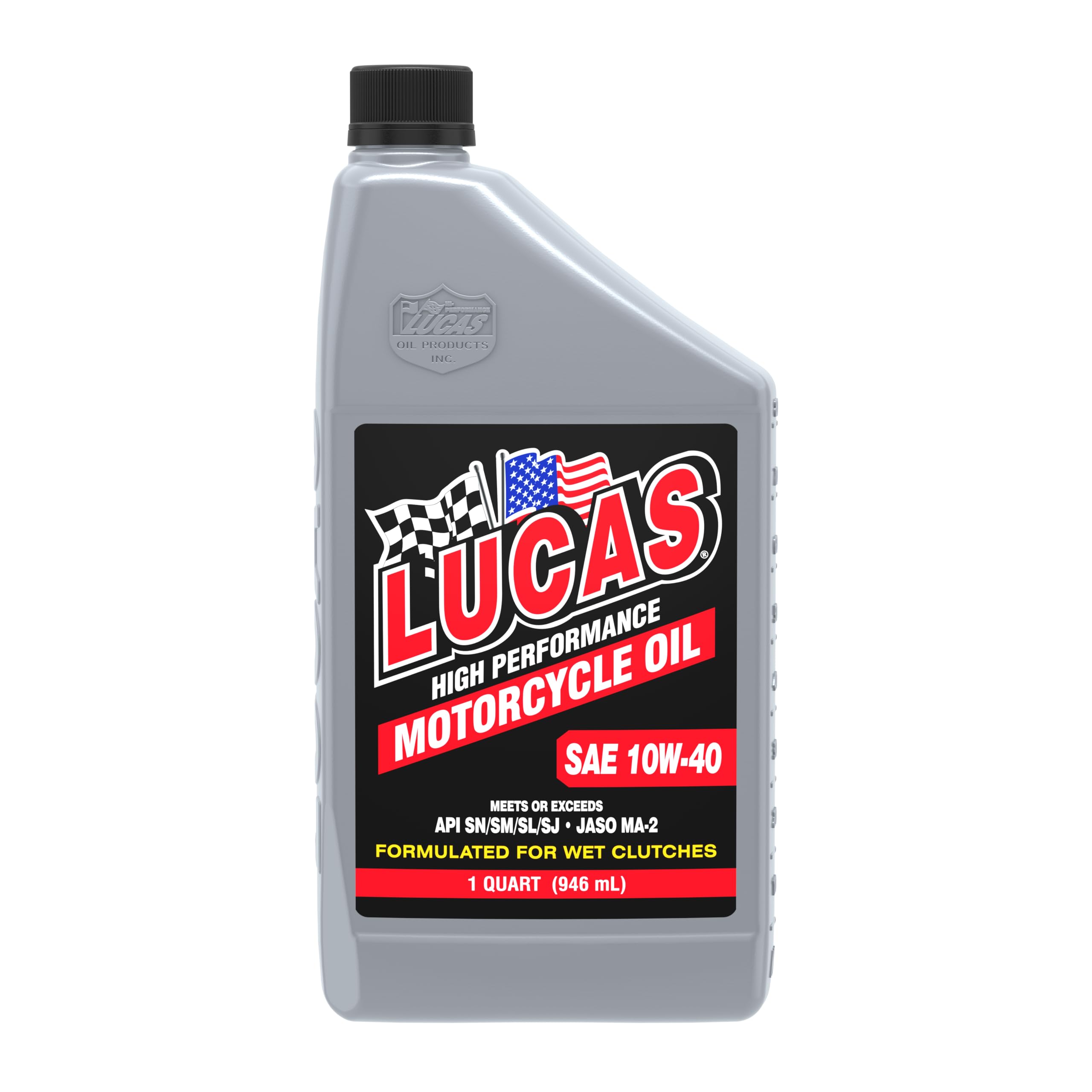
| Lucas Oil 10767Best Value | Dirt Bikes & ATVs | 10W-40 | Synthetic | 2 Quarts | Amazon |
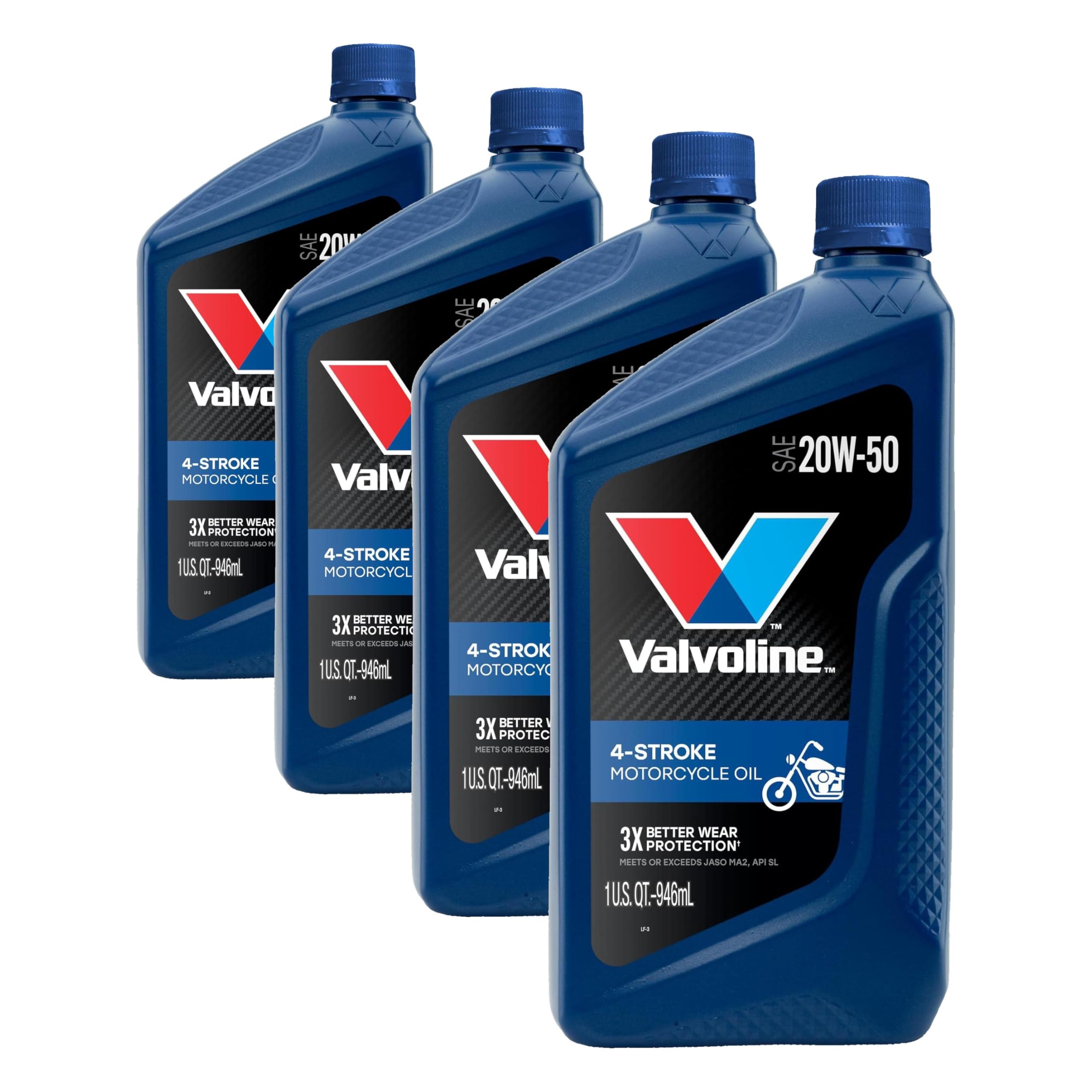
| Valvoline 20W-50Vintage Pick | Vintage & Air-Cooled Bikes | 20W-50 | Mineral | 4 Quarts | Amazon |
| Yamaha Yamalube 20W-50 | Yamaha & Wet Clutch Bikes | 20W-50 | Mineral Blend | 1 Gallon | Amazon |
| Liqui Moly 20W-50 Street | Harleys & Hot Climates | 20W-50 | Mineral | 4 Liters | Amazon |
| Yamaha Yamalube 10W-40 FS | Dual-Sport & All-Weather | 10W-40 | Full Synthetic | 1 Gallon | Amazon |
| Valvoline 10W-40 | Daily Commuters | 10W-40 | Mineral | 6 Quarts | Amazon |
| Liqui Moly 4T 10W-40 | Street Bikes & Touring | 10W-40 | Synthetic Tech | 4 Liters | Amazon |
| Castrol Actevo 4T | Budget-Conscious Sport Riders | 10W-40 | Synthetic Blend | 6 Quarts | Amazon |
In‑Depth Reviews
1. Royal Purple Max-Cycle 10W-40
Our pick — over 4.5★ from 950+ verified ratings; the strongest balance of quality and price.
The track-ready synthetic that turns a rough gearbox buttery smooth.
Royal Purple’s proprietary Synerlec additive chemistry claims 3X to 4X the load-carrying capacity of other synthetic engine oils. For a heavily modified bike that runs hot, that extra film strength means the oil holds up where standard synthetics give out. Riders on air-cooled machines report oil temperatures dropping from over 300°F down to the 210-225°F range on 105°F days, which is a dramatic change for engine longevity.
The standout real-world proof comes from high-strung machines. Buyers report running it on a 16000 rpm ZX4RR without problems for the first two recommended oil changes, and the 6-quart case lines up perfectly for bikes that take 3 quarts per change. Clutch performance gets consistent praise too, with owners noting no slip and better grip after switching from other brands. The bike feels quieter and shifts smoother, which several riders describe as making their bike feel new again.
At 2 pounds for the full case of 6 quarts, you are getting a lightweight premium synthetic that punches far above its weight for protection. The only real trade-off is the upfront cost, which sits at the higher end of this list — but as owners put it, one engine rebuild saved by better protection pays for the cases many times over.
What wins riders over
- The thing everyone raves about is the quality — nearly 100 owners single it out above everything else
- Noticeably cooler oil temperatures on big-bore air-cooled engines
- Quieter engine and dramatically smoother shifting after the switch
The trade-offs
- Premium price per quart compared to standard synthetics
- The purple color stains anything it touches — pour carefully
Grab this if: you ride a high-performance, modified, or track-focused bike that pushes oil to its limits. The load-carrying capacity and cooling benefits are exactly what stressed engines need.
Think twice if: you just want a cheap fill for a low-stress commuter — you will not open up the protection you are paying for.
2. Lucas Oil 10767 High Performance Synthetic 10W-40
The trusty synthetic that keeps a 1973 Honda alive and dirt bikes happy.
Lucas Oil brings its reputation for dependability into a 10W-40 synthetic that emphasizes lower oil temperatures, longer oil and component life, and less noise. All Lucas motorcycle oils meet JASO specifications, so you are safe running it in a bike with a wet clutch. It is a genuine two-quart pack, which suits smaller engines or a single oil change on bikes with modest sumps.
Where this oil really shines is older machines and off-road toys. Owners mention it keeping a 1973 Honda TL125 running strong, and it earns specific praise for ATV maintenance and dirt bike use. The loyalty runs deep — one rider sums up the sentiment as “It’s Lucas!!! Works like it should, quality oil and the only brand I use and have used for 15 years now.”
You get synthetic protection without the premium price tag of the Royal Purple above, and at 2 pounds for the pair, it is lighter and easier to handle. Owners most often praise the oil quality, with performance as a close second. It is not the most exotic oil here, but it is one you can count on.
The appeal
- Great price point for a synthetic that meets JASO specs
- Proven track record on vintage bikes and ATVs
- Backed by 15 years of owner loyalty in the review pages
Know before you buy
- Only two quarts per pack — larger bikes will need multiple packs
- Not the full-synthetic extreme-duty protection of premium rivals
Reach for this if: you ride a dirt bike, ATV, or a beloved older machine and want a dependable JASO-safe synthetic at a fair price.
Look elsewhere if: you need the ultimate heat resistance for a modified engine — the premium synthetics on this list go further.
3. Valvoline 4-Stroke Motorcycle SAE 20W-50
The mineral-oil classic that vintage Yamahas have trusted for a decade.
For older motorcycles, Valvoline’s 20W-50 is the old-school pick many riders choose on purpose because it is a mineral oil, not a synthetic. The maker claims up to 3X better durability versus industry standards in Sequence IVA engine tests. (a standard test for valve-train wear), and it meets or exceeds API SL and JASO MA-2 requirements (the ratings for 4-stroke motorcycle oils) for bikes like Harley Davidson, Honda, Yamaha, Kawasaki, and Suzuki. That wet clutch protection means you get smooth shifting and steady power transfer.
Vintage owners swear by this oil. One rider has used it in a 1988 Yamaha Radian for the last 10 years, noting they were always told not to use synthetic on old bikes — so this mineral formula is exactly what they want. It also gets praise for hot-weather performance, which makes sense because the thicker 20W-50 grade holds up better in high heat.
At 4 quarts and 7.9 pounds, this is a heavier, more generous pack than the Lucas 10W-40 above — nearly four times the weight, offering more oil per dollar. Owners praise the oil quality most, with value for money a close second, and specifically note it prevents clutch slippage and leaking.
Why owners stick with it
- Ideal for vintage bikes where synthetic oil is not recommended
- Up to 3X better durability vs industry standards in engine tests
- Praise for preventing clutch slippage and leaks
Fair warning
- Thicker 20W-50 grade is not ideal for freezing climates
- Mineral oil needs more frequent changes than full synthetic
Best for: riders of 1980s-90s Japanese classics or any bike that specifically calls for mineral 20W-50. This is the trusted go-to that has proven itself over a decade of use.
skip it if: you ride in cold winters and need easier cold starts — a 10W-40 flows better when the mercury drops.
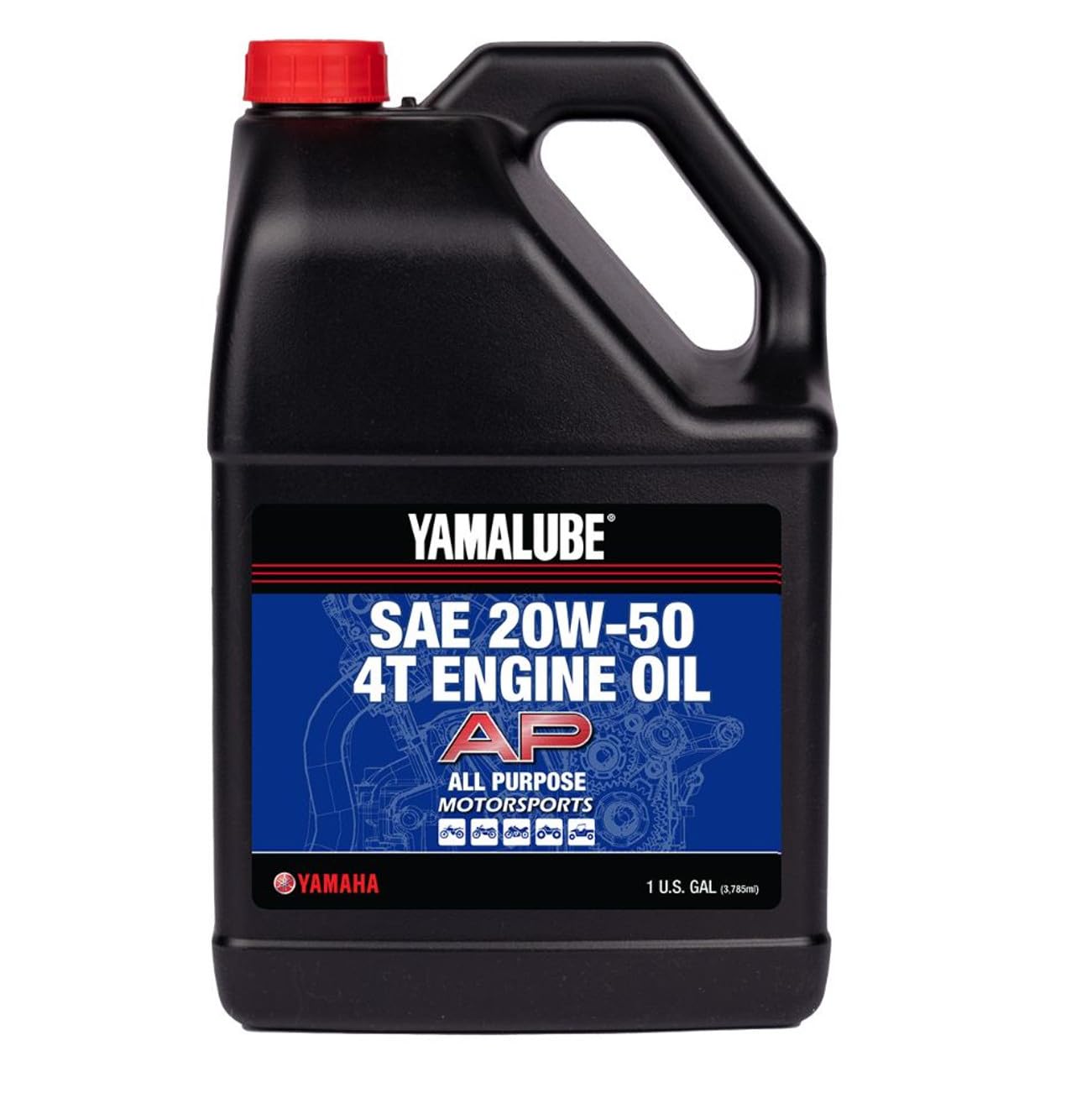
4. Yamaha Yamalube All Purpose 20W-50
The factory-blended gallon that keeps wet clutches biting exactly as designed.
When Yamaha makes oil specifically for Yamaha, you know the formulation is dialed in. This All Purpose Performance 20W-50 is a performance-blended mineral oil suitable for motorcycles, ATVs, side-by-side vehicles, and scooters. It meets or exceeds the JASO MA requirements, which includes the highest certified motorcycle engine oil rating that ensures proper wet clutch performance.
You get exactly what your manual asks for without the dealership markup. One owner liked having it shipped instead of making an hour-long round trip to a store, and riders report it works great in Harley-Davidson engines too — so it is not Yamaha-only despite the branding. The gallon size weighs 7.5 pounds and gives you four quarts for multiple changes.
Compared to the Royal Purple above, this is a mineral-based option rather than full synthetic, so it suits standard street riding rather than extreme duty. What wins people over is the oil quality — the most-cited aspect — with value for money close behind. It is the safe, factory-recommended choice with zero guesswork.
What makes it a safe bet
- JASO MA certified, the highest motorcycle engine oil rating
- Works across Yamaha, Harley-Davidson, ATVs, and scooters
- Gallon jug means fewer trips to the store and more oil per order
The catch
- Mineral blend, so not the ultimate protection for modified engines
- 20W-50 grade is thick for winter riding
Pick this if: you want the manufacturer-recommended oil for your Yamaha or any bike that calls for 20W-50, without paying dealer prices.
Pass if: you demand full synthetic protection for a high-performance build — look at the Royal Purple instead.
5. Liqui Moly Motorbike 4T SAE 20W-50 Street

The German blend that holds tough when Florida summer heat turns brutal.
Liqui Moly’s 20W-50 Street oil is built for universal application with high lubricant-film stability and excellent wear protection. It offers high shear and ageing stability with low evaporation loss, plus outstanding cleaning properties that prevent black sludge. It is mixable with all commercially available engine oils and tested for compatibility with catalytic converters, and it is suitable for wet clutches.
The real-world reviews paint a picture of an oil that shrugs off extreme heat. A Harley-Davidson Sportster owner in Florida — where summer heat can be brutal — reports this oil “hangs right in there” with no complaints. A BMW R1200RT rider ran it in triple-digit temperatures and called it awesome, noting only minor morning tapping that disappears once fully warmed up. One rider even measured a +4 mpg average improvement on a Suzuki Intruder and Buell Blast.
At 4 liters in a 3.54 kg jug, this is a generous volume for multi-bike households. It is a mineral-based 20W-50 like the Valvoline above, but Liqui Moly’s German engineering earns particular loyalty from BMW and Harley owners. The most-praised aspect is oil quality, with value for money as a solid secondary point.
The strengths
- Proven in triple-digit heat on Harleys and BMWs
- Prevents black sludge with outstanding cleaning properties
- 4-liter jug is excellent value for multi-bike owners
Worth noting
- Some riders see morning valve tapping until the oil warms up
- Mineral base means regular change intervals
Choose this if: you ride a big air-cooled cruiser in a hot climate and want German-engineered oil that holds its film strength.
Look past it if: you need a 10W-40 for a modern liquid-cooled sport bike — the 10W-40 Liqui Moly below fits better.
6. Yamaha Yamalube 10W-40 4T Full Synthetic

The full-synthetic gallon that handles 110°F summers and 30°F winters alike.
When you want the ultimate Yamaha-engineered protection, this full synthetic is it. The formula uses only fully synthesized base oil for superior performance and durability, with advanced thermal stability that keeps engines running efficiently under demanding conditions. It is certified to JASO MA and API SL specifications, ensuring compatibility with today’s advanced high-performance engine parts.
The durability story here is impressive. One rider has run it exclusively on a 2017 Yamaha FJ-09 Tracer for 40,000 miles at 3,500-mile intervals, handling temperature swings from 110°F down to 30°F. They note the clutch starts to slip on aggressive 5th-6th shifts at 3,000+ miles — a clear signal it is time for a change — and resolves immediately after an oil change. That is honest, useful feedback about interval timing.
At 128 fluid ounces in one gallon, this replaces four quarts and saves money versus buying individual bottles. It is engineered for both on-road and off-road applications, so it suits dual-sport riders and pit bikes alike — one shop owner buys it continuously for the fleet. The most-praised aspect is oil quality, with performance and value tied for second.
Why it stands out
- Full synthetic for superior performance and durability
- Handles extreme temperature swings from 110°F to 30°F
- Gallon size saves money versus buying quarts
Keep in mind
- Full synthetic costs more per change than mineral oil
- Clutch slip at 3k+ miles signals the change interval
Best for: Yamaha riders who want factory-engineered full synthetic protection and ride in varied climates or off-road conditions.
Not for: vintage bikes that specifically call for mineral oil — the full synthetic formula is wrong for them.
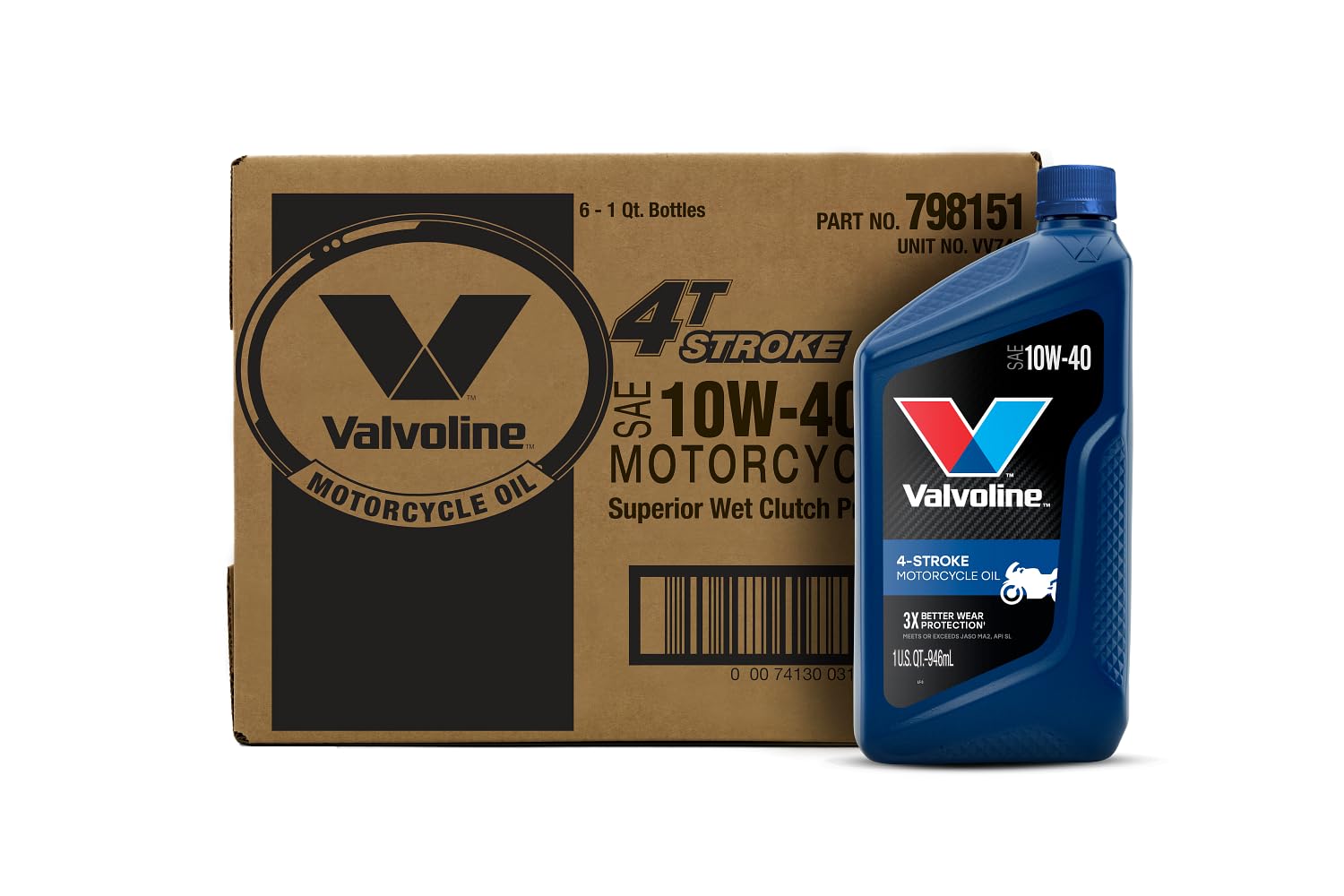
7. Valvoline 4-Stroke Motorcycle SAE 10W-40
The dependable 10W-40 that keeps commuters shifting smoothly mile after mile.
Valvoline’s 10W-40 is engineered with enhanced anti-shudder protection for smooth shifting and maximum power transfer. It uses anti-wear technology to help improve transmission durability, and a proprietary blend of base oils and advanced additives provides better oil flow at low temperatures and greater film protection at higher temperatures. It is a universal-fit oil that works across most 4-stroke motorcycles.
The reliability story here is strong and simple. Riders report running their machines on this oil for many thousands of miles with no issues at all, and it gets specific praise for wet clutch applications. A Rhino 660 owner and a 4-wheeler rider both confirm their machines run good on this oil, and Its 394°F flash point means it resists heat breakdown..
You get 6 quarts in a case here — three full oil changes for many bikes in one order — making it a strong value for daily riders, though it is a mineral oil, not a synthetic. Owners most often cite oil quality, with value for money as the clear second.
The daily-driver appeal
- Six quarts per case covers multiple oil changes
- Enhanced anti-shudder protection for smoother shifting
- Reliable over many miles with no reported issues
The limits
- Mineral oil, not synthetic — shorter change intervals
- No JASO MA2 certification listed in the specs
Grab this if: you want a dependable, affordable 10W-40 for daily commuting and do not need full synthetic protection.
Consider something else if: you ride a high-performance bike that demands JASO MA2 certified oil.
8. Liqui Moly 4T 10W-40 Street 4-Liter

The German synthetic that made one rider switch from Valvoline after two changes.
Liqui Moly’s 4T 10W-40 is a high-performance motor oil based on synthetic technology, developed for air- and water-cooled 4-stroke engines exposed to normal to extreme operating conditions. It delivers optimum lubrication, outstanding engine cleanliness, excellent friction control, and minimal wear. It works in engines with or without a wet clutch, and the 4-liter jug comes with a handy spout for mess-free pouring.
The review pages contain a compelling head-to-head story. A 2023 Kawasaki Vulcan S650 owner ran Valvoline 10W-40 synthetic twice and found the shifting poor — then switched to Liqui Moly and immediately noticed smoother shifting, more power, and smoother idling. That is a direct, honest comparison between two oils on this very list. Other owners praise the easy-pour funnel design and the clean color, noting the oil clings so well it is hard to wash off your hands.
At 8 pounds for 4000 ml, this is a substantial jug that serves multiple changes. Its 230°C flash point signals strong heat resistance. Quality is the most-praised aspect, with value for money second, and pouring convenience earns its own dedicated praise. It is a premium pick that justifies its price with proven results.
Why riders convert
- Noticeably smoother shifting and more power vs other synthetics
- Comes with a spout for clean, easy pouring
- Excellent heat resistance with a 230°C flash point
Be aware
- Premium price per liter compared to mineral oils
- Some may find the 4-liter jug bulky to store
Reach for this if: you want German-engineered synthetic technology and value easy pouring plus proven shifting improvements.
Skip if: you are on a tight budget and just need a basic fill — the Castrol blend below costs less.
9. Castrol Actevo 4T 10W-40 Synthetic Blend

The budget-friendly blend that survived the Tail of the Dragon without breaking a sweat.
Castrol’s Actevo 4T uses Trizone technology to protect all three critical zones: engine, clutch, and gearbox. Active Protection Molecules (APM) enhance the lubricant’s ability to cling to vital engine components, and the formula exceeds API SG and JASO MA-2 standards. It provides excellent wear protection during long trips, short commuting, and stop/start conditions — the exact mix of riding most people actually do.
The durability proof is genuinely impressive for a budget oil. A Ninja 300 owner ran it from 20K to 44K miles over 5+ years, reporting very smooth gear shifts with no ticking noise, and survived a 1400-mile twisty mountain trip on the Tail of the Dragon with no overheating or power loss. Another rider confirmed very low oil consumption in 100°F+ heat with no breakdown after 4000 miles. That is real-world endurance at a friendly price.
At 6 quarts in a case, this is the volume play for riders who change oil often. The Trizone protection means your clutch and gearbox get the same care as your engine, and the JASO MA-2 certification means wet clutch safety. Quality and value are the most-praised aspects, and one wry reviewer summed it up: “It’s definitely oil. Its oily. It smells like oil. It pours like oil. My engine is still running.”
The strong case
- JASO MA-2 certified synthetic blend at a budget price
- Survived 1400 miles of mountain riding with no power loss
- Six quarts per case offers excellent value per change
Honest limits
- Synthetic blend, not full synthetic — less extreme heat margin
- Some riders report slightly more noise vs full synthetics
Best for: budget-conscious riders who want JASO MA-2 certified protection with proven durability on long trips.
Consider premium if: you push a high-performance engine to its limits and want the extra heat margin of full synthetic.
Understanding the Specs
JASO MA vs MA2 Certification
JASO MA is the standard that guarantees an oil has the right friction properties for a motorcycle wet clutch. A wet clutch shares the engine oil, and the wrong friction modifiers make it slip under acceleration. JASO MA2 is the higher tier with stricter friction requirements, so it is the safest bet for modern sport bikes and any bike with a shared oil sump. If an oil lacks this mark, treat it as car oil and keep it out of your motorcycle.
10W-40 vs 20W-50 Viscosity
The first number (10W or 20W) tells you how the oil flows in cold weather — lower means easier cold starts. The second number (40 or 50) is the thickness at operating temperature — higher means more protection in hot conditions. A 10W-40 is the versatile all-rounder for most modern bikes and varied climates. A 20W-50 suits big air-cooled engines and hot climates where the thicker film protects better when everything gets hot.
FAQ
Can I use car oil in my motorcycle?
What is the difference between 10W-40 and 20W-50 motorcycle oil?
How many quarts does a motorcycle oil change need?
Is full synthetic oil better than mineral oil for motorcycles?
How often should I change my motorcycle oil?
Will motorcycle oil work in an ATV or side-by-side?
Why does my clutch slip after an oil change?
Is it bad to mix motorcycle oil brands?
Can I use 20W-50 in winter?
What does the flash point of motorcycle oil mean?
Final Thoughts: The Verdict
For most riders, the engine oil for motorcycles winner is the Royal Purple Max-Cycle 10W-40 because its 3X-4X load-carrying capacity and proven cooling benefits protect stressed engines better than anything else here. If you want factory-engineered full synthetic for varied climates, grab the Yamaha Yamalube 10W-40 FS. And for budget-conscious riders who still want JASO MA-2 certified protection, the Castrol Actevo 4T is the one to reach for.
How We Picked
We do not accept paid placement. Every pick is matched to a real buyer and a real use-case; we do not hands-on test units.
Sources & Methodology
Specifications: manufacturer listings and product documentation. Review insights: verified customer reviews, as of August 2026. Pricing: not shown on this page (it changes often); check the current price via the retailer link.
As an Amazon Associate, WellFizz earns from qualifying purchases. This does not affect which products we feature.
Related Guides

Mo Maruf
I created WellFizz to bridge the gap between vague wellness advice and actionable solutions. My mission is simple: to decode the research and give you practical tools you can actually use.
Beyond the data, I am a passionate traveler. I believe that stepping away from the screen to explore new environments is essential for mental clarity and physical vitality.