Our readers keep the lights on and my smoothie glass nicely filled. As an Amazon Associate, I earn from qualifying purchases.
Specs are compiled from manufacturer listings and verified buyer reviews and can change over time — please confirm the key details on the product page before buying.
Picking a feeding tube formula is a deeply personal medical choice — the right one keeps weight stable, calms the stomach, and fits your daily routine, while the wrong one can mean clogged tubes, digestive distress, or wasted money. This guide compares the leading complete-nutrition formulas by calorie density (kcal/mL), protein content, fiber levels, and how real caregivers and patients rate them in daily use, so you can match a formula to your needs: weight gain, fluid restrictions, or a preference for real food ingredients.
I’m Mohammad Maruf — the founder and writer behind WellFizz. This guide is built by comparing the manufacturers’ published specifications and the patterns across verified customer reviews, so you get each pick’s real strengths and trade-offs instead of marketing spin.
Whether you’re a caregiver managing a PEG tube or a patient seeking oral nutrition, the feeding tube formula that fits your life balances calorie density, protein, and digestibility with proven real-world results from thousands of other users’ experiences.
Our Picks at a Glance

How To Choose The Best Feeding Tube Formula
Every formula here is nutritionally complete — it can be your only source of nutrition. But they differ in ways that change your daily life: how much you need to drink, how fast it flows through the tube, and how your body tolerates it.
Calorie Density — The Number That Sets The Pace
Calorie density, measured in kcal/mL, tells you how many calories are packed into each milliliter of fluid. A 1.0 Cal formula means you need more volume to hit your calorie target, which translates to longer feeding times. A 1.5 or 2.0 Cal formula delivers the same calories in less fluid — a real advantage if your doctor has restricted your fluid intake, or if you want to shorten the hours you spend hooked to a pump.
Protein And Fiber — The Muscle And The Rhythm
Protein preserves lean body mass during weight loss or recovery. Fiber maintains bowel regularity, preventing constipation or diarrhea in tube-fed patients. Standard formulas often skip fiber entirely, which is why some caregivers specifically seek out options with added fiber.
Standard Formula vs. Real Food
Most tube feeding formulas are made from isolated nutrients — protein from milk or soy, added vitamins, and corn syrup for calories. A newer category, blenderized tube feeding, uses puréed whole foods like beef, potatoes, and spinach. Real-food blends often improve digestive tolerance but cost more.
Quick Comparison
| Model | Best For | Calorie Density | Protein Per 1000 mL | Fiber | Amazon |
|---|---|---|---|---|---|
| Jevity 1.5 Cal High Protein★ Best Overall | High-protein, high-calorie support | 1.5 kcal/mL | High | With FOS | Amazon |
| Fibersource HNFiber First | Fiber support in tube feeding | 1.2 kcal/mL | High | With fiber | Amazon |
| TwoCal HN VanillaFlavor Favorite | Great-tasting change of pace | 2.0 kcal/mL | High | — | Amazon |
| Abbott Jevity 1.2 Cal | Unflavored, gentle everyday standard | 1.2 kcal/mL | Standard | — | Amazon |
| Osmolite 1.2 Cal | Hospital-standard weight gain | 1.2 kcal/mL | High | — | Amazon |
| Nutren 2.0 | Maximum calories, short feeding window | 2.0 kcal/mL | 84 g | — | Amazon |
| Nestle Compleat | Real fruits and vegetables | — | Standard | Natural | Amazon |
| Isosource 1.5 Cal | Calorie-dense with fiber support | 1.5 kcal/mL | High | With fiber | Amazon |
| Real Food Blends | Whole-food, blenderized diet | — | Whole foods | Natural | Amazon |
In‑Depth Reviews
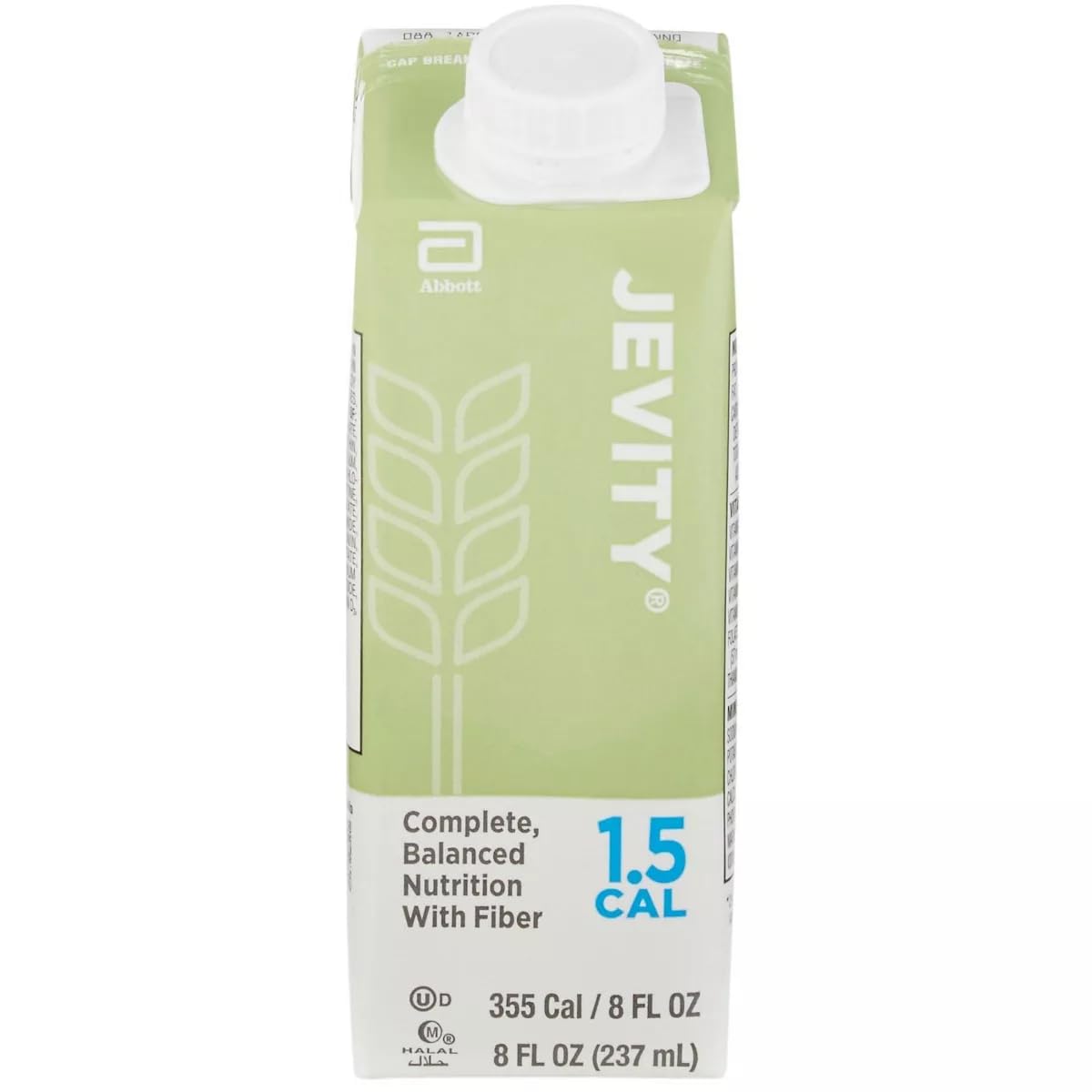
1. Jevity 1.5 Cal High Protein Nutrition with FOS
Our pick — over 4.5★ from 350+ verified ratings; the strongest balance of quality and price.
The crowd favorite that holds its own as a lifesaver when insurance supply runs dry
Jevity 1.5 Cal packs more nutrition into every carton, which means fewer feeding sessions and less fluid volume for the same calorie target. It suits altered taste perception and works for both supplemental and sole-source nutrition. It’s lactose and gluten-free, making it a gentler fit for sensitive systems, though it does contain milk and soy ingredients.
Abbott’s formulation wins people over — owners consistently praise the nutritional value and how well it flows through feeding tubes. As the review pages sum it up: it’s a “life saver for PEG tube feeding when the insurance supply is delayed.” This is the product caregivers buy out of pocket to bridge the gap between deliveries, and it delivers exactly what the prescription promised.
Weight management stories run through the reviews — a husband maintaining his weight, a grandson’s nutritional needs being met. It also ships in a 15-pound case, noticeably heavier than the Osmolite 1.2 Cal case at 14 pounds, which tracks with the higher calorie density inside each 8-ounce carton.
What owners praise
- High-quality Abbott formulation trusted for tube feeding
- Dense 1.5 kcal/mL shortens feeding time
- Lactose and gluten-free for sensitive stomachs
Trade-offs to know
- Contains milk and soy — not for those with those allergies
- Heavier case at 15 pounds to haul and store
Reach for it if: your priority is dense nutrition in a trusted brand that works for both tube and oral feeding.
Think twice if: you require a completely milk-free or soy-free formula.
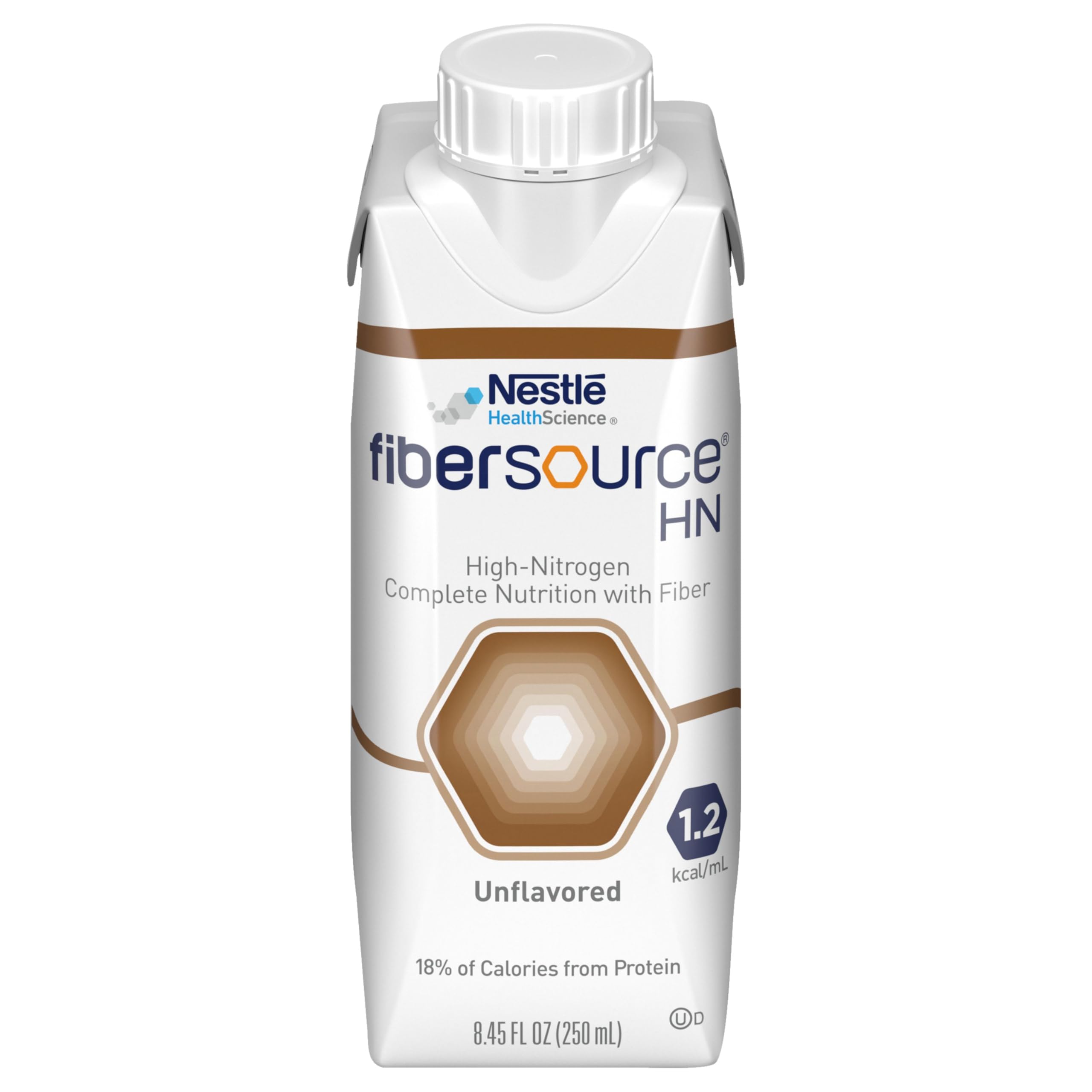
2. Fibersource HN Complete Nutrition with Fiber
The fiber-forward formula that fills a gap standard shakes leave behind
Fibersource HN from Nestlé Health Science is built for patients whose tube feeding needs more than just calories. It’s a nutritionally complete formula with added fiber for digestive health, and it’s lactose-intolerance-friendly and gluten-free. The protein comes from milk and soy, and it’s intended for tube feeding only — not for IV use — so it’s a dedicated enteral nutrition tool.
Reviews highlight the fiber gap as the key differentiator. One caregiver on nearly total tube feedings bought over-the-counter shakes like Ensure Max and Boost, then realized those have no fiber content at all — switching to supplement one feeding every other day with Fibersource “has really helped.” It’s the go-to when regularity is the priority.
It also earned praise from a PEG tube patient recovering from Stage 2 throat cancer who found “nothing not to love” about it, and from a parent confirming it’s the right product, delivered undamaged.
Why it stands out
- Added fiber supports bowel regularity in tube feeding
- Gluten-free and suitable for lactose intolerance
- Kosher certification for dietary needs
The trade-off
- Contains protein from milk and soy
- Not for individuals with galactosemia
Choose this one if: your standard formula is leaving you constipated or irregular.
Look elsewhere if: you need a dairy-free or soy-free source.
3. TwoCal HN Nutrition Vanilla
A vanilla-flavored change of pace that comforts patients who taste what they’re fed
TwoCal HN delivers a dense 2.0 kcal/mL — the most calorie-packed option in this lineup — in a vanilla flavor that’s become a favorite among patients who can still taste. For someone whose swallowing has been affected, getting enough calories without choking is the whole battle, and the flavor here makes that daily effort far less miserable. It comes in a pack of 24 cartons totaling 192 fluid ounces.
Owners describe it as “the best meal replacement I have found” specifically because of the flavor and the vitamins, with one patient noting it helps a lot when replacing about one meal a day. The hospice story is the most telling: a caregiver feeding a dad on hospice through a tube called this “amazing” — proof that even in the hardest care situations, this formula delivers comfort.
If you’re on a feeding tube long-term, monotony sets in, and as one owner put it, “sometimes it helps to make a change in your formula.” That’s exactly the niche TwoCal fills.
The flavor win: a genuinely enjoyable vanilla that makes oral or tasting patients more willing to drink.
The honest note: one owner flagged it as “pricey” compared to everything else they had tried.
Choose it for: patients who can taste and need a high-calorie formula that doesn’t taste like a chore.
Caution: if budget is a tight constraint, this is one of the more expensive per-case options.
4. Abbott Jevity 1.2 Cal Unflavored

The dependable unflavored staple that hides easily in any routine
Abbott’s Jevity at 1.2 Cal is the measured, middle-ground choice — lighter than the 1.5 Cal version, with an unflavored profile that works well for tube feeding where taste is irrelevant. Each 8-ounce carton comes in a re-closable Tetra carton, which is a genuinely useful detail if you don’t finish a feeding all at once and need to store the rest safely for later.
The reviews show a satisfied, steady customer base. One owner simply noted “1.5 is even better,” which hints that this is a stepping stone or supplementary option rather than the most calorie-dense. Another happy customer for a parent called it “good and very healthy,” suggesting a reliable track record for older adults using it as a nutritional supplement.
It’s a smart option if you want the trusted Abbott formulation but prefer a lower calorie density for slower, gentler feeding, or for oral supplementation between meals rather than full meal replacement.
The reliability read: a steady, unremarkable performer that does exactly what it says — dependable nutrition.
The caveat: if you need maximum calories per carton, the 1.5 Cal Jevity delivers more.
Pick this if: you want the trusted Abbott brand with a less aggressive calorie punch and a re-sealable carton.
skip it if: you need the higher 1.5 Cal density for fluid restriction.
5. Osmolite 1.2 Cal High Protein

The hospital-standard feed that put weight back on a malnourished mom
Osmolite 1.2 Cal is the formula you know from the hospital, now delivered to your door — and that familiarity is a huge comfort for caregivers. One owner said “it’s exactly the same as you get at the hospital,” which removes the guesswork when you’re discharged and still need reliable nutrition. It’s a high-protein 1.2 kcal/mL formula in 8-ounce containers.
The weight-gain story here is tangible. An owner described how her mother was malnourished and Osmolite “help her put on some weight,” and she feeds through a G-tube, noting the cartons are “easy to open, and easy to hold” — a real consideration for caregivers with limited hand strength. Another shared that her 91-year-old mother was recommended it by her doctor and looks amazing.
At 14 pounds per case, it’s lighter than the Jevity 1.5 Cal case at 15 pounds, reflecting the lower calorie density. For the family who values consistency and doctor familiarity above novelty, this is a steady, trusted choice.
The trust factor: the exact same feed patients get in hospital — zero adjustment period needed.
The honest note: if you need 1.5 Cal density, you may have to settle for this 1.2 Cal version as one owner noted.
Consider the alternative: if you need more calories per volume, step up to a 1.5 Cal formula.
6. Nutren 2.0 Calorically-Dense Formula

Twice the protein of a standard feed, built for serious weight recovery and short feeding windows
Nutren 2.0 is the heavyweight of this lineup: 2.0 calories per mL translates to 2000 calories per 1000 mL, with 84 grams of protein per 1000 mL from casein and soy. For patients with high energy needs, shortened feeding cycles, or restricted fluid volume, this is the formula designed to deliver maximum nutrition in minimal time. It works for short- or long-term tube feeding under medical supervision.
The real-world math is striking. One owner switched from a hospital formula offering 258 calories per 8 oz to this one’s 550 calories and “over twice the protein.” That single container-level comparison is why ALS and cancer patients see results — one owner called it “awesome” and noted it was “highly recommended by nutritionist.”
There’s a practical edge too: it’s about the same cost out of pocket after insurance, but you can buy a case at a time on Amazon instead of four cases from a local supplier. The taste gets mixed reactions — some find it good, others find it unpleasant — which matters more if you’re drinking it orally.
The big wins
- 550 calories per 8 oz container for rapid weight recovery
- Over twice the protein of a standard 258-calorie hospital feed
- Consistent flow consistency for feeding tubes
What to weigh
- Mixed taste reviews if drinking orally
- Contains milk and soy protein
Pick this for: patients with high calorie needs, ALS, or post-cancer weight loss who need maximum nutrition in less fluid.
Note: if you’re drinking it by mouth, order a single case first to test the taste.
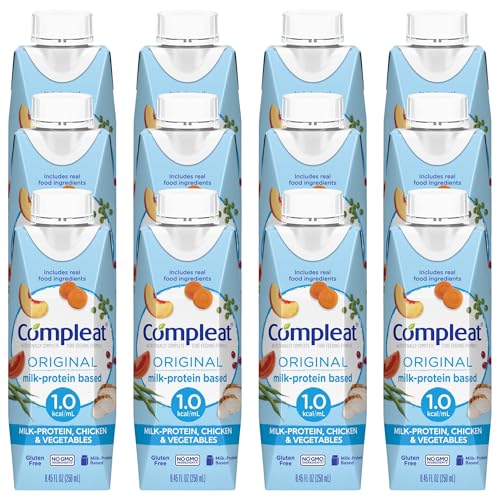
7. Nestle Compleat Original
Tube feeding with actual recognizable food, not just water and corn syrup
Nestle Compleat is the bridge formula between standard nutrition and real food. It provides complete nutritional support with real fruits and vegetables per serving, and it avoids GMOs, gluten, corn, and soy entirely. If you’ve ever looked at the ingredient list of a standard formula and wished for something more natural, this is the answer.
The most passionate review makes the case directly: “In feeding-tube formulas like Jevity, you won’t find recognizable ingredients besides water and corn syrup. This formula contains actual food.” That same owner reports it improved health, strength, and bowel regularity. Another caregiver praised it as “gentle on my baby’s tummy” without causing throwing up — a meaningful data point for parents of tube-fed children.
Weight stability is a recurring theme, with owners using it to keep weight on for gastric tube patients. It comes in a 12-count case, which is a smaller commitment than the 24-count cases elsewhere — useful if you want to trial it before committing. The trade-off owners acknowledge is cost.
The natural edge: real food ingredients that improve digestive tolerance and bowel regularity.
The cost reality: a more expensive option, with one owner unsure they can afford it long-term.
Reach for this if: you or your family member struggles with digestion on traditional formulas, or you prefer clean ingredients.
Be mindful: the price per case is higher, so budget-conscious families should weigh the benefits carefully.
8. Isosource 1.5 Cal with Fiber

Calorie-dense AND fiber-rich — the rare combo for patients who need both
Isosource 1.5 Cal from Nestlé Health Science is a nutritionally-complete, calorically-dense formula that doesn’t force you to choose between calories and digestion. It delivers 1.5 kcal/mL with fiber for digestive health and lean body mass support. For tube-fed patients who need weight support but struggle with regularity, this hits both targets.
The tube feeding compatibility is the standout — it “works great for my feed tube” is the consistent chorus. One powerful story: an owner lived on Isosource exclusively for 18 months after cancer surgery with a feeding tube, and even now that they can eat normally, keeps it in the house for days when cooking feels like too much. That’s a long-term trust you can’t fake.
Owners also noted the practical shipping advantage — roughly a year out on the expiration date upon arrival, which takes the pressure off when you’re storing a case. The flavor gets mixed reviews, which only matters if you’re drinking it orally rather than through a tube.
Why it works
- 1.5 kcal/mL calories plus fiber for digestive support
- Long shelf life on delivery — about a year out
- Proven over 18 months of exclusive use post-cancer
Good to note
- Mixed flavor reviews for oral drinkers
- Meant for tube feeding use
Pick this if: you want calorie density and fiber in one formula, and you value long-term reliability.
Look elsewhere if: you’re drinking it by mouth and taste sensitivity is a concern.
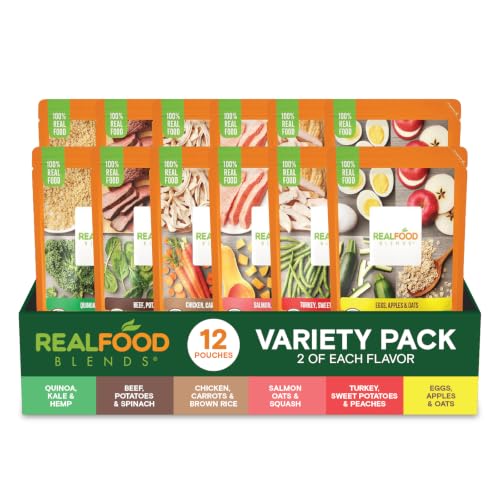
9. Real Food Blends Variety Pack
Puréed beef, potatoes, and spinach through a tube — the closest thing to eating real food
Real Food Blends is the most radical option here: a true blenderized diet made of just six real food ingredients — Pineapple Juice, Beef, Potatoes, Spinach, Grapeseed Oil, and Water. It’s shelf-stable and ready to feed through bolus, gravity, or pump methods, and it works for both adults and children. If the idea of living on processed liquid formula bothers you, this is the alternative.
Families report genuinely life-changing differences. One owner called it “so much healthier than traditional formulas” and said the difference was “life changing” for their tube-fed family member. Another story: after 7 weeks of oral radiation and significant weight loss, a husband on a temporary G-tube was getting sick from Ensure and other drinks — switching to Real Food Blends stopped the sickness. The digestive tolerance is the headline benefit.
There’s a real transition story too: one patient moved from full tube feeding with this product toward eating by mouth, crediting the real-food approach. It’s not cheap — owners openly call it “expensive” — and the brand is upfront that it’s a premium product, with 320–340 calories per 9.4 oz pouch.
The real-food advantage
- Only 6 recognizable ingredients — no corn syrup or isolated additives
- Better digestive tolerance for sensitive stomachs
- Variety pack of 6 meals and 1 snack to avoid monotony
The price of purity
- Clearly the most expensive option in this lineup
- Not a fit for patients who need maximum calorie density per volume
Choose this for: patients who struggle with digestive distress on standard formulas, or families who want whole-food nutrition.
The honest limit: the cost per pouch makes it a premium choice that’s hard to sustain long-term on a tight budget.
Understanding the Specs
Calorie Density (kcal/mL)
This is the single most important number for tube feeding. A 1.0 Cal formula needs more volume to reach your calorie goal; a 1.5 or 2.0 Cal formula delivers the same calories in less fluid. If your doctor restricts fluids, or you want shorter pump times, higher density wins. If you need gentle, slower feeding, lower density is easier on the stomach.
Protein Per 1000 mL
Protein supports lean body mass — the muscle you’re trying to protect during illness or recovery. Standard formulas offer moderate protein; high-protein versions like Nutren 2.0 deliver 84 grams per 1000 mL. Patients who are malnourished or at risk of muscle wasting need higher protein to maintain strength.
FAQ
Can I use a standard grocery store shake like Ensure instead of a tube feeding formula?
What does the kcal/mL number mean for my daily feeding schedule?
Is the unflavored formula better for tube feeding?
Can I use these formulas if the patient has lactose intolerance?
How long does a case of formula typically last?
What is the difference between a standard formula and a blenderized diet?
Does a higher calorie density mean I need less fluid volume?
Can these formulas help with weight gain in malnourished patients?
Is it safe to buy tube feeding formula on Amazon?
What formula is best for a patient who gets stomach upset from standard formulas?
Final Thoughts: The Verdict
For most buyers, the feeding tube formula winner is the Jevity 1.5 Cal High Protein because it balances dense nutrition, a trusted Abbott formulation, and proven tube-feeding performance — the pick that consistently wins over caregivers. If you want fiber support built into your feed, grab the Fibersource HN. And for the family seeking whole-food nutrition or relief from digestive upset, the Real Food Blends variety pack is the one to reach for, if your budget allows.
How We Picked
We do not accept paid placement. Every pick is matched to a real buyer and a real use-case; we do not hands-on test units.
Sources & Methodology
Specifications: manufacturer listings and product documentation. Review insights: verified customer reviews, as of August 2026. Pricing: not shown on this page (it changes often); check the current price via the retailer link.
As an Amazon Associate, WellFizz earns from qualifying purchases. This does not affect which products we feature.
Related Guides

Mo Maruf
I created WellFizz to bridge the gap between vague wellness advice and actionable solutions. My mission is simple: to decode the research and give you practical tools you can actually use.
Beyond the data, I am a passionate traveler. I believe that stepping away from the screen to explore new environments is essential for mental clarity and physical vitality.