Our readers keep the lights on and my smoothie glass nicely filled. As an Amazon Associate, I earn from qualifying purchases.
Specs are compiled from manufacturer listings and verified buyer reviews and can change over time — please confirm the key details on the product page before buying.
If you’re tired of mowing every weekend and your lawn still looks patchy, dwarf fescue is the fix. These fine-bladed grasses grow low and dense, which means less mowing and a softer, carpet-like feel underfoot. The real challenge is matching the seed’s germination needs to your yard’s sun, soil, and watering habits.
I’m Mohammad Maruf — the founder and writer behind WellFizz. This guide is built by comparing the manufacturers’ published specifications and the patterns across verified customer reviews, so you get each pick’s real strengths and trade-offs instead of marketing spin.
Here are the best dwarf fescue grass seed options for a low-maintenance, shade-tolerant lawn that needs fewer cuts and less water.
Our Picks at a Glance
How To Choose The Best Dwarf Fescue Grass Seed
Dwarf fescue is really a family of fine fescues that stay short, tolerate shade, and demand far less water and mowing than standard turf. But not every bag behaves the same, so here’s what separates a great pick from a frustrating one.
Check the fescue blend, not just the label
Many of the best products are blends of different fescue types — like Creeping Red, Chewings, and Sheep Fescue. A blend usually fills in more evenly because each type handles a slightly different microclimate in your yard. A single-variety seed is more consistent but can leave bare spots if the conditions aren’t perfect.
Match the bag to your light and climate
Fine fescues are famous for growing in shade, but some tolerate full sun in cooler climates better than others. Check the USDA hardiness zone listed on the bag and be honest about how much sun your yard actually gets. Shade-tolerant doesn’t equal no-sun — most still want partial sun to perform.
Read the germination timing before you plant
Germination windows vary from a few days to a couple of weeks depending on soil temperature and moisture. If you’re impatient, a faster-sprouting seed is worth it, but remember that a slow start often means a hardier, denser lawn later.
Quick Comparison
| Model | Best For | Weight | Coverage | Shade Tolerance | Amazon |
|---|---|---|---|---|---|
| Southland Sod 3 Marathon II★ Best Overall | Manicured Southern California lawns | 1 lb | — | Partial | Amazon |
| Simple Lawn Mow Less Fine Fescue | Shady, low-maintenance front yards | 2 lbs | Up to 1,000 sq ft | High | Amazon |
| Earthwise EcoSeed Alternative Lawn Seed | No-mow, hard-to-grow shaded areas | 5 lbs | Up to 1,000 sq ft | High | Amazon |
| Twin City Eco Seed Low Grow Fescue | Full sun to dense shade, low-mow turf | 5 lbs | Up to 1,000 sq ft | Full sun to heavy shade | Amazon |
In‑Depth Reviews
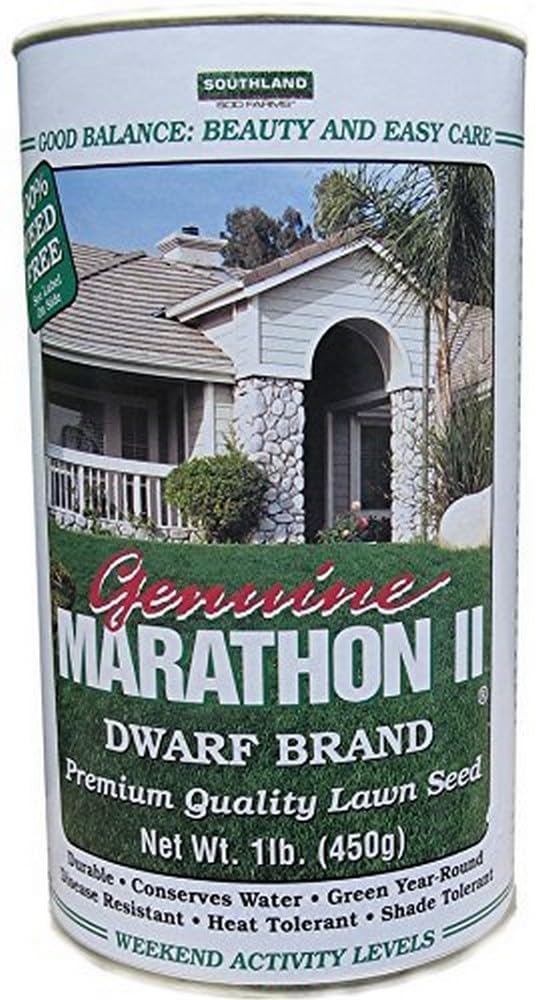
1. Southland Sod 3 Marathon II Grass Seed Mix
Our pick — over 4★ from 250+ verified ratings; the strongest balance of quality and price.
The dwarf turf that delivers that tight, manicured carpet look Southern California lawns are famous for.
Marathon II’s second-generation dwarf variety, Encore, is a proprietary blend bred for Southern California’s climate. That translates into a real-life win: you can mow shorter, yet still get greater density and slightly narrower leaves, which gives you that compact, carpet-like appearance without the constant upkeep.
The trade-off is slower winter growth, and the 1 lb bag suits patching bare spots better than full-lawn planting. The seed is clean and uniform with no debris or filler, spreading easily on fresh ground or for overseeding. With light watering a few times daily, you can see grass growing in days for a small investment.
Germination results split evenly: some yards sprout in under a week, others report no germination at all. Pre-soaking the seed for several days yields the best results, and the established grass earns consistent praise for quality and durability. In San Diego, it’s often called the gold standard.
Why It Earns The Top Spot
- Second-generation dwarf variety (Encore) gives a tight, manicured look
- Clean, uniform seed with no debris or filler
- Grows well in both shade and sun once established
- Lower mowing height with greater density
Know Before You Plant
- Germination is the most-discussed concern — soak first for best results
- Growth rate slows noticeably in winter
- Expensive for the coverage a single pound provides
The pick for: anyone with a medium-traffic Southern California lawn who wants that dense, manicured, shade-and-sun tolerant turf.
Reach for it if: you’re fine doing a little pre-germination work and want a proven regional favorite over a generic mix.
2. Simple Lawn Mow Less Fine Fescue Grass Seed
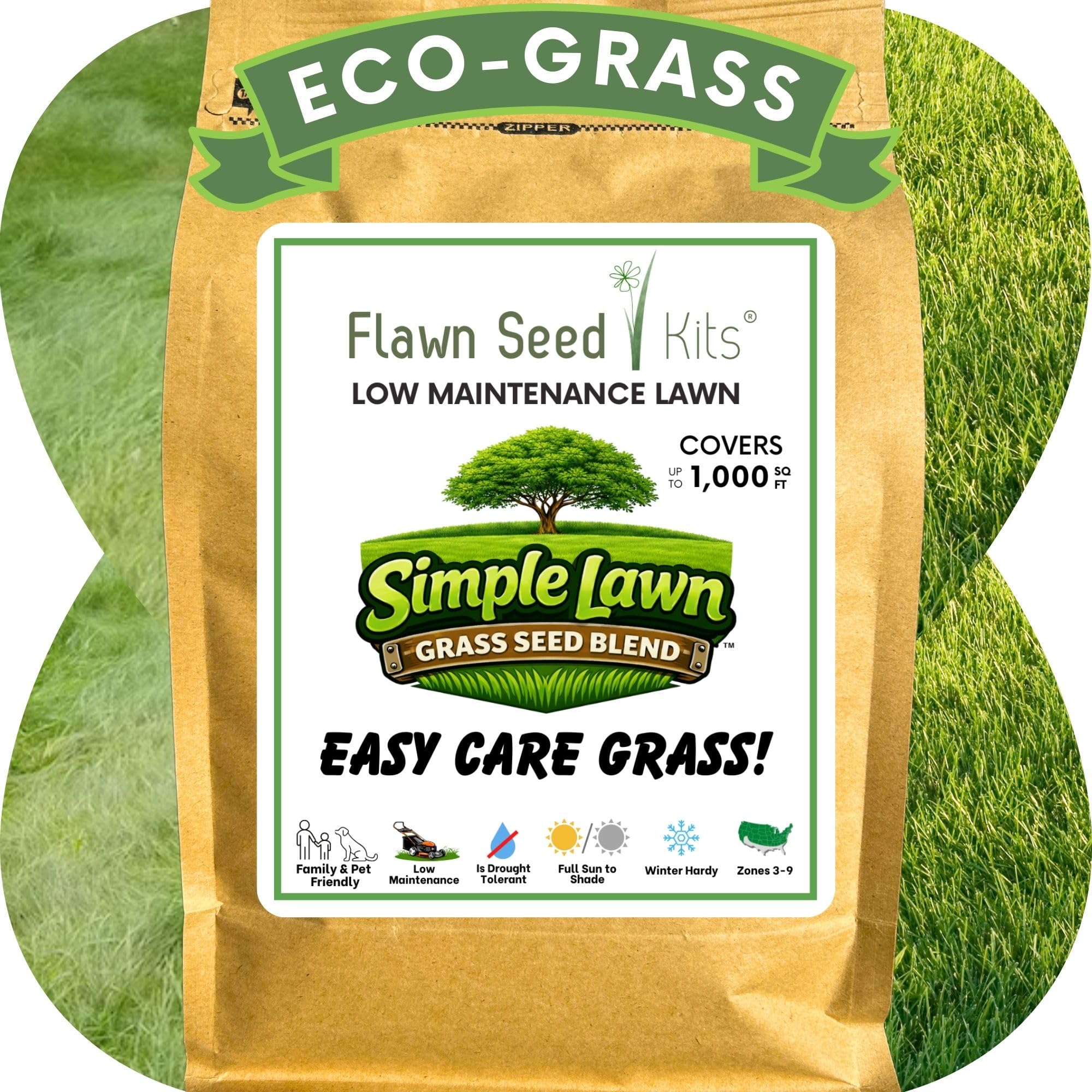
The shade-rescuer with a soft, wispy blade that turns a struggling yard into a no-mow zone.
This 2 lb bag is built around a simple promise: mow less. The slow-growing varieties stay shorter naturally, and the fine, clean blade texture creates a smooth, uniform lawn that looks intentional rather than wild. It’s designed for front yards, backyards, and residential spaces where you want curb appeal without the weekend chore.
Owners who planted in shady areas that were struggling report the grass came in thick and quickly, and it’s notably soft underfoot. The germination window requires a little patience — expect 7-10 days to see even a hint of a baby tip of grass — but the payoff is a very wispy, soft blade that fills in consistently. The lack of filler seed means the whole lawn shares the same texture rather than sprouting in patchy stages.
You get a lawn that fills in fast: this seed germinates (sprouts) reliably in 1-2 weeks once soil temperatures hit 50-60 degrees Fahrenheit, so you are not waiting long to see green. It blends smoothly into existing lawns and needs little to no watering once established, saving you time and effort. It is also GMO-free (not genetically modified) and comes in a kraft pouch, a plus if you avoid plastic packaging. The only real catch is the slow start; this grass rewards patience over instant gratification, so expect a steadier establishment rather than a quick fix.
Why You’ll Like It
- Grows thick and fast in shady, struggling areas
- Very soft, wispy blades underfoot
- Drought tolerant and pet friendly
- No filler seed — uniform texture across the lawn
Keep In Mind
- Takes 7-10 days just to see the first tips
- Slow-growing nature means a slow start to full coverage
Your move: pick this if a shady front yard has been your losing battle and you’re ready to quit mowing it so often.
Look elsewhere if: you need instant ground cover this season and can’t wait a couple of weeks for germination.
3. Earthwise EcoSeed Alternative Lawn Seed
The no-mow alternative lawn that grows low, dense, and dark emerald — if you can wait for it.
This 5 lb bag covers up to 1,000 sq ft, but the real story is the blend inside: Creeping Red, Chewings, and Sheep Fescue. That combination is engineered as a no-mow alternative lawn that grows low and dense with minimal mowing and no routine fertilization once established. It performs best in partial sun to shade, and can even tolerate full sun in cooler climates.
The deep-rooted fine fescues help retain moisture efficiently, which means lower water needs once the lawn is established. Owners describe a beautiful dark emerald color that grows much, much lower than other grasses — the kind of natural, soft look that replaces the need for a manicured turf. The expected plant height tops out around 4 inches, so it genuinely stays short.
The patience warning is real here. Germination typically runs 7 to 14 days with consistent moisture, and some buyers report it can take weeks to come up — even a careful planter who tilled, seeded, and watered regularly saw nothing sprout. The guidance from buyers is simple: keep the ground moist and be patient, because when it does come up, it’s worth it. The 5 lb weight is a full five times the Southland bag, making it the stronger choice for filling patchy areas across a larger yard.
The Real Strengths
- Triple fescue blend for dense, even coverage
- Beautiful dark emerald color
- Grows low and needs minimal mowing
- Drought tolerant with deep roots
The Honest Caveat
- Germination can take weeks — patience is mandatory
- Some owners saw nothing sprout even with careful planting
- Needs consistent moisture during establishment
Step up if: you have a larger shaded or hard-to-grow area and want a true no-mow blend with a premium dark color.
Think twice if: your watering schedule is inconsistent or you expect a fast green result within a week.
4. Twin City Eco Seed Low Grow Fescue Mix

The four-way fescue blend that handles everything from full sun to dense shade without fuss.
This mix stands apart with its four-way composition: 25% Celestial Creeping Red Fescue, 25% Enchantment Chewings Fescue, 25% Viking H2O Hard Fescue, and 25% Blue Mesa Sheep Fescue. That genetic variety is what makes it so adaptable — it thrives in full sun to dense shade, and adapts to most soil conditions from very sandy to heavy clay. If left unmown, the long-term stand reaches 10-12 inches, but the mow between 2-4 inches guidance means you control the height.
The growth profile gets the most discussion from owners. Germination runs 7-12 days under ideal conditions, and while some owners mention fast sprouting in 4-5 days, most note the grass grows slowly after that — exactly as advertised. It’s a no-mow aesthetic that requires limited fertilizer and irrigation, making it ideal for areas that are difficult to maintain. Owners who prefer it over cheaper big-box store seed plan to reseed entire acreages with it.
The weakness is a real-world logistics hiccup rather than a seed-quality issue: some orders arrive with the wrong bag size, shipped as smaller bags than what was ordered. It’s a known fulfillment complaint tied to one seller experience, so it’s worth checking your package on arrival. The appearance earns consistent praise, and the disease-resistant, drought-tolerant traits make it a true set-and-forget turf for the right buyer.
Why It Stands Out
- Four-way fescue blend handles full sun to dense shade
- Drought tolerant and disease resistant
- Adapts to sandy soil and heavy clay
- Grows well whether mown or left alone
Watch For
- Occasional shipping mix-ups on bag size
- Slow growth after sprouting — patience required
- Runs 7-12 days to germinate under ideal conditions
Choose this when: your yard has wildly varying conditions — some full sun, some dense shade, some tricky soil — and you want one seed to handle it all.
Be ready for: a slow-growing turf that needs the right bag size delivered, so verify your order when the box lands.
Understanding the Specs
Fescue Blends vs. Single Varieties
Most premium dwarf fescue products aren’t one grass but a blend. A mix of Creeping Red, Chewings, and Sheep Fescue fills in more evenly because each type handles a slightly different part of your yard. If you see a blend, you’re getting insurance against patchiness. A single variety is more predictable but leaves less margin for error if conditions are off.
Germination Time
This is the number that decides whether you feel successful or frustrated. Fast-sprouting seeds show green in 4-7 days, while slower fine fescues can take 7-14 days or even weeks. Slower germination often means a hardier, denser lawn later. Keep the soil consistently moist during this window — dry spells are the #1 reason seeds fail.
FAQ
What is the difference between dwarf fescue and regular tall fescue?
How much seed do I need for my lawn?
Will dwarf fescue grow in full shade?
How long does dwarf fescue take to germinate?
Can I plant dwarf fescue in the summer?
Is dwarf fescue really low maintenance?
What USDA zones are best for dwarf fescue?
How short can I mow dwarf fescue?
How often do I need to water new dwarf fescue seed?
Is dwarf fescue safe for pets?
Final Thoughts: The Verdict
For the majority of shoppers, the dwarf fescue grass seed winner is the Southland Sod Marathon II because its second-generation dwarf variety delivers that dense, manicured carpet look with less mowing — the crowd favorite holds a strong rating across hundreds of owners. If you want maximum shade tolerance and a soft blade, grab the Simple Lawn Mow Less. And for a true no-mow alternative lawn on a larger property, the Earthwise EcoSeed is the one to reach for.
How We Picked
We do not accept paid placement. Every pick is matched to a real buyer and a real use-case; we do not hands-on test units.
Sources & Methodology
Specifications: manufacturer listings and product documentation. Review insights: verified customer reviews, as of August 2026. Pricing: not shown on this page (it changes often); check the current price via the retailer link.
As an Amazon Associate, WellFizz earns from qualifying purchases. This does not affect which products we feature.
Related Guides

Mo Maruf
I created WellFizz to bridge the gap between vague wellness advice and actionable solutions. My mission is simple: to decode the research and give you practical tools you can actually use.
Beyond the data, I am a passionate traveler. I believe that stepping away from the screen to explore new environments is essential for mental clarity and physical vitality.